Ever since he released his music in the early ’80s (1983, to be exact), Michel Banabila has been hard topinpoint to a specific genre or style. His musical output includes jazz, experimental cut-up electronics, worldmusic (especially influenced by the Fourth World music as developed by Jon Hassell), New Age, eclectic poptunes, music for dance or other stage projects, and soundtracks for TV productions. Some listeners may havefound it somewhat difficult throughout the years to find their way in this versatile output that includes verydifferent genres. Because of this versatility Banabila has grown into one of the most fascinating musicians in Europe and wasalways highly acclaimed by critics, which was well deserved. Nevertheless – for possibly that very samereason his work never came across the radar of most people, and that is something he does not deserve.When diving deeper into his output, one gets familiar with the trademark Banabila sound: his personal waysof using samples, the way he incorporates vocal fragments, the fact that there is always an emotional layeryou can relate to, even in his most abstract works.Over the years, Banabila’s work has progressed and evolved in different directions. It must be weird for anycreative artist when the interest of new audiences (and labels) focuses on your earlier work - work that youhave long left behind while exploring new directions. On the other hand: Whoever gets interested in yourolder work may also want to explore the newer stuff (which means they have almost forty years to explore,just imagine!).For this particular release, Bureau B chose a different approach. Instead of archiving early works from the1980s, Wah-Wah Whispers focuses on Banabila’s more recent output. It is a collection of works showcasingmany facets of his music: a journey visiting the minimal and cinematic sample scape in the opener Take MeThere, a robotic reggae-like rhythm (Tic Tac), contemplative ambient / fourth world scenes evolving into adownright funky beat (Hidden Story), the synth version of Secunde, and more. The album ends with akaleidoscope of atmospheres gradually building up to a noise climax in Narita (the only collaboration track onthe album, with Rutger Zuydervelt / Machinefabriek).No single compilation album could really do justice to the massive scope of Banabila’s output since 1983, butwith Wah-Wah Whispers, Bureau B did a wonderful job to facilitate a view into his more recent work (2013-2020, with the exception of Tic Tac, which is from 2001).This album is an invitation that may lead to explore Banabila’s back catalogue and dive deeper into the workof one of Holland’s most creative independent artists.- Peter van Cooten

The best new albums this week: Wah-Wah Whispers (April 2021)
There are certain artists whose oeuvre is so monolithic it can be tricky knowing where to begin – the kind of auteurs who exist outside trends and scenes and simply spend their lives forming mountains of published material for hapless listeners to scale. Dutch tinkerer Michel Banabila is certainly one of those, who since 1983 has steadily issued all kinds of material spanning different approaches and styles with an overall inquisitive, leftfield slant whether dealing in rhythms or ambience, field recordings or synthesis. Bureau B here provide a snapshot into (relatively) more recent Banabila output, which focuses on work from the past 10 years. Admittedly, the one exception is also one of the album highlights – the surprisingly groove-oriented tickover of 2001 piece ‘Tic Tac’ replete with owl noises and a crime jazz bent. But if Wah-Wah Whispers functions as a compilation of sorts, it doesn’t feel like one. The varying shades, from pastoral composition ‘Branches’ to the widescreen electronica of ‘Secunde Reprise’, keep the listening ear engaged and guessing. The humid fug and treated turtle flute on the title track certainly calls to mind a noted influence, Jon Hassell, but Banabila brings his own vivid production sensibilities to bear on his interpretation of the Fourth World aesthetic. With depth and diversity at every turn, at the very least this concise collection hints at the many styles of Banabila that lie in wait of intrepid explorers. (OW)
HHV MAG:
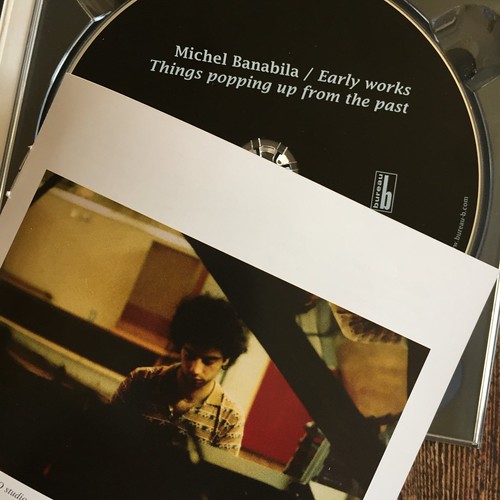
Manche Musik ist auf so idiosynkratische Weise eigen, dass man Gefahr läuft, ihre Besonderheit zu überhören – oder sie gleich komplett zu überhören. Der Holländer Michel Banabila passt, wenn überhaupt, dann in diese Kategorie. Seit den 1980er Jahren veröffentlicht der Klangkünstler seine Aufnahmen, die abstrakte Ethno-Collagen, sehr entspannte elektronische Groove-Nummern in gemäßigtem Tempo oder auch Field Recordings gern schon mal in ein und demselben Stück kombinieren. Mittlerweile sind von ihm ziemlich viele Alben erschienen, seit einigen Jahren veröffentlicht er bevorzugt auf seinem Label Tapu Records. Das Hamburger Label Bureau B hatte 2016 mit der Compilation »Early Works / Things Popping Up from the Past« einen ersten kleinen Einblick in seine Anfangsjahre gegeben. Mit Wah-Wah Whispers sind jetzt seine jüngeren Veröffentlichungen zwischen 2013 und 2020 dran. Auch hier bildet die für Banabila typische Mischung, die schon in seinen frühen Aufnahmen entwickelt ist, die Klammer der acht etwas ausgedehnteren Nummern. Im Titelstück dieser Compilation verneigt er sich dabei recht vernehmlich vor einem seiner Einflüsse: Sowohl der verfremdete Trompeten (?)-Klang als auch die digitale diskrete Perkussion lassen als Vorbild die Fourth World Music von Jon Hassell erkennen. Eine ebenfalls sehr eigene Inspiration, was für Michel Banabilas Kosmos als Referenz allemal in Ordnung geht. Ein Klangforscher, der unaufdringlich für sich einnimmt. (Tim Caspar Boehme)
BABYBLAUE SEITEN:
Der Niederländer Michel Banabila scheint ein ewiger Geheimtipp zu sein, weil er stilistisch in keine Schublade passt. Seit 1983 veröffentlich er seine Musik, auf seine Popularität scheint es jedoch keinen großen Einfluss gehabt zu haben. Andererseits seien ihm viele positive Kritiken schon immer sicher gewesen, heißt es. Unter seinen Arbeiten befinden sich die Filmmusiken, Videokunst und die Musiken für Theater und Choreographien. „Wah-Wah Whispers“ nennt sich die Zusammenstellung seiner Arbeiten, die sich allerdings der jüngeren Zeit im Schaffen von Banabila widmet. Das älteste Stück stammt aus dem Jahr 2001. Schon bei dem eröffnenden „Take Me There“ fällt mir die ungewöhnliche Kombination aus kreativ eingesetzten Samples sowie akustischen und elektronischen Klängen auf, die insgesamt eine melancholisch-geheimnisvolle Stimmung erzeugt. In „Tic Tac“ ähnelt der Rhythmus zwar Reggae, hat gleichzeitig jedoch etwas Mechanisches und Hypnotisches an sich. Zudem sorgen die Arrangements für eine bedrohlich wirkende Atmosphäre. Die cineastischen Klangbilder von „Branches“ halte ich für sehr phantasieanregend. Wie eine morgens aufwachende Natur in einem grenzenlosen Wald. Eine Verschmelzung von futuristischen, ambient-artigen und ethnischen Klängen wurde einst von Jon Hassell als Fourth World Music beschrieben. Vergleichbares bietet auch „Hidden Story“, das zudem noch gesampelte Stimmen, sphärische Gitarren, afrikanisch anmutende Rhythmen und einiges mehr bereithält. In die gleiche Kerbe schlägt auch „Wah-Wah Whispers“, wobei die Rolle der Trompete möglicherweise von einer stark verfremdeten Stimme übernommen wird. Die episch-melancholischen Stimmungen lassen mich bei „Out of Sync“ sofort an Postrock denken. Es ist die ambientartig-elektronische, mit Field Recordings und Samples versehene Version von Postrock, die uns in eine magische Landschaft entführen kann. Ohne Rhythmussektion, dafür mit mehrstimmigen lyrischen Gitarren. „Secunde Reprise“ halte ich für eine Verschmelzung von Elektronik, Modern Prog und Postrock. Die knackigen Rhythmen, die dissonanten Gitarreneinwürfe, die Sequenzer und die verstreuten Pianoakkorde erzeugen ein ungewöhnliches Gesamtbild. „Narita“ ist eine Zusammenarbeit mit Rutger „Machinenfabriek“ Zuydervelt“. In dem Stück kontrastieren noisig übersteuerte Instrumente mit ausgleichend meditativen Schleifen, die Flöten- und Dudelsack-Klänge zu verarbeiten scheinen. Eine interessante Zusammenstellung, die wie gesagt einiges an Vielfalt bietet, und zwar zwischen Elektronik, Fourth World Music, Ambient, Postrock und einigen Arrangements, für die es wahrscheinlich noch keine stilistischen Schubladen gibt. (Siggy Zielinski)
SCHADUWKABINET/SUBJECTIVISTEN:
Ambient, experimentele muziek, avant-garde tot jazz, wereldmuziek, filmmuziek, neoklassiek, new age en kabaal, ja de Rotterdamse muzikant, producent en componist Michel Banabila heeft het allemaal. Maar zonder gekkigheid, sinds Banabila in 1983 is begonnen met muziek uit te brengen, heeft hij ook echt van alles uitgebracht. Dat gaat van prijswinnende en innovatieve solowerken tot invloedrijke wereldmuziek met East Meets West, meditatieve ambient met Chi en meer experimentele ambient met Cloud Ensemble. Daarnaast werkt hij veelvuldig met andere artiesten samen, waaronder Yasar Saka, Hannes Vennik, Scanner, Radboud Mens, Philippe Petit, Mete Erker, Oene van Geel, Maarten Vos, Eric Vloeimans en last but not least Machinefabiek. Hoewel de muziek behoorlijk varieert, weet Banabila altijd wel een voor hem kenmerkende stempel te drukken en maakt hij muziek die dikwijls toonaangevend is. Het is muziek ingegeven door nieuwsgierigheid en een hang naar avontuur. Wat dat betreft is hij net zo breed en bijzonder als Hector Zazou was. Toch zit deze eigengereide variatie hem qua bekendheid ook wel eens in de weg. Hij verdient een veel groter podium dan hij nu soms krijgt. Dat moeten ze bij het prestigieuze label Bureau B ook gedacht hebben, want ze brengen er nu de compilatie Wah-Wah Whispers van Michel Banabila uit. En geen gewone “best of”, maar een uitgekiend overzicht van tracks die van 2013 tot 2020 zijn verschenen plus één van het album Spherics uit 2001. De overige 7 tracks zijn afkomstig van de albums Travelog (2013, samen met Machinefabriek) en Tapu Sampler (2016) en de digitale releases Just Above The Surface (2018), tweemaal Everything Else Is Just Right Here (2018), Spherics III en Always There (2020). Dat laatste is voor mensen zoals ik, die niets met digitale releases hebben, al helemaal goed nieuws. Het zijn overigens de wat meer toegankelijke en subtiele tracks, maar die geven toch heel goed de avontuurlijkheid, speelsheid en biologerende bijzonderheid van zijn muziek weer. Je belandt in een parallel universum, een wondere wereld vol bezinnende, biologerende en verstrooiende pracht, die ergens zit tussen de “fourth world music” van Jon Hassell en de wereldse avant-garde van Hector Zazou. Dit nieuwe album vormt tevens de perfecte instapplaat voor degene die Banabila nog niet zo goed kennen, maar ook voor de fans is dit een originele schakering van muziekstukken, die van toegevoegde waarde is. Banabila is en blijft een schitterend unicum. (JanWillem Broek)
VITAL WEEKLY 1276:
Usually, when an artist is around for some time, there are a few compilations with the 'best-of' of early material, but on 'Wah-Wah Whispers' by Michel Banabila this is not the case. This is a 'best of' recent work, as all pieces are from 2013 to 2020 with one from 2001. It is a selection made by Bureau B from Michel Banabila's vast catalogue from his Tapu Records, found online. Stuff that so far reached a small audience, but which, so Bureau B thinks, should be heard by more people. Quite rightly so, of course. A bigger label equals a bigger budget for promotion and (hopefully, of course) a wider audience and with the kind of music Banabila creates, I can easily see a bigger audience available; if only they knew it was out there. In the past, I, all to easily/hastily, said something about fourth world music in connection with Banabila, but that is only a small portion of the man's vast output. His electronic music covers much more than just sampled ethnic percussion and exotic mood scapes. You can find them here as well, but there are minimalism and maximalism to be found here too. Found voices, percussion, soundtrack-like soundscapes, dubby music (the 2001 track 'Tic Tac'), field recordings in 'Out of sync' and in 'Hidden Story' reminded me of Jorge Reyes and O Yuki Conjugate in quite the same exotic style of music, while 'Secunde Reprise' is almost a straight forward piece of ambient house with a strong motorik sequencer. A bit of noise (controlled as it is!) we find at the end in 'Narita', which is the only collaborative piece around here, with Machinefabriek, which is a descent and ascent in the world of drones with a civilized amount of distortion in the middle. It is, altogether, the perfect introduction to this fantastic composer's recent output. If you are looking for something great and not all too strange to play when you have visitors who don't like your outer limits music collection, you should not look further. (FdW)
All tracks recorded, performed, composed & produced by Michel Banabila, except ‘Narita’ performed, composed & produced by Michel Banabila & Rutger Zuydervelt.
Voice samples on ‘Narita’ by All N4tural & Yuko Parris.
Guitar on ‘Hidden Story’ by Cok van Vuuren.
'Tic Tac' was previously published by Tone Casualties / Boudisque Recording / Steamin’Songs.
Track 1 & 2 originally mastered by Michel Banabila,
3, 4, 5, 6, 7, 8 originally mastered by Marlon Wolterink.
Artwork by Anh Thu Vu.
Compiled by Daniel Jahn.
Remastered by Detlef Funder.
Executive Producer: Daniel Jahn & Gunther Buskies.
Licensed from Tapu Records for Bureau B, published by Tapete Songs.

1. Take Me There (from: Tapu Sampler / 2016)
2. Tic Tac (from: Spherics / 2001)
3. Branches (from: Always There / 2020)
4. Hidden Story (from: Everywhere Else Is Just Right Here / 2018)
5. Out Of Sync (from: Just Above The Surface / 2018)
6. Secunde - Reprise (from: Spherics III / 2020)
7. Wah-Wah Whispers (from: Everywhere Else Is Just Right Here / 2018)
8. Narita (by Banabila & Machinefabriek, from: Travelog / 2013)
Cat No: BB363.
UPC/EAN: 4015698104844.
BUREAU B
www.bureau-b.com
TAPETE RECORDS
www.tapeterecords.de
2021 © + ℗ Bureau B.
video by David Kleijwegt.
LIBERO BLOG:
Electronica sperimentale pervade l'aria della stanza chiusa. Wah - Wah Whispers esplode di enorme originalità e creatività. Nubi polverose si addensano all'orizzonte, ed i battiti di queste composizioni martellano il loro sapere. In questa opera si esercitano poteri distanti. Nessuna manipolazione, solo esercizio di stile e classe. Classe innata per un suono che invade l'etere. Note complicate e mirabili che nascondono l'amarezza di fondo. Tutto è preciso in queste canzoni. Loop che sognano territori impervi per ricordarsi di potere dimenticare... (Claudio Baroni)
SUBJECTIVISTEN NNM:
Ambient, experimentele muziek, avant-garde tot jazz, wereldmuziek, filmmuziek, neoklassiek, new age en kabaal, ja de Rotterdamse muzikant, producent en componist Michel Banabila heeft het allemaal. Maar zonder gekkigheid, sinds Banabila in 1983 is begonnen met muziek uit te brengen, heeft hij ook echt van alles uitgebracht. Dat gaat van prijswinnende en innovatieve solowerken tot invloedrijke wereldmuziek met East Meets West, meditatieve ambient met Chi en meer experimentele ambient met Cloud Ensemble. Daarnaast werkt hij veelvuldig met andere artiesten samen, waaronder Yasar Saka, Hannes Vennik, Scanner, Radboud Mens, Philippe Petit, Mete Erker, Oene van Geel, Maarten Vos, Eric Vloeimans en last but not least Machinefabiek. Hoewel de muziek behoorlijk varieert, weet Banabila altijd wel een voor hem kenmerkende stempel te drukken en maakt hij muziek die dikwijls toonaangevend is. Het is muziek ingegeven door nieuwsgierigheid en een hang naar avontuur. Wat dat betreft is hij net zo breed en bijzonder als Hector Zazou was. Toch zit deze eigengereide variatie hem qua bekendheid ook wel eens in de weg. Hij verdient een veel groter podium dan hij nu soms krijgt.
Dat moeten ze bij het prestigieuze label Bureau B ook gedacht hebben, want ze brengen er nu de compilatie Wah-Wah Whispers van Michel Banabila uit. En geen gewone “best of”, maar een uitgekiend overzicht van tracks die van 2013 tot 2020 zijn verschenen plus één van het album Spherics uit 2001. De overige 7 tracks zijn afkomstig van de albums Travelog (2013, samen met Machinefabriek) en Tapu Sampler (2016) en de digitale releases Just Above The Surface (2018), tweemaal Everything Else Is Just Right Here (2018), Spherics III en Always There (2020). Dat laatste is voor mensen zoals ik, die niets met digitale releases hebben, al helemaal goed nieuws. Het zijn overigens de wat meer toegankelijke en subtiele tracks, maar die geven toch heel goed de avontuurlijkheid, speelsheid en biologerende bijzonderheid van zijn muziek weer. Je belandt in een parallel universum, een wondere wereld vol bezinnende, biologerende en verstrooiende pracht, die ergens zit tussen de “fourth world music” van Jon Hassell en de wereldse avant-garde van Hector Zazou. Dit nieuwe album vormt tevens de perfecte instapplaat voor degene die Banabila nog niet zo goed kennen, maar ook voor de fans is dit een originele schakering van muziekstukken, die van toegevoegde waarde is. Banabila is en blijft een schitterend unicum. (Jan Willem Broek)
Order here: https://orcd.co/banabila