Showing posts with label vinyl. Show all posts

Friday, 13 June 2025

Pierre Bastien & MIchel Banabila: Nuits Sans Nuit


Pierre Bastien and Michel Banabila return with Nuits Sans Nuit, their second collaboration following their Baba Soirée debut from 2023.

Recorded as an intuitive exchange between Rotterdam and Valencia, the album emerged from a simple ping-pong process: Banabila sculpted sounds and atmospheres, to which Bastien responded with his distinctive instrumental palette: flute-augmented cornet, mechanised log drum, and more. Mixed by Banabila, the result is a raw yet immersive work that resonates with a somnambulant, wide-awake presence.

Pierre Bastien: "The dreamlike quality of our recordings reminded me of a book I read years ago: ‘Nuits Sans Nuit Et Quelques Jours Sans Jour’ by Michel Leiris. Around that same time, some fifty years ago, I was playing in Nu Creative Methods with Bernard Pruvost, a duo that appears on the Nurse With Wound list. Since then, Pruvost has turned to painting, and his work is as dreamlike as our music. We asked him to contribute one of his paintings for the album cover."
"I don't know how to describe the feeling of these crazy times we live in," says Banabila. "Les plus désespérés sont les chants les plus beaux,” Bastien quotes De Musset.

Wordless yet deeply expressive, the album invites listeners into a space of contemplation, where meaning emerges through immersion — like ritual music carrying an unspoken message. Echoes of saudade, blues, fado, and soleá surface in the duo’s playful noise, reimagined through their singular vocabulary.


PIERRE BASTIEN Cornet augmented with rotary flutes (1), Sintir (2), Rabab and pipe (3), Roll piano (4), Mechanized steel drums (5), Prepared cornet (2, 6, 10, 11), Mechanized log drum / Sanza / Hand drum (7), Cornet and mechanized zheng (8), Mangbetu harp kundi, Talking drum tama (9).

MICHEL BANABILA Software instruments, Sampler, Melodica (9), Wooden flute (2), Found objects (1+11), Percussion (1, 2, 4), Field recording (5+6), Mexican Turtle Flute (9), E-bow effects (8), Voice (8), Mix.

Artwork:
'La closerie ferme ses portes avec une sauterelle' by Bernard Pruvost.
Design: Rutger Zuydervelt.
Mastering and vinyl cut by Kassian Troyer at Dubplates & Mastering.
All music composed by Pierre Bastien and Michel Banabila
Recorded in Rotterdam and Valencia, 2024.
Produced by Michel Banabila.
Pingipung 090.
© & ℗ 2025 Pingipung.
LC 09304

'Chaque morceau évoque une marche au clair de lune.' (Geoffroy Séré / POPNEWS)


Monday, 10 January 2022

Echo Transformations (Knekelhuis vinyl LP compilation)


Michel Banabila ‘Echo Transformations’ Album Out 13th of December 2021.

Listen to 'Echo Transformations' album:
Soundcloud: https://bit.ly/3k3U1Kv
Pre-order vinyl/digital: https://bit.ly/3ENgYtj
Rush Hour Distribution: https://bit.ly/3qawJGr

Find us here:
https://www.instagram.com/michel_banabila
http://www.instagram.com/knekelhuis_/

Mastering & remastering by Wouter Brandenburg
All tracks composed & performed by Michel Banabila
Executive produced by Mark van de Maat
Artwork by Keziah Philipps
Design by Steele Bonus
© 2021 Knekelhuis, under exclusive licence to Knekelhuis Records.


Michel Banabila is an indispensable part of the Dutch experimental music scene, where he has acquired a special place with many, in the 40 years that he has been releasing music. Michel is also just as active as a composer for the theater and ballet world, as well as for TV productions, to considerable fame. The threat of drowning in the sea of his oeuvre is real in view of the unprecedented amount of output, but once sailing unmissable monolithic rock formations loom up rapidly. Echo Transformations' is one of them. It's a magical album, where everything falls into place in a rich domain inspired by the Fourth World dimension. A world of sound arises from our imagination, stimulating the senses. A concept album where every sigh has its place and where no superfluous tone can be heard. What remains is to embrace the inevitable surrender that accompanies unstoppable change. This is Banabila at his best (knekelhuis, 2021)


Friday, 19 March 2021

Wah-Wah Whispers (Bureau B vinyl LP & CD compilation)

AMBIENTBLOG:
Ever since he released his music in the early ’80s (1983, to be exact), Michel Banabila has been hard topinpoint to a specific genre or style. His musical output includes jazz, experimental cut-up electronics, worldmusic (especially influenced by the Fourth World music as developed by Jon Hassell), New Age, eclectic poptunes, music for dance or other stage projects, and soundtracks for TV productions. Some listeners may havefound it somewhat difficult throughout the years to find their way in this versatile output that includes verydifferent genres. Because of this versatility Banabila has grown into one of the most fascinating musicians in Europe and wasalways highly acclaimed by critics, which was well deserved. Nevertheless – for possibly that very samereason his work never came across the radar of most people, and that is something he does not deserve.When diving deeper into his output, one gets familiar with the trademark Banabila sound: his personal waysof using samples, the way he incorporates vocal fragments, the fact that there is always an emotional layeryou can relate to, even in his most abstract works.Over the years, Banabila’s work has progressed and evolved in different directions. It must be weird for anycreative artist when the interest of new audiences (and labels) focuses on your earlier work - work that youhave long left behind while exploring new directions. On the other hand: Whoever gets interested in yourolder work may also want to explore the newer stuff (which means they have almost forty years to explore,just imagine!).For this particular release, Bureau B chose a different approach. Instead of archiving early works from the1980s, Wah-Wah Whispers focuses on Banabila’s more recent output. It is a collection of works showcasingmany facets of his music: a journey visiting the minimal and cinematic sample scape in the opener Take MeThere, a robotic reggae-like rhythm (Tic Tac), contemplative ambient / fourth world scenes evolving into adownright funky beat (Hidden Story), the synth version of Secunde, and more. The album ends with akaleidoscope of atmospheres gradually building up to a noise climax in Narita (the only collaboration track onthe album, with Rutger Zuydervelt / Machinefabriek).No single compilation album could really do justice to the massive scope of Banabila’s output since 1983, butwith Wah-Wah Whispers, Bureau B did a wonderful job to facilitate a view into his more recent work (2013-2020, with the exception of Tic Tac, which is from 2001).This album is an invitation that may lead to explore Banabila’s back catalogue and dive deeper into the workof one of Holland’s most creative independent artists.- Peter van Cooten

JUNO DAILY:
The best new albums this week: Wah-Wah Whispers (April 2021)

There are certain artists whose oeuvre is so monolithic it can be tricky knowing where to begin – the kind of auteurs who exist outside trends and scenes and simply spend their lives forming mountains of published material for hapless listeners to scale. Dutch tinkerer Michel Banabila is certainly one of those, who since 1983 has steadily issued all kinds of material spanning different approaches and styles with an overall inquisitive, leftfield slant whether dealing in rhythms or ambience, field recordings or synthesis.
 Bureau B here provide a snapshot into (relatively) more recent Banabila output, which focuses on work from the past 10 years. Admittedly, the one exception is also one of the album highlights – the surprisingly groove-oriented tickover of 2001 piece ‘Tic Tac’ replete with owl noises and a crime jazz bent. But if Wah-Wah Whispers functions as a compilation of sorts, it doesn’t feel like one. The varying shades, from pastoral composition ‘Branches’ to the widescreen electronica of ‘Secunde Reprise’, keep the listening ear engaged and guessing. The humid fug and treated turtle flute on the title track certainly calls to mind a noted influence, Jon Hassell, but Banabila brings his own vivid production sensibilities to bear on his interpretation of the Fourth World aesthetic. With depth and diversity at every turn, at the very least this concise collection hints at the many styles of Banabila that lie in wait of intrepid explorers. (OW)

HHV MAG:
Manche Musik ist auf so idiosynkratische Weise eigen, dass man Gefahr läuft, ihre Besonderheit zu überhören – oder sie gleich komplett zu überhören. Der Holländer Michel Banabila passt, wenn überhaupt, dann in diese Kategorie. Seit den 1980er Jahren veröffentlicht der Klangkünstler seine Aufnahmen, die abstrakte Ethno-Collagen, sehr entspannte elektronische Groove-Nummern in gemäßigtem Tempo oder auch Field Recordings gern schon mal in ein und demselben Stück kombinieren. Mittlerweile sind von ihm ziemlich viele Alben erschienen, seit einigen Jahren veröffentlicht er bevorzugt auf seinem Label Tapu Records. Das Hamburger Label Bureau B hatte 2016 mit der Compilation »Early Works / Things Popping Up from the Past« einen ersten kleinen Einblick in seine Anfangsjahre gegeben. Mit Wah-Wah Whispers sind jetzt seine jüngeren Veröffentlichungen zwischen 2013 und 2020 dran. Auch hier bildet die für Banabila typische Mischung, die schon in seinen frühen Aufnahmen entwickelt ist, die Klammer der acht etwas ausgedehnteren Nummern. Im Titelstück dieser Compilation verneigt er sich dabei recht vernehmlich vor einem seiner Einflüsse: Sowohl der verfremdete Trompeten (?)-Klang als auch die digitale diskrete Perkussion lassen als Vorbild die Fourth World Music von Jon Hassell erkennen. Eine ebenfalls sehr eigene Inspiration, was für Michel Banabilas Kosmos als Referenz allemal in Ordnung geht. Ein Klangforscher, der unaufdringlich für sich einnimmt. (Tim Caspar Boehme)

BABYBLAUE SEITEN:
Der Niederländer Michel Banabila scheint ein ewiger Geheimtipp zu sein, weil er stilistisch in keine Schublade passt. Seit 1983 veröffentlich er seine Musik, auf seine Popularität scheint es jedoch keinen großen Einfluss gehabt zu haben. Andererseits seien ihm viele positive Kritiken schon immer sicher gewesen, heißt es. Unter seinen Arbeiten befinden sich die Filmmusiken, Videokunst und die Musiken für Theater und Choreographien. „Wah-Wah Whispers“ nennt sich die Zusammenstellung seiner Arbeiten, die sich allerdings der jüngeren Zeit im Schaffen von Banabila widmet. Das älteste Stück stammt aus dem Jahr 2001. Schon bei dem eröffnenden „Take Me There“ fällt mir die ungewöhnliche Kombination aus kreativ eingesetzten Samples sowie akustischen und elektronischen Klängen auf, die insgesamt eine melancholisch-geheimnisvolle Stimmung erzeugt. In „Tic Tac“ ähnelt der Rhythmus zwar Reggae, hat gleichzeitig jedoch etwas Mechanisches und Hypnotisches an sich. Zudem sorgen die Arrangements für eine bedrohlich wirkende Atmosphäre. Die cineastischen Klangbilder von „Branches“ halte ich für sehr phantasieanregend. Wie eine morgens aufwachende Natur in einem grenzenlosen Wald. Eine Verschmelzung von futuristischen, ambient-artigen und ethnischen Klängen wurde einst von Jon Hassell als Fourth World Music beschrieben. Vergleichbares bietet auch „Hidden Story“, das zudem noch gesampelte Stimmen, sphärische Gitarren, afrikanisch anmutende Rhythmen und einiges mehr bereithält. In die gleiche Kerbe schlägt auch „Wah-Wah Whispers“, wobei die Rolle der Trompete möglicherweise von einer stark verfremdeten Stimme übernommen wird. Die episch-melancholischen Stimmungen lassen mich bei „Out of Sync“ sofort an Postrock denken. Es ist die ambientartig-elektronische, mit Field Recordings und Samples versehene Version von Postrock, die uns in eine magische Landschaft entführen kann. Ohne Rhythmussektion, dafür mit mehrstimmigen lyrischen Gitarren. „Secunde Reprise“ halte ich für eine Verschmelzung von Elektronik, Modern Prog und Postrock. Die knackigen Rhythmen, die dissonanten Gitarreneinwürfe, die Sequenzer und die verstreuten Pianoakkorde erzeugen ein ungewöhnliches Gesamtbild. „Narita“ ist eine Zusammenarbeit mit Rutger „Machinenfabriek“ Zuydervelt“. In dem Stück kontrastieren noisig übersteuerte Instrumente mit ausgleichend meditativen Schleifen, die Flöten- und Dudelsack-Klänge zu verarbeiten scheinen. Eine interessante Zusammenstellung, die wie gesagt einiges an Vielfalt bietet, und zwar zwischen Elektronik, Fourth World Music, Ambient, Postrock und einigen Arrangements, für die es wahrscheinlich noch keine stilistischen Schubladen gibt. (Siggy Zielinski)

SCHADUWKABINET/SUBJECTIVISTEN:
Ambient, experimentele muziek, avant-garde tot jazz, wereldmuziek, filmmuziek, neoklassiek, new age en kabaal, ja de Rotterdamse muzikant, producent en componist Michel Banabila heeft het allemaal. Maar zonder gekkigheid, sinds Banabila in 1983 is begonnen met muziek uit te brengen, heeft hij ook echt van alles uitgebracht. Dat gaat van prijswinnende en innovatieve solowerken tot invloedrijke wereldmuziek met East Meets West, meditatieve ambient met Chi en meer experimentele ambient met Cloud Ensemble. Daarnaast werkt hij veelvuldig met andere artiesten samen, waaronder Yasar Saka, Hannes Vennik, Scanner, Radboud Mens, Philippe Petit, Mete Erker, Oene van Geel, Maarten Vos, Eric Vloeimans en last but not least Machinefabiek. Hoewel de muziek behoorlijk varieert, weet Banabila altijd wel een voor hem kenmerkende stempel te drukken en maakt hij muziek die dikwijls toonaangevend is. Het is muziek ingegeven door nieuwsgierigheid en een hang naar avontuur. Wat dat betreft is hij net zo breed en bijzonder als Hector Zazou was. Toch zit deze eigengereide variatie hem qua bekendheid ook wel eens in de weg. Hij verdient een veel groter podium dan hij nu soms krijgt. Dat moeten ze bij het prestigieuze label Bureau B ook gedacht hebben, want ze brengen er nu de compilatie Wah-Wah Whispers van Michel Banabila uit. En geen gewone “best of”, maar een uitgekiend overzicht van tracks die van 2013 tot 2020 zijn verschenen plus één van het album Spherics uit 2001. De overige 7 tracks zijn afkomstig van de albums Travelog (2013, samen met Machinefabriek) en Tapu Sampler (2016) en de digitale releases Just Above The Surface (2018), tweemaal Everything Else Is Just Right Here (2018), Spherics III en Always There (2020). Dat laatste is voor mensen zoals ik, die niets met digitale releases hebben, al helemaal goed nieuws. Het zijn overigens de wat meer toegankelijke en subtiele tracks, maar die geven toch heel goed de avontuurlijkheid, speelsheid en biologerende bijzonderheid van zijn muziek weer. Je belandt in een parallel universum, een wondere wereld vol bezinnende, biologerende en verstrooiende pracht, die ergens zit tussen de “fourth world music” van Jon Hassell en de wereldse avant-garde van Hector Zazou. Dit nieuwe album vormt tevens de perfecte instapplaat voor degene die Banabila nog niet zo goed kennen, maar ook voor de fans is dit een originele schakering van muziekstukken, die van toegevoegde waarde is. Banabila is en blijft een schitterend unicum. (JanWillem Broek)

VITAL WEEKLY 1276:
Usually, when an artist is around for some time, there are a few compilations with the 'best-of' of early material, but on 'Wah-Wah Whispers' by Michel Banabila this is not the case. This is a 'best of' recent work, as all pieces are from 2013 to 2020 with one from 2001. It is a selection made by Bureau B from Michel Banabila's vast catalogue from his Tapu Records, found online. Stuff that so far reached a small audience, but which, so Bureau B thinks, should be heard by more people. Quite rightly so, of course. A bigger label equals a bigger budget for promotion and (hopefully, of course) a wider audience and with the kind of music Banabila creates, I can easily see a bigger audience available; if only they knew it was out there. In the past, I, all to easily/hastily, said something about fourth world music in connection with Banabila, but that is only a small portion of the man's vast output. His electronic music covers much more than just sampled ethnic percussion and exotic mood scapes. You can find them here as well, but there are minimalism and maximalism to be found here too. Found voices, percussion, soundtrack-like soundscapes, dubby music (the 2001 track 'Tic Tac'), field recordings in 'Out of sync' and in 'Hidden Story' reminded me of Jorge Reyes and O Yuki Conjugate in quite the same exotic style of music, while 'Secunde Reprise' is almost a straight forward piece of ambient house with a strong motorik sequencer. A bit of noise (controlled as it is!) we find at the end in 'Narita', which is the only collaborative piece around here, with Machinefabriek, which is a descent and ascent in the world of drones with a civilized amount of distortion in the middle. It is, altogether, the perfect introduction to this fantastic composer's recent output. If you are looking for something great and not all too strange to play when you have visitors who don't like your outer limits music collection, you should not look further. (FdW)


All tracks recorded, performed, composed & produced by Michel Banabila, except ‘Narita’ performed, composed & produced by Michel Banabila & Rutger Zuydervelt.
Voice samples on ‘Narita’ by All N4tural & Yuko Parris.
Guitar on ‘Hidden Story’ by Cok van Vuuren.
'Tic Tac' was previously published by Tone Casualties / Boudisque Recording / Steamin’Songs.
Track 1 & 2 originally mastered by Michel Banabila,
3, 4, 5, 6, 7, 8 originally mastered by Marlon Wolterink.

Artwork by Anh Thu Vu.
Compiled by Daniel Jahn.
Remastered by Detlef Funder.
Executive Producer: Daniel Jahn & Gunther Buskies.
Licensed from Tapu Records for Bureau B, published by Tapete Songs.


1. Take Me There (from: Tapu Sampler / 2016)
2. Tic Tac (from: Spherics / 2001)
3. Branches (from: Always There / 2020)
4. Hidden Story (from: Everywhere Else Is Just Right Here / 2018)
5. Out Of Sync (from: Just Above The Surface / 2018)
6. Secunde - Reprise (from: Spherics III / 2020)
7. Wah-Wah Whispers (from: Everywhere Else Is Just Right Here / 2018)
8. Narita (by Banabila & Machinefabriek, from: Travelog / 2013)


Cat No: BB363.
UPC/EAN: 4015698104844.


BUREAU B
www.bureau-b.com
TAPETE RECORDS
www.tapeterecords.de

2021 © + ℗ Bureau B.


video by David Kleijwegt.

LIBERO BLOG:
Electronica sperimentale pervade l'aria della stanza chiusa. Wah - Wah Whispers esplode di enorme originalità e creatività. Nubi polverose si addensano all'orizzonte, ed i battiti di queste composizioni martellano il loro sapere. In questa opera si esercitano poteri distanti. Nessuna manipolazione, solo esercizio di stile e classe. Classe innata per un suono che invade l'etere. Note complicate e mirabili che nascondono l'amarezza di fondo. Tutto è preciso in queste canzoni. Loop che sognano territori impervi per ricordarsi di potere dimenticare... (Claudio Baroni)


SUBJECTIVISTEN NNM:
Ambient, experimentele muziek, avant-garde tot jazz, wereldmuziek, filmmuziek, neoklassiek, new age en kabaal, ja de Rotterdamse muzikant, producent en componist Michel Banabila heeft het allemaal. Maar zonder gekkigheid, sinds Banabila in 1983 is begonnen met muziek uit te brengen, heeft hij ook echt van alles uitgebracht. Dat gaat van prijswinnende en innovatieve solowerken tot invloedrijke wereldmuziek met East Meets West, meditatieve ambient met Chi en meer experimentele ambient met Cloud Ensemble. Daarnaast werkt hij veelvuldig met andere artiesten samen, waaronder Yasar Saka, Hannes Vennik, Scanner, Radboud Mens, Philippe Petit, Mete Erker, Oene van Geel, Maarten Vos, Eric Vloeimans en last but not least Machinefabiek. Hoewel de muziek behoorlijk varieert, weet Banabila altijd wel een voor hem kenmerkende stempel te drukken en maakt hij muziek die dikwijls toonaangevend is. Het is muziek ingegeven door nieuwsgierigheid en een hang naar avontuur. Wat dat betreft is hij net zo breed en bijzonder als Hector Zazou was. Toch zit deze eigengereide variatie hem qua bekendheid ook wel eens in de weg. Hij verdient een veel groter podium dan hij nu soms krijgt.
Dat moeten ze bij het prestigieuze label Bureau B ook gedacht hebben, want ze brengen er nu de compilatie Wah-Wah Whispers van Michel Banabila uit. En geen gewone “best of”, maar een uitgekiend overzicht van tracks die van 2013 tot 2020 zijn verschenen plus één van het album Spherics uit 2001. De overige 7 tracks zijn afkomstig van de albums Travelog (2013, samen met Machinefabriek) en Tapu Sampler (2016) en de digitale releases Just Above The Surface (2018), tweemaal Everything Else Is Just Right Here (2018), Spherics III en Always There (2020). Dat laatste is voor mensen zoals ik, die niets met digitale releases hebben, al helemaal goed nieuws. Het zijn overigens de wat meer toegankelijke en subtiele tracks, maar die geven toch heel goed de avontuurlijkheid, speelsheid en biologerende bijzonderheid van zijn muziek weer. Je belandt in een parallel universum, een wondere wereld vol bezinnende, biologerende en verstrooiende pracht, die ergens zit tussen de “fourth world music” van Jon Hassell en de wereldse avant-garde van Hector Zazou. Dit nieuwe album vormt tevens de perfecte instapplaat voor degene die Banabila nog niet zo goed kennen, maar ook voor de fans is dit een originele schakering van muziekstukken, die van toegevoegde waarde is. Banabila is en blijft een schitterend unicum. (Jan Willem Broek)

Order here: https://orcd.co/banabila

Thursday, 26 December 2019

Movements (music for dance)


YIN YUE for PENNSYLVANIA BALLET:

A1 - DRAGONFLY II
Original soundtrack for the choreography 'A Trace of Inevitability'
by Yin Yue with Pennsylvania Ballet, in accordance with Yin Yue Dance Company & Pennsylvania Ballet.
This music was commissioned by Pennsylvania Ballet and premiered at 'World Premieres 2019' in the Merriam Theater, Philadelphia, USA, November 7th, 2019.

Musicians on Dragonfly II:
Peter Hollo: cello
Gareth Davis: bass clarinet
Oene van Geel: viola & stroh violin
Gulli Gudmundsson: el. bass, double bass & e-bow
Michel Banabila: midi instruments, sampling, electronics

PATRICK O’ BRIEN for CUNY DANCE INITIATIVE:

B1 - ILLICIT ACQUIREMENT
Composed for the choreography 'Enough' by Patrick O’Brien with Patrick O’Brien Dance Collective.
This music was commissioned by Patrick O’Brien with support from CUNY Dance Initiative and premiered in LaGuardia Performing Arts Center, New York, USA, November 14th, 2019.

CONNY JANSSEN for CONNY JANSSEN DANST:

C1 - CROWDS (Big Data Poetry Mix)

Was originally created for Big Data Poetry, an audio visual live performance by Geert Mul & Michel Banabila
 and was used in the choreography 'Home' by Conny Janssen for Conny Janssen Danst with Michel Banabila & Maarten Vos, and premiered in the Rotterdamse Schouwburg, Rotterdam, NL, January 20th, 2017.
C2 - I WON’T PLAY YOUR GAME
C3 - GUERRILLA TACTICS

C4 - NEW ENERGY FORMS
Were commissioned by Conny Janssen Danst for the choreography 'Zout' by Conny Janssen with Conny Janssen Danst & Anne Soldaat and premiered in the Rotterdamse Schouwburg, Rotterdam, NL, February 13th, 2011.

ANNABELLE LOPEZ OCHOA for SAN FRANCISCO BALLET and BJM DANSE MONTREAL

D1 - JUMP CUTS II
Was 
created for 'Guernica' in accordance with Annabelle Lopez Ochoa Company & San Francisco Ballet and premiered in the War Memorial Opera House, San Francisco, USA, April 24th, 2018.

D2 - A STRONG SENSE OF URGENCY

Was used in the choreography 'Zip Zap Zoom' by Annabelle Lopez Ochoa, in accordance with Annabelle Lopez Ochoa Company & BJM Danse. Zip Zap Zoom premiered in San Diego CA, USA, October 18th, 2009.

NORMAN RECORDS:
These eight tracks represent a decade of Banabila’s career - ‘Dragonfly II’ and ‘Illicit Acquirement’ premiered barely a month before 'Movements (Music For Dance)' came out while closing number ‘A Strong Sense of Urgency’ dates from 2009. When heard in this light it becomes fascinating to chart the development of Banabila’s practice across these ten years. The earlier pieces are concerned more purely with rhythm, channelling a cinematic sense of foreboding through driving drumlines that verge on techno at times. Vatican Shadow is not a million miles away, though the dance context inevitably gives tracks like ‘Crowds (Big Data Poetry Mix)’ a bit more of a high-art feel.

While this sound remains in the recent work, Banabila’s touch has become more deft of hand. This is apparent from before you even put ‘Dragonfly II’ and ‘Illicit Acquirement’ on - both tracks are afforded a whole side of wax here, their length a testament to Banabila’s widened scope. While they do eventually blossom into driving groove-based music - ‘Illicit Acquirement’ has a cool Venetian Snares-type thing going on - their opening passages are characterised by a hitherto-unheard lack of drums. There’s both Penguin Cafe and Steve Reich to ‘Dragonfly II’s nimble-fingered string work, and ‘Illicit Acquirement’ begins with some of the most abstracted sounds on 'Movements (Music For Dance)'. Banabila executes both moves expertly, successfully broadening his sonic palette without sacrificing the emotion and muscularity of those earlier compositions. (Fred MG)


Released December 25, 2019

All tracks composed, performed & produced by Michel Banabila.

Design: Yasar Saka / YAY Music & Media.
Front cover photo: Deberían Permitir (Buenos Aires, 2012)
by Mista Stagga Lee under CC 2.0 license
creativecommons.org/licenses/by/2.0
Back photo Yin Yue: Arian Molina Soca.

D2 (A Strong Sense Of Urgency) was licensed from Steamin'Soundworks with kind permission by Roel Kruize / published by Steamin’Songs. All rights reserved © + ℗ Steamin’Soundworks. More info: steamsounds.com

Joost Kroon: drums on Jump Cuts II.

Pressed at Deepgrooves, Leeuwarden.
Executive producer: Nico van Hemmen.
Mastering & remastering by Marlon Wolterink at White Noise Studio.

DISTRIBUTION:

NORMAN RECORDS (EU)
normanrecords.com/records/179690-michel-banabila-movements-music-for-dance

SQUIDCO (US)
www.squidco.com/r.cgi?p=28431

Cat. nr. NVH01TR.
2020 © + ℗ Tapu Records.

AMBIENTBLOG review

Tuesday, 23 April 2019

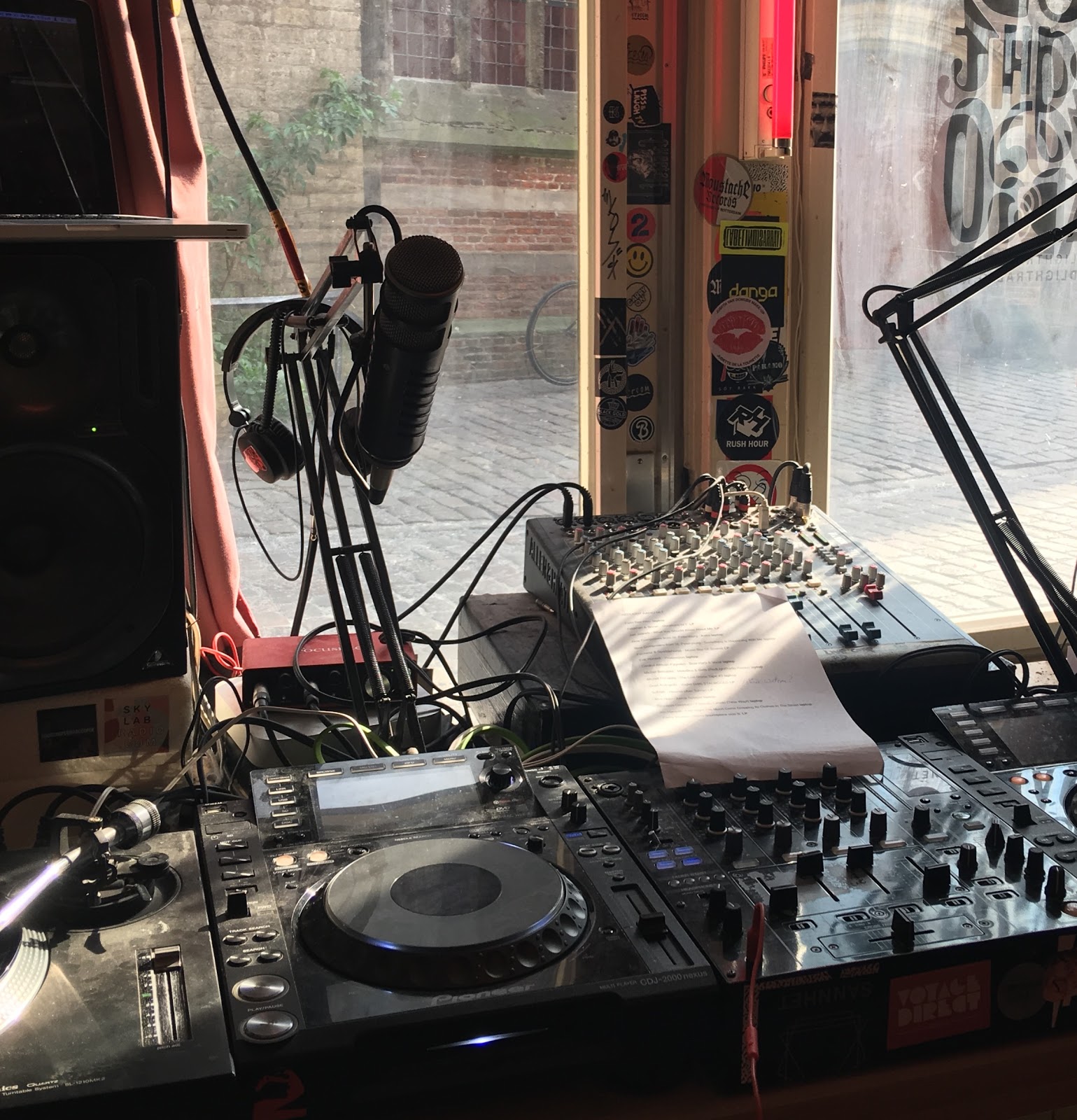
Mix for RedLight Radio

SET LIST 04-18-2019 RedLight Radio

1. Field Rec intro
2. Feldman & Brown - Durations IV.1
3. Jan Jelinek - What You Should Know About Me
4. Oren Ambarchi and Martin Ng - Surfacing Edit
5. New Composers from St. Petersburg - Astra
6. New Composers from St. Petersburg - Something Is Happening With Me
7. Erik Honoré - Procession
8. Central African Pygmies - Bow-Harp & Vocal
9. Michel Banabila - Melodica & Bells (Red Light Radio Remix)
10. Michel Banabila - The Lost Drone Tape 3
11. Fennesz & Sparklehorse - Music Box Of Snakes
12. Alva Noto - Xerox Spiegel
13. Thurayya Qaddura - Fatakatu Lahziki (Time Wept) - mixed -
14. Jon Hassell - Last Night The Moon Came Dropping Its Clothes In The Street


Visit The Something Something

Friday, 31 August 2018

VoizNoiz part 1 reissued on 2LP vinyl by Steamin' Soundworks

First album from the VoizNoiz series (CD / 2000 - Pork Recordings , Tone Casualties) reissued by Steamin' Soundworks on a 2LP vinyl album (ltd 234), including a 16 minute remix by Michel Banabila & Oene van Geel. Expected in October 2018, available via Norman Records. Fully remastered by Marlon Wolterink. 175G vinyl in hardback gatefold sleeve. Photography Jacky van Dijk / design Rutger Zuydervelt. More info at Steamin' Soundworks Bandcamp & Steamsounds.com


Remix (Side D) by Michel Banabila & Oene van Geel:


Saturday, 2 December 2017

Trespassing

Trespassing is out now. A Séance Centre release. Available at Rush Hour

2LP vinyl record in a gatefold sleeve, featuring with archival pics, essay and artwork by Alan Briand.


#TTLexpansions: Collection of genre bending material from long-serving Dutch experimentalist Michel Banabila. The release compiles examples of Banabilla's "excursions into otherworldly and imagined realms," and the results will take you there along with him. "Trespassing" includes tracks recorded between 1987 and 2017, which move between humid, percussion-led workouts, exotic ambience, dark and creepy soundscapes and sticky electro-acoustic fusion. The second record, "Marilli," was originally released in 1983 and appears as an LSD inspired DIY tribute to David Byrne and Brian Eno's "My Life In The Bush Of Ghosts." The highly sought-after album is presented here in its entirety for the first time since its original release. If you've been feeling the releases on Music From Memory or any of the recent spate of Japanese reissues we recommend you check this one out. Twenty tracks in all. Released by Seance Centre on double vinyl housed in a gatefold sleeve.⠀ ╲➸link in bio╲⠀@michel_banabila @seance_centre

A post shared by @ turntablelab on

Thursday, 3 August 2017

Coming soon, on Séance Centre: Trespassing

Trespassing 2LP vinyl album


Tegentonen Festival Paradiso 1984


Michel Banabila, Amsterdam, early 80's


website Séance Centre


Friday, 19 May 2017

New reviews for Sound Years [12" transparent vinyl LP]


Mixed by Michel Banabila.

Side A
(this side has the tracks jointed, making it one uninterrupted mix):

A1. Close To The Moon (previously unreleased / 2016)
A2. Earth Visitor (from Earth Visitor / 2016)
A3. E.T. (from Traces / 2007)
A4. Gorlice (from Live in Gorlice / 2014)
A5. 47 Voice Loops (from 47 Voice Loops / 2013)


Side B
(this side has the tracks jointed, making it one uninterrupted mix):

B1. Stone Bridge (from Hilarious Expedition / 2005)
B2. Niki Jumpei (from Gardening / 2012)
B3. TAPE (mix 3) (from Bouwwerk / 2010)
B4. Shortwave (from Hilarious Expedition / 2005)
B5. Radio Spelonk (from Music for viola and electronics II / 2015) with Oene van Geel
B6. Vuka Vuka! intro (from Songs from Vuka Vuka! / 2005)
B7. The Turtle Came Back (from Gardening / 2012)
B8. Yarra (from Travelog / 2013) with Machinefabriek


CHAIN D.L.K.:
“Sound Years” is a Michel Banabila sampler, segueing selected tracks from ten previous albums along with one new work into two gentle, chilled-out continuous pieces. This has the diversity and variation of a various artists chillout compilation, but impressively, it’s all the work of one man (and a couple of guest appearances). Smoothness is the order of the day here. Gentle piano melodies, occasional plaintive guitar strums, and found sounds including the classics such as falling rain ambiences and tropical birds, blend with the mellowest flavours of electronica chill-out such as the deftly twisted and re-pitched vocal samples in “Earth Visitor”. Other sections are more pared-down, simple warm drones, deep vocal sustains and cultured resonance. The second side opens with a slightly more cinematic bent- a real orchestra warming up alongside a virtual one, broad sci-fi choral pads and robotic noises have us floating outside a spaceship. The ambience gradually gets more down-to-earth, with plaintive violin lines (from guest Oene Van Geel I think) and micro-cut vocal snippets glitching away in “Radio Spelonk”. While some of the elements are cliché, they are used tastefully in a way that freshens them up. Even the cockerel crowing sound, used to great effect by The Orb, makes an appearance. In fact The Orb is a comparison worth making; if you like either of The Orb’s most recent two albums, then you should absolutely check “Sound Years” out. To someone unfamiliar with Banabila’s work, this is a seriously impressive and accomplished retrospective. A wide orchestral palette and some absolutely top-notch production, with a beautiful sense of space and an ability to shift subtly between warm and cold atmospheres, makes this an aural joy in its own right. The transitions are seamless and this absolutely stands up as its own work, without any of the unsatisfying incompleteness you sometimes get in compilations. It’s released on Banabila’s own Tapu Records. Several of the original albums from which these tracks are sourced are legitimately available to download for free online, and this compilation will definitely make you want to peruse things further. (Stuart Bruce)

NORMAN RECORDS staff review:
These are troubling times, or maybe it’s just because it’s the middle of the week, but fret not for Michel Banabila is here to bring the balm. This lovely guy has a background in producing scores for film, documentaries, theatre and video art. Banabila finds uses for discarded objects and makes tapestries with these along with his electronics, field recordings and shortwave radio bites. The results are greater than the sum of these parts though, of course. The sounds he makes are spectacularly gorgeous and immaculately crafted, so let’s get into it now... The record opens with the wondrously twilit ‘Close To The Moon’, acoustic oriental instrumentation gently plucked from some mystical faraway place and picking its way through some serene Fripp / Eno type sound bedding. Hints of guitar bubble up amongst the most luscious synth pads and subtle recordings of birdsong, low in the mix. This all segues seamlessly into some Frahm-ish piano and found sounds, Bjorkian vocals flitting in and out. The piano weaves a lovely melody gently around eastern instrumentation, gradually speeding up together with backwards vocals to create a slightly disorienting effect, before warm droning ambience washes back in. It’s as good as having the most relaxing bubble bath. Exotic birdcalls drift back in, soft lulling vocals and heavenly harp all combine to seduce this tired writer. Delicious. Is it time for bed yet? **** (Jamie)


POSTAMBIENT:
アンビエントという視点からオランダの音楽を探していた時に知った、世代もバックグラウンドも異なる2人の作曲家が、ジャーマン・エレクトロニクス周辺の復刻を手掛けるbureau Bのカタログに加わったことが、とても印象深いことでした。ひとりは、1925年ハールレム出身、著名なクラシック音楽一家に育ち、96年デン・ハーグで死去したJurriaan Andriessen(ユリアーン・アンドリーセン)。もうひとりは、1961年アムステルダムでオランダ人の母とイエメン出身の父との間に生まれた、現在ロッテルダムを拠点に活動するMichel Banabila(ミシェル・バナビラ)。ユトレヒト音楽院で父に作曲を学び、メシアンに師事したアンドリーセンは、元々アカデミックな現代音楽の世界で活躍していましたが、50歳代にさしかかった70年後半にPhilip GlassやWendy Carlosの影響から、自ら「トランス・シンフォニー」と呼ぶミニマルなシンセサイザー・ワークに開眼。先のbureau Bに取り上げられた「The Awakening Dream」は、Clusterや初期Kraftwerkにも通じるアナログでトリッピーなコズミック・サウンドを作り上げたシンセ期の代表作。プレアンビエントなアンドリーセンに対して、かたや次世代のバナビラはEno & ByrneやJon Hassellといったオリジネーターに直接的な影響を受けた、ポストパンク以降のオランダにおけるアンビエント・ミュージックの先覚者と見ることができます。 バナビラが同郷の映像作家Hero Wouters(ヘロ・ヴォウタス)のスタジオでアルバム制作に取り組みはじめたのが、彼が19才であった80年前後のこと。インドネシア、ガーナ、レバノンといった国々の民族音楽と、ジャズやミニマル・ミュージックといった要素をポストパンクの越境的感覚で再構築した「マリリ」、連作「発見された痕跡」などのソロ作を発表。Hanyo van Oosterom(ハンヨ・ファン・オーステロム)率いる第四世界音楽グループChiでの活動を経て、80年代末から90年代にかけては、トルコ、スリナム、ベルギーなどの多国籍フォーク・グループEast Meets Westや、トルコ出身のマルチ奏者Yaşar Saka(ヤシャール・シャカ)とのデュオなど、イエメン人の血を継ぐ自身の音楽的ルーツを探す旅のように、民族音楽志向をさらに広げた精力的なライブ活動を繰り広げ、ワールド・ミュージックの潮流の中で大きな評価を獲得していきました。その後トリップホップ〜クラブジャズから、グリッチ〜デジタル・ミニマリズム、実験的なエレクトロアコースティック、サティを思わせるピアニズムや室内楽に及ぶ多様なアプローチで、舞台芸術、ドキュメンタリー、映画、ビデオアートのための音楽を制作。初期のイマジナリーな民族性やミニマリズム的手法は、時代ごとに様相を変えながら、現在まで途絶えることなくバナビラの音楽の基幹になっていると思います。 この「Sound Years」は、過去12年の間に制作した既発アルバムから選ばれた13の楽曲からなるコンピレーション・アルバム。00年代以降の主要作を俯瞰しつつ、しかし単なるサンプラーではなく、遠く離れた広大無辺な宇宙空間と顕微鏡内のミクロな世界との間を漂泊するバナビラ特有の離郷的詩情を各作品から拾い集めるように、セルフミックスによって新しい物語へと昇華した、近年の最高作と呼ぶにふさわしい内容。昨年リリースされた初期編集盤「Early Works」と対比をなし、近年に初期作を発見した新しい層のリスナーにとっては数多くのバナビラ作品を辿るためのひとつの切り口となる(おそらく新作では最後の)ヴァイナル・フォーマットでリリースされたことにも少なからぬ意義を感じます。(Tomoyuki Fujii)


AMBIENTBLOG:
Sound Years is a compilation of previously released tracks (with the exception of the previously unreleased opening track Close To The Moon). All are hand-picked by Michel Banabila himself and mixed into two continuous tracks – one for each side of the vinyl album. The selection is taken from various projects: some of them from theatre works, some of the more recent experimental electronic music, an occasional live recording, and a selection of his collaboration works with Oene van Geel and Rutger Zuydervelt (Machinefabriek). The oldest tracks are taken from 2005’s Hilarious Expedition, the newest are from 2016. They are selected to create a continuous uninterrupted flow. The sound is immediately recognisable as Banabila‘s – especially in his trademark use of ‘alien vocal’ samples (like in E.T. and Vuka Vuka!). The set is a perfect demonstration of Banabila‘s mastership of creating moods and atmospheres. A soft, warm, comfortable selection that is slightly unnerving and ‘outerworldish’ at the same time. Sound Years can perhaps be seen as Banabila‘s companion to KLF’s ‘Chill Out’ album: a slow walk through quiet (yet alien) landscapes. Unknown, full of surprises, yet always vaguely familiar. (Peter van Cooten)


HEAR AND NOW:
Sound Years is a mix curated by Dutch musician Michel Banabila from recordings created variously for stage productions, documentaries, soundtracks and other releases from the previous 11 years. As you can see, it was released in a quiver inducing vinylophiles pleasure-dream - a clear platter of sound exploration. The Bandcamp link above takes you to an edit of the release. I enjoy Michel's music for it's imaginative panoramas which are enhanced by his engagement with avant and sound art methodology. Michel is a master of experimental ambient and this is where he excels. Exterior environments/field recordings are integral to many of his works. Musique concréte too. This exploratory aspect of his work is tempered by his inclusion of jazz, blues, African, Indian/Asian, classical/opera and other popular forms. Through these methodologies, he creates intriguing musical hybrids that, I feel, expand the musical traditions he utilises into original and unique soundworlds. I feel he is at the forefront of unalienating avant and creating more accessible approaches, that welcome the unfamiliar listener, rather than estrange them. The A-side opens with a previously unreleased track Close To the Moon. It's the kind of track that makes Michel's music so likeable, sounds are often tweaked through processing, creating aural hallucinates of the original sound. Oblique familiarity creating intrigue. An arcane vocal burbles. Tricked strike sound akin to a tabla floop. Acoustic guitar motif intone, slowly, calmly at the deeper end of the scale. Organ like keys cycle. Frog click. Ebow glissandi ring. I'm hearing things in a different light - odd combinations of sound source that here, are entirely plausible. A poignant piano motif enters and leaves. The vocal samples return more assertively. Harmonium like drone billows. And a silence. Another movement unfolds. More silences amidst forest sound flowering the mix. Nursery song and noise. For a moment, I glimpse a meeting between the Müm and Eno's Apollo. It closes where a recurring theme throughout this first side has ebbed and flowed - the human voice. In particular it features a sample from Michels 47 Voice Loops release, created for an installation that melded subtlety with complexity. The B-Side is a kind of aural film. Further out sound-art explorations and compositional technique are to the fore here and in places I'm reminded of Daedelus and DJ Spooky - it has a more cut-up/mixologist feel. Four of the songs featured are lifted from the Hilarious Exhibition and Gardening albums, both which really mirror the musical approach on this side. Frequent collaborators musician/sound-artist Machinefabriek and violinist/improvisor/composer Oene van Geel both share moments on this side too. Their inclusion reinforces the avant and "orchestral" feels present here. In the closing moments of the B-side there is a return to similar musical themes from the A-side through Yarra, from the memorable 2013 release, Travelog. It features a lovely Bayaka like cooing warble. It closes on a poignant piano melody.
In all, Sound Years is a great way to traverse a decade or so of Michel's ouevre.
nb. In 2010, Michel treated us to another career spanning sampler of his music, Streets, Dreams and Memories, collated/mixed by ambientblog's Peter van Cooten. It's available as a download now and is another great overview of Michel's panoramic music, particularly his fourth world recordings. (Perry Holt)

FELTHAT:
Michel Banabila is primarily known for film scores, theatre and video art scores. With that kind of experience you can really expect a chamelon sort of genre and that's is almost to be the truth. But as an experienced musician and a visionary he knows his way around and helps himself with vast array of means to accomplish his goals. Music presented on "Sound Years" beautifully released vinyl has a base of ethereal ambient guitar work which you might associate with Eno/Fripp archetype. But this is just a base to tiny little delights that this album has e.g. oriental acoustic instrumentation in the first track, rich and lush synth textures, drone ambience, piano work, a bit whimsical, gentle vocals. What is most striking is whatever Michel is playing - he can embellish it as a master - you can see his craft in each little corner. Delights... (Hubert Heathertoes)

MUSIC WON'T SAVE YOU:
Non solo condensare in quaranta minuti oltre un decennio di esperienze musicali personali, collaborative e combinate con altri linguaggi, ma farlo dandovi una forma nuova, come in un timelapse nel quale suoni e immagini smarriscono i propri contorni, assumendo significati inediti. È l’operazione posta in essere da Michel Banabila in “Sound Years”: per realizzare le due facciate in vinile del lavoro, l’artista olandese non ha fatto altro che riassemblare in sequenza ininterrotta una serie di frammenti tratti da una varietà di lavori passati, comprese pièce destinate alla danza o a installazioni audio-visuali. Dal venir meno delle cesure tra le varie parti, è scaturito un iter narrativo radicalmente nuovo, nel quale field recordings, parti suonate ed effetti sintetici scolorano gli uni negli altri assumendo una coerenza intrinseca imprevedibile. Ai due lunghi brani – sedici e diciannove minuti – è associato un più breve inedito risalente allo scorso anno, “Close To The Moon”, costituito da minute emissioni elettroniche sospese su un pulviscolo sonoro, appunto, lunare. A margine di tale brano, comunque, l’essenza di “Sound Years” può davvero riassumersi nell’applicazione sperimentale alla musica del principio per cui nulla si crea e nulla si distrugge, ma tutto si trasforma. (Raffaello Russo)

ROCKERILLA:
Sono più di trent’anni che Michel Banabil registra album di sonorizzazioni per cinema, televisione e teatro ai confni della new age. Con A Sound Years il musicista Olandese ha creato due mix - uno per lato dell’ LP - unendo tracce di suoi vecchi lavori e alcuni inediti. L’atmosfera è pacata e lievemente melanconica: le melodie suonate al pianoforte e su vecchi sintetizzatori si increspano sotto strati di micro-elettronica. Machinefabriek collabora nella conclusiva Yarra (dall’album Travelog del 2013), chiudendo nel migliore dei modi un disco che cresce ascolto dopo ascolto. Vinile trasparente pesante (175 grammi) già esaurito sul Bandcamp dell’artista. SOFFUSO. (Roberto Mandolini)

DISCREET MUSIC BLOG:
Michel Banabila har ett förflutet i Chi och har även släppt en mängd musik under eget namn och tillsammans med andra. Sound Years består av två spår på nitton respektive sexton minuter, de innehåller flera låtar av musik från dokumentärfilmer, dansföreställningar, konstinstallationer, videoverk och annat. Allt som allt från tio olika skivor, det är dock sammanhållet och faktiskt till och med väldigt bra.

GROOVE.DE:
Sound Years (Tapu), die Klang-Collagen des Holländischen Soundtrack-Spezialisten Michel Banabila sind deutlich optimistischer, aber noch kleinteiliger, innenräumlicher und spezifischer. Sein Haushalt ist der eines Hoarders: Found Footage, Flohmarktplatten, Field Recordings, Gesprächsfetzen und Instrumente wie Banabilas eigenwillig gespielte gestopfte Trompete definieren Ambient als Musique Concrète aus Big Data. (Frank P. Eckert)

LOOP:
Michel Banabila es un artista sonoro, compositor y productor que reside en los Países Bajos, quien desde 1983 viene editando su música y producido la música incidental de numerosos filmes, documentales, obras de teatro y coreografías.
Banabila trabaja con objetos encontrados que son procesados electrónicamente además de grabaciones de campo y fragmentos diversos ruidos.
“Sound Years” incluye temas seleccionados de diez álbumes anteriores junto a dos nuevos temas. Tanto el lado A como el B de este vinilo los temas están unidos generando una mezcla ininterrumpida.
“Close To The Moon” – del lado A - da comienzo con suaves acordes de guitarra al estilo oriental junto a sampleos de vocales hábilmente retorcidas y retocadas que me recuerdan el trabajo de Woob, aka Paul Frankland editado a mediados de los ’90 en el mítico sello inglés em:t. Luego suaves melodías de piano le ponen un toque de elegancia creando una atmósfera de ensueño.
El lado B tiene un carácter de paisaje sonoro que comprende grabaciones a voces, objetos, punteos a la guitarra, solo de violín y ondas corta de radio, creando bellos colchones de ambient acompañado del canto de pájaros. (Guillermo Escudero)

IRREGULARCRATES:
I came across the sound world of Michel Banabila about three years ago through the work of Machinefabriek, the moniker of soundsmith and graphic designer Rutger Zuyderveldt. Both artists are based in Rotterdam. Their series of collaborations are excellent. Rutger also did the layout work on the clear vinyl version of this release – Sound Years – and I would definitely recommend obtaining the reasonably priced physical version. Zuyderveldt also contributes to the closing piece on the record and whilst there’s also a track with composer Oene van Geel on side B, this is Banabila’s solo practice.
It’s always nice to review vinyl, for the usual reasons; the sense of occasion, to get the actual artwork, which is stunning on this record – an aerial shot of who-knows where, with a male shadow that reminds me of LFO’s Frequencies, from visual artist Gerco de Ruijter. But there’s also the fact that on my turntable, vinyl can’t be ignored or left alone. If I want to preserve the needle and record I have to be watching the progress across the platter. Outside of the packaging, I think the most impressive thing about this release is that it is a compilation of works – but it plays like two very connected suites of music. The source material appears to be from audio visual commissions and the like from 2005 to 2015 – I deliberately didn’t look at the tracklisting first and I wrote what follows in one sitting. I wrote it without much editing and it’s a first thought, best thought kind of approach!
Side A

1. Electronic drips trickle over a Japanese lament with ornamented clicks and flutters that never take over from the contemplative loop. We unfold into an expansive suite of cinematica with a very subtle, slightly Spanish click-ery field recording. The drips continue – and merge into the start of a lovely piano piece cloaked in what could now be an actual rain field recording. Or static. A cat mews quietly in the background. The lamenting voice returns, but it is now beautifully distressed and dances with the other elements for an extended moment in an impressive display of digital processing that is as alive and seductive. All the time there’s a great musicianship to this mixing of elements that allows the end result to sit very comfortably on the soundtrack of a film like Arrival, and the quality is as high as a Johan Johannsson work.
2. Next, a Rhodes-like bassline is the clothesline that bubbling vocals are mutated and hung over, but as twisted as they are, there is very clear intention behind the warping of them – a kind of polyglot investigation. There’s almost a song-like craft here, instead of the ‘academic’ tag we often see lazily attributed to electroacoustic music. Here, it’s a warm work, sensitive and conceptual at the same time, an unusual and accomplished mix. If the previous track was Arrival, this would work with a Studio Ghibli storyline about a swamp in rural Japan. 3. What we used to call the ‘Far East’ is a reasonable description of where we visit. Perhaps the ‘Far-out’ East! Now we are unsure of location. But I’m reminded of a Leaf Label record I used to own. I’m thinking Asa-Chang and Junray – there’s a kind speaking of tongues here, and that seems to be the unifying theme of this side, and it floats in and out of animated, sensitively-drawn landscapes. It feels like early afternoon, I expect to see a large dragonfly and then we go below the waterline to another place, – the drone is forefront here. I didn’t see it coming, so subtle was the development over the last few minutes.
4. And as we build into a slow choir of vocals before side one draws to an end, I could have this last track never finish. If it’s an edit, I’m ready for more. What will Side B hold for us?
Side B

1. I feel like we’ve been placed in the centre of an orchestra pit. Instruments are being tuned up. There’s a Cockerel sample that is very like the Orb’s launch into Little Fluffy Clouds, but these clouds are full of static and distant church gongs. It’s like a séance in an old sound archive, tuning in to hear E.V.P. voices, – and perhaps this artist would make an excellent artist in residence at the SETI institute. 2. A very different journey from Side A, but that’s what side B-s are for. Some lost Estonian orchestra and the sounds of reel to reel machines fight it out. It’s like the memories of an old tape recorder that is being demagnetised – a real play on the signal-to-noise ratio here – you get the sense that that there’s a real investigation between the detritus of archives and the desire to make order.
3. It’s a kind of reportage, or survey going on here – and whilst not as warm as Side A’s more cinematic emotional syringe, here it’s just as atmospheric but with a more suspicious plot. What’s impressive is that Banabila is very restrained and eclectic in the composition – elements don’t out-stay their welcome and whilst there’s some brutal cut ups of voices – they are heard so briefly that they punctuate the piece perfectly. An incredible amount of source material and editing here.
4. The spectral voice on side A is back again! I love this treatment here, it’s floating in some dark space – it would sit next to Burial’s work and also retain it’s own identity. I think I recognise some Cycling 74 plug-ins here, or some fantastic MaxMSP work. 5. I feel like now we’ve moved onto a dank, leaky interior like some warehouse with bits of roof missing. Drips of water and some coming together of spidery life forms coalesce into the basis for a warm yet beguiling closing of the record. I adored this record and you can get it from Tapu Records (Chris Dooks)

POPUNIE:
Het is vreemd om een muziekrecensie te starten met het beschrijven van een hoes. Voor de hoes van de compilatie Sound Years van geluidskunstenaar Michel Banabila zijn foto’s gebruikt van Gerco de Ruijter. De foto’s deden me denken aan een bepaald deel van Andalusië aan de Spaanse zuidkust, namelijk het tuinbouwgebied tussen Murcia en Almería. Daar zijn uitgestrekte vlaktes van met plastic opgetrokken tuinbouwkassen te vinden.
Ooit, toen ik daar voor het eerst overheen vloog, op weg naar een vakantiebestemming aan zee, leek het vanuit de lucht of er grote glinsterende meren of zwembaden te zien waren. Nadat het vliegtuig de daling had ingezet werd pas zichtbaar wat de rechthoekige vlakken precies waren. Op de hoes een paar prachtfoto’s die inderdaad gemaakt zijn in de buurt van Almería met een aan een vlieger vastgemaakte camera.
Net als de foto’s vormen de diverse muziekstukken op dit album een geschakeerde eenheid. Alle oorspronkelijke tracks zijn aan elkaar gemixt tot twee langere stukken en zijn pas bij nadere intensieve beluistering van elkaar te onderscheiden. Dat is dan weer vergelijkbaar met de kassen op de foto’s. De hoes en plaat vormen wat mij betreft dan ook een zeldzaam mooie eenheid. Michel is een kei in het maken van abstracte en meanderende ambient met hier en daar knisperende en schurende geluiden. Zijn werk is vaak ook voorzien van warme sounds, al dan niet geproduceerd met gemanipuleerde samples van menselijke stemmen. Die combinatie is wat mij betreft kenmerkend voor Michel.
Het album Sound Years start met de niet eerder uitgebrachte prachtige track Close To The Moon. Het basismateriaal is uit de periode 2005 – 2016, waarbij ook twee tracks zijn gebruikt met anderen, namelijk Radio Spelonk met Oene van Geel en Yarra met Rutger Zuyderveldt onder de naam Machinefabriek. Wonderlijk hoe het Michel is gelukt om een ijzersterk album af te leveren, met dit materiaal uit verschillende periodes. Officieel een compilatie, maar in werkelijkheid een heerlijk consistente en toch gevarieerde eenheid. De volgende keer dat ik naar Andalusië vlieg gaat de digitale versie van Sound Years zeker mee op mijn mp3-speler. (Koert Sauer)

released February 2, 2017

All tracks composed by Michel Banabila except:
'Radio Spelonk' by Banabila & Van Geel.
'Yarra' by Banabila & Zuydervelt.

Mastering: Marlon Wolterink at White Noise Studio.

Photography: Gerco de Ruijter.
Layout: Rutger Zuydervelt.
PR: Dense Promotion Berllin.

UPC 753907987683.
Pressing: MPO France.
Manufactured by Mobineko.

2016 ℗ Tapu Records / 020TR

Sound Years - Discogs


Saturday, 4 February 2017

Sound Years

Sound Years (limited edition 33 rpm transparent 175 gr heavy weight vinyl)


Side A
(this side has the tracks jointed, making it one uninterrupted mix):

A1. Close To The Moon (previously unreleased / 2016)
A2. Earth Visitor (from Earth Visitor / 2016)
A3. E.T. (from Traces / 2007)
A4. Gorlice (from Live in Gorlice / 2014)
A5. 47 Voice Loops (from 47 Voice Loops / 2013)


Side B
(this side has the tracks jointed, making it one uninterrupted mix):

B1. Stone Bridge (from Hilarious Expedition / 2005)
B2. Niki Jumpei (from Gardening / 2012)
B3. TAPE (mix 3) (from Bouwwerk / 2010)
B4. Shortwave (from Hilarious Expedition / 2005)
B5. Radio Spelonk (from Music for viola and electronics II / 2015) with Oene van Geel
B6. Vuka Vuka! intro (from Songs from Vuka Vuka! / 2005)
B7. The Turtle Came Back (from Gardening / 2012)
B8. Yarra (from Travelog / 2013) with Machinefabriek


Released February 2, 2017

All tracks composed by Michel Banabila except:
'Radio Spelonk' by Banabila & Van Geel.
'Yarra' by Banabila & Zuydervelt.


Mastering: Marlon Wolterink at White Noise Studio.

Photography: Gerco de Ruijter.
Layout: Rutger Zuydervelt.


Discogs.

UPC 753907987683.
Pressing: MPO France.
Manufactured by Mobineko.

2016 ℗ Tapu Records / 020TR

Saturday, 6 August 2016

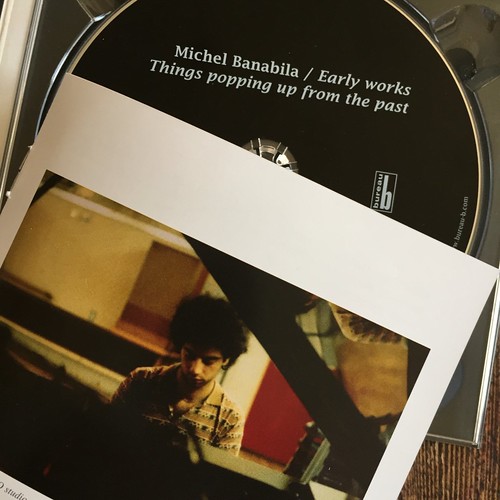
Early Works: Things Popping Up From The Past

The wonderful German Bureau B label released in June 2016 a selection compiled by label boss Gunther Buskies from my early recordings on CD and vinyl


Michel Banabila, born 1961, is a sound artist, composer, and producer.
Banabila releases music since 1983 and has produced musical scores for numerous films, documentaries, theatre plays and choreographies.
This album collects 11 songs from his early years, released on tape, vinyl EPs or limited CD editions: beautiful minimal loop-based electronica, neo-classical pieces and ambient drone music.
A true discovery! (Bureau B)


Early Works: Things Popping Up From The Past (2016 reissue) liner notes:

Numerous threads run through the music of Michel Banabila, whose contemporary work ranges from adventurous electronic cross-breeding of chamber instrumentation, to industrial rhythmic sampling, to outward-bound modular synthesis, to deeply elegiac drones.

What is remarkable about this collection of early pieces is just how many of Banabila’s ongoing fascinations had already taken root, when he was barely half his current age. The child apparently is not merely the father to the man; he is also his music tutor. In particular, there are extended sequences of neoclassical loveliness and dense patches of Fourth World exploration that, matters of specific equipment aside, could have been recorded yesterday. Except that they weren’t.

The classical activity heard here constitutes a romantic attachment to the Old World, filtered through a contemporary sense of proportion. Banabila’s piano, its atmospheric gestures bringing to mind the proto-minimalism of Erik Satie, echoes with a disarming simplicity. The sweetness of the tune masks his determined compositional focus on loop-like repetitions, on the ever so slight variations between pulses, on training the listener’s ear to hear inside the notes, between the notes, to be receptive to matters that are more tactile than tonal. The melody could easily be an additional hundred years old — except for fact that the refined patterning is something that likely only could have been pursued in light of the music of Michael Nyman and Philip Glass. Similarly, a solo harmonium performance circles around a song that could be a maudlin street-corner serenade in a benighted district of a nameless Eastern European city — and yet it has a self-consciousness of the instrument’s breath-like quality that marks it, however subtly, as modern music.

And, of course, this isn’t modern music. This is music several decades after the fact. It is no longer of our time. The equipment on which it was made, notably an early sampler, was limited in various ways, key among them the relatively circumspect set of capabilities, especially in terms of memory storage, and the lack of received performance techniques. The equipment was simple and it was new, and neither factor limited Banabila’s ambition; to the contrary, the tools concentrated his imagination.

If the classical pieces represent the Old World as framed by the new, then the more recognizably “electronic” work here is likewise most at home in a fictional place, an idealized zone. That zone is a quiet neighborhood in the Fourth World, to borrow Jon Hassell’s terminology, one in which digital tools render something that is, for all its technological dependency, ultimately a form of folk music — an otherworldly folk music for another time. At that time and in that place, a percussive guitar figure lends momentum to ethereal synthesized choral vocals. Fidgety percussion plays amid a fierce but restrained guitar line (there are echoes of Laurie Anderson and Adrian Belew). An ambiguous and elongated drone, thick with subliminal activity, beautiful in its toxic anxiety, suggests dire activity on the horizon.

And yet the horizon wasn’t dire. Quite the contrary, what was ahead for Banabila was a long string of releases, a healthy and well-documented career in which so many of these individual threads have been provided time and space to have entire records dedicated to their pursuit. This album of archival works is a document, and what it documents is the continuity inherent in Banabila’s music. It is a map in musical form, and the path it traces is one that crisscrosses back and forth between the Old World and the Next.

Marc Weidenbaum / Disquiet
San Francisco, California
February 2016.


Reviews:

THE RECOUP:
Michel Banabila is a prolific Dutch experimental composer, specializing in minimalist electronica. He’s quite prolific, too; on Discogs, he has fifty-two albums to his credit, and that’s just to his name, not including his side projects. His work has a unifying sound: the beauty of ambient music, as performed by modern technology. Bureau B’s new compilation Early Works does an admirable job of introducing Banabila to the listener unfamiliar with his work. For the most part, the compilation goes straight for the gentle, delicate work. It’s hard not to drift off into a netherworld of pleasantness when listening to “October” and “The Call.” Harold Budd is recalled on “Piano 1” and “Piano 2,” as well as on the gorgeous “Harmonium Improv 1” and “Harmonium Improv 2,” which tempers the delicateness of piano with a hushed, cooling drone that never imposes any heaviness on the listener. Not that he can’t do drone well; “The Lost Drone Tapes” show that he’s a master of that style, too; the sounds and atmosphere is heavy, but it’s never short of beauty. Banabila has released a lot of music over the course of three decades; one can find his work scattered throughout the internet, via Spotify, Youtube, and other sources. But Early Works offers an excellent look at the man’s early years, where it’s obvious that Banabila realized quite early that he is a gifted, talented composer. This music serves as a perfect escape from the heat of an oppressive Summer sun. (Joseph Kyle)

OEDIPE PURPLE:
Alors que son album Marilli figure en bonne place dans notre wishlist, le label Bureau B a eu la bonne idée de ressortir du placard les splendides harmonies de Michel Banabila. Une invitation à la rêverie qu’on ne peut refuser, à l’instar du premier morceau October… On repeat.


NOWAMUZYKA:
Niemiecka wytwórnia Bureau B opublikowała płytę z bardzo rzadkimi utworami Michela Banabily, które powstały na początku jego kariery. Nie tak dawno recenzowałem podwójny album „Tapu sampler” holenderskiego muzyka, kompozytora i producenta, będący zbiorem jego nagrań z lat 2007-2015. Można potraktować ten materiał jako szybki sprawdzian z tego, co w ostatnich latach prezentował Banabila. W przypadku longplaya „Early Works / Things popping up from the past” cofamy się w czasie jeszcze dalej gdzieś w okolice lat 80., ponieważ z tego okresu pochodzą kompozycje. Przypomnę, że artysta aktywnie działa od 1983 roku. Na „Early Works…” znajdziemy jedenaście różnych utworów nie tylko pod względem brzmienia czy użytych instrumentów, ale przede wszystkim pokazujących szeroki wachlarz możliwości tego utalentowanego kompozytora. W takich fragmentach jak „Harmonium improv #1/improv #2” i „Piano No. #1/#2” można doszukać się – jak trafnie zauważył Marc Weidenbaum w swoim tekście – inspiracji twórczością Michaela Nymana oraz Philipa Glassa. Ale na tym krążku są też takie nagrania, które mogłyby być zarejestrowane dosłownie wczoraj, choćby dwa ambientowe „Des Traces Retrouvées I, No. #4”, „The Lost Drones Tape No. #2” i bardziej eksperymentalne „The Workers”. W lekko etnicznym „A Sharp Silver Line” z kolei mamy solówkę gitarową Banabily bliższą stylowi Adriana Belewa z King Crimson. Niesamowite jest to – jak już wspomniałem – że większość utworów z tego zestawu nie kojarzy się z kiczem lat 80., nawet nie ma przepychu jeśli chodzi o syntezatory, a jak już są to raczej w aranżacjach z pogranicza minimalizmu i muzyki klasycznej. Mimo dużej rozpiętości stylistycznej, „Early Works/Things popping up from the past” słucha się jako całości. (Łukasz Komła)


NORMAN RECORDS staff review:
This a collection of early works by Banabila, he has previously done all sorts in his career including theatre. But don’t let that put you off as this collection has some moments that you’ll want to spend time visiting if you are a fan of Michael Nyman or Philip Glass. The opening ‘October’ could in fact come from any number of Woo LPs. Elsewhere we get off kilter piano compositions (‘Piano no 2’), Eno/Fripp-like instrumental scapes with wobbly guitar solos (‘A Sharper Silver Line’) and all manner of variations of oddball drones. Some of it’s disconcertingly angular and some is truly mesmeric, ‘The Call’ in particular runs Eno’s ‘Another Green World’ fairly close in faded 70s nostalgia synth. A delightful collection, your ears will thank you for it. 8/10 (Clinton)

UNDERBELLY:
Need I still explain Michel Banabila? After his recent period of increased productivity, the “Retro-Market” has found him, too. After all, he started releasing records in 1983, so the time is here. This album collects 11 songs from his early years, released on tape, vinyl EPs or limited CD editions. There’s a great variety – besides the kind of electronic loop-based world-ambient that made him so well-known – like two improvisation pieces on harmonium, found back in his enormous collection of tape recordings, never published before, some minimalist Satie-esque piano pieces, and more abstract, textured drones. The overall feel is that of intimacy, withdrawal and sweet melancholy. (Mariette Groot)


VITAL WEEKLY 1037:
'To hear his first album 'Marilli', go to Michel's bandcamp page and listen to an extensive remix version of it, and you can hear the various traces of the original, but reworked, by Banabila and his many friends; it's a highly recommended remix project'. 'For a real glimpse of old days, Bureau B just released this eleven song release, with four previously unreleased pieces, and pieces from 'Des Traces Retrouvees I' and 'Des Traces Retrouvees III' and 'The Lost Drones Tapes'. These pieces no longer work using ethnic voices (as was apparent on 'Marilli'), but purely dwell on Banabila's own playing of the Roland S10 sampler, piano, found objects and harmonium. Banabila's music these days may take many forms, from modular synth to electro-acoustics to ambient, in these old days it was all about moods and textures'. 'The music is dreamy and meditative but never borders on the tired clichés of new age; it sounds naive but after some thirty years it is also surprisingly fresh. It's minimal music and it always remains very playful, never very strict'. 'These eleven pieces are a highly varied bunch but it makes great sense putting these together. Not just because it shows the many sides of Michel Banabila (even back then!), but also because it makes such a great listen. Always atmospheric but with delicate touches on offer, this is a great CD. (FdW)

GONZO CIRCUS 134:
Sinds 1983 overstelpt de Nederlander de mensheid met releases, die meestal behoorlijk interessant zijn. Voor deze collectie ‘vroeg werk’ dook Bureau B de archieven in en komt naar boven met nummers uit ‘Des Traces Retrouvees I’ (1984), ‘Des Traces Retrouvees III’ (1987) en ‘The Lost Drones Tape (1988). Cassettes en een mini-album die al jaren onvindbaar zijn en hier worden aangevuld met vier onuitgegeven nummers die verder bouwen op wat de ooit verschenen stukken al lieten horen. En dat is een Banabila die ondanks de beperkingen van het materiaal in die tijd, inventief aan de slag ging. Harmonium improvisaties, stijlvolle ambient, en piano muziek die erg klassiek aandoet, wisselen elkaar af. We denken meteen aan Erik Satie, vroege Philip Glass, en Michael Nyman, mede door het filmische karakter van de meeste nummers. Banabila zit er dan ook niet om verlegen muziek te componeren die in allerlei disciplines kan worden gebruikt. ‘Early Works / Things Popping Up From The Past’ is een mooie aanvulling op het fysiek beschikbare werk van veelzijdig artiest Banabila (PB)

Untitled POLYPHONIA:
Holenderski muzyk Michel Banabila nie daje nam odpocząć! Płyty z jego najnowszymi nagraniami ukazują się bardzo często. Okazuje się jednak, że również w przeszłości Michel miał wiele do powiedzenia na polu muzyki elektronicznej i nie tylko! Krążek „Early Works / Things Popping Up From The Past„, ukazał się na płycie CD, ale także na płycie winylowej nakładem wytwórni Bureau B, która to wytwórnia specjalizuje się właśnie w wydawaniu wczesnych prac muzyków, którzy utrwalili swoje miejsce na niezależnej scenie muzycznej. Tak, aby mieć to już za sobą, napiszę od razu o tym, co wg mnie jest mankamentem tego wydawnictwa – jedenaście utworów nie stanowi bardzo spójnego przekazu muzycznego, a to dlatego, że każdy z nich jest trochę „z innej bajki” i trochę z innego okresu twórczości – część z lat 80tych, a inne są aż o dekadę młodsze! Jednocześnie ten mankament może stanowić też o sile przekazu tego wydawnictwa! Jeśli nie poszukujemy albumu koncepcyjnego, opartego na podobnych brzmieniach, czy pomysłach realizacyjnych, to „Early Works…” stanowi świetną okazję do tego, by zapoznać się z zupełnie różnymi podgatunkami muzycznymi – od eksperymentów brzmieniowych, przez ambient czy drone, aż po krótkie szkice zagrane na pianinie. Mimo tego, że utwory powstały w latach 80tych i 90tych, nie słychać w nich żadnych inspiracji modnymi w tamtych czasach gatunkami muzycznymi. Banabila wypracował bardzo unikatowy styl, który przenosi na coraz to nowy poziom w kolejnych swoich współczesnych wydawnictwach, a przy okazji „Early Works…” słuchacz dowiaduje się, że już w początkach swojej kariery (którą datuje się na rok 1983), artysta poszukiwał nietuzinkowych środków wyrazu artystycznego. Ciekawe kompozycje to prace oparte na pętlach: „October (Des Traces Retrouvées III)”, „A Sharp Silver Line (Des Traces Retrouvées III)” gdzie można dostrzec podobieństwo do nagrań King Crimson i stylu Andriana Belewa. Moimi osobistymi faworytami są utwory, w których Banabila korzysta z pianina: w „Harmonium improv #1/improv #2” i „Piano No. #1/#2” można dostrzec inspiracje pracami Philipa Glassa – jednocześnie uważny słuchacz odnajdzie w nich tak popularny dzisiaj styl rozwijany przez Nilsa Frahma. Świetne są też momenty dronowe – „The Lost Drones Tape No. #3 (The Lost Drones Tape)” i ambientowe „The Lost Drones Tape No. #2 (The Lost Drones Tape)”. Jak zwykle Michel Banabila nie pozostawia słuchacza obojętnym na swoje dokonania na polu muzycznym. Wszystko wskazuje na to, że po zapoznaniu się z tak ciekawymi początkami kariery Holendra, możemy spokojnie otworzyć umysł, by zagłębić się w jego współczesne dokonania. (Grzegorz Bojanek)


Untitled


Released June 3, 2016.

Michel Banabila:
Roland S10 sampler, piano, found objects, harmonium.

Track 1: ovation guitar by Piet Legerstee.
Track 2: drone by Peter Riebeek.
Track 2: recorded by Peter Riebeek.
Track 1, 5, 6, 9: recorded by Jurgen Brouwer.
Track 3, 4, 7, 8, 10, 11: recorded by Michel Banabila.
Track 2: with kind permission by Trichord Records.
2016 ℗ + © all tracks published by Tapete Songs.
Liner notes booklet & inlay by Marc Weidenbaum.
Audio edits for this compilation: Radboud Mens.
Track 1 - 11: composed by Michel Banabila.
Photography by Marielle Uiterwijk Winkel.
Artwork design by Kerstin Holzwarth.
Compiled by Gunther Buskies.
Mastering by Jonas Förster.

BUREAU B
TAPETE RECORDS

Cat No BB227
CD No CD 123072
EAN CD 4015698004885
LP No LP 123071
EAN LP 4015698004892


Order at UNDERBELLY

Order at NORMAN RECORDS

Order at BOOMKAT