Showing posts with label Amsterdam. Show all posts

Monday, 10 January 2022

Echo Transformations (Knekelhuis vinyl LP compilation)


Michel Banabila ‘Echo Transformations’ Album Out 13th of December 2021.

Listen to 'Echo Transformations' album:
Soundcloud: https://bit.ly/3k3U1Kv
Pre-order vinyl/digital: https://bit.ly/3ENgYtj
Rush Hour Distribution: https://bit.ly/3qawJGr

Find us here:
https://www.instagram.com/michel_banabila
http://www.instagram.com/knekelhuis_/

Mastering & remastering by Wouter Brandenburg
All tracks composed & performed by Michel Banabila
Executive produced by Mark van de Maat
Artwork by Keziah Philipps
Design by Steele Bonus
© 2021 Knekelhuis, under exclusive licence to Knekelhuis Records.


Michel Banabila is an indispensable part of the Dutch experimental music scene, where he has acquired a special place with many, in the 40 years that he has been releasing music. Michel is also just as active as a composer for the theater and ballet world, as well as for TV productions, to considerable fame. The threat of drowning in the sea of his oeuvre is real in view of the unprecedented amount of output, but once sailing unmissable monolithic rock formations loom up rapidly. Echo Transformations' is one of them. It's a magical album, where everything falls into place in a rich domain inspired by the Fourth World dimension. A world of sound arises from our imagination, stimulating the senses. A concept album where every sigh has its place and where no superfluous tone can be heard. What remains is to embrace the inevitable surrender that accompanies unstoppable change. This is Banabila at his best (knekelhuis, 2021)


Tuesday, 23 April 2019

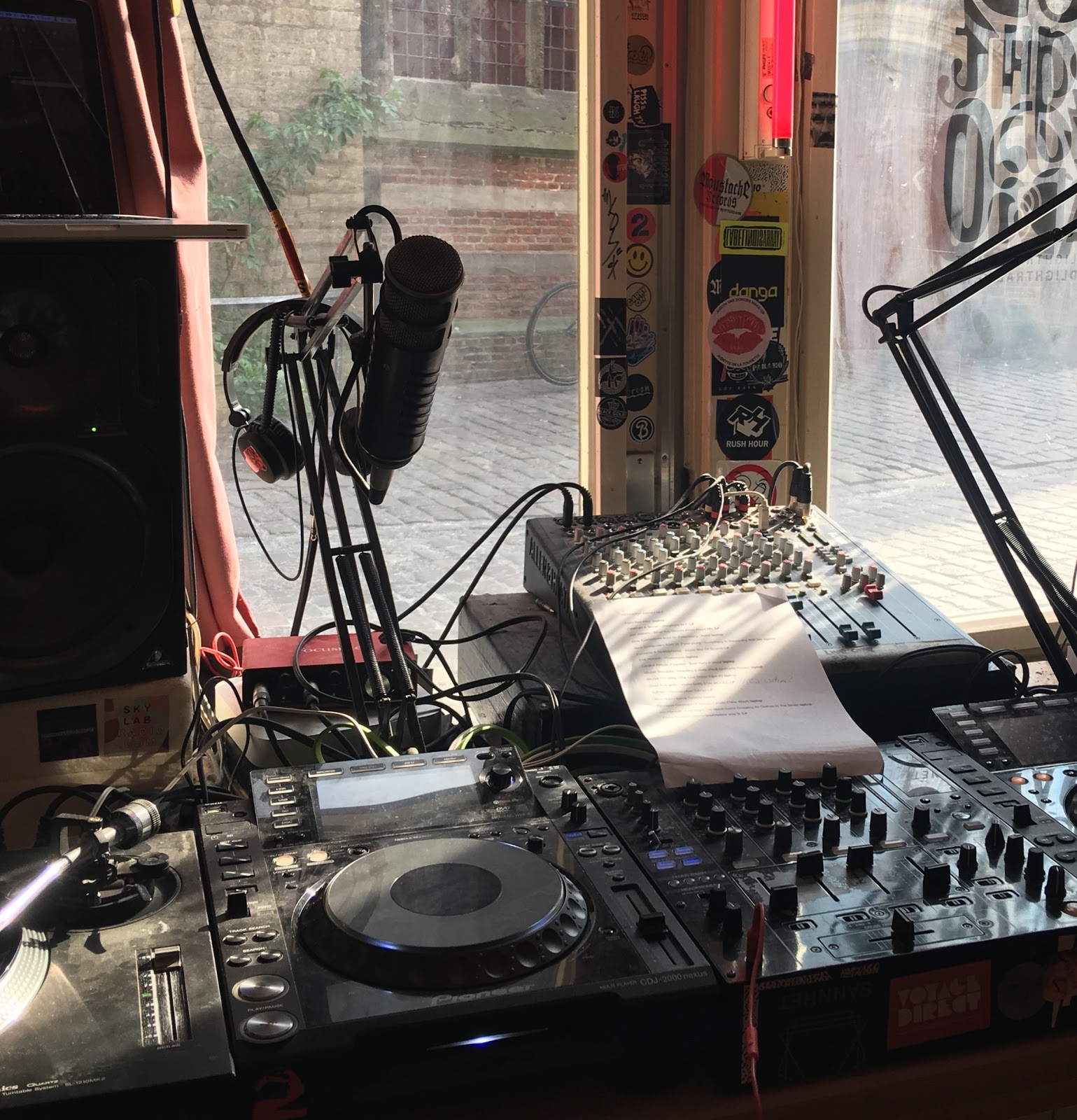
Mix for RedLight Radio

SET LIST 04-18-2019 RedLight Radio

1. Field Rec intro
2. Feldman & Brown - Durations IV.1
3. Jan Jelinek - What You Should Know About Me
4. Oren Ambarchi and Martin Ng - Surfacing Edit
5. New Composers from St. Petersburg - Astra
6. New Composers from St. Petersburg - Something Is Happening With Me
7. Erik Honoré - Procession
8. Central African Pygmies - Bow-Harp & Vocal
9. Michel Banabila - Melodica & Bells (Red Light Radio Remix)
10. Michel Banabila - The Lost Drone Tape 3
11. Fennesz & Sparklehorse - Music Box Of Snakes
12. Alva Noto - Xerox Spiegel
13. Thurayya Qaddura - Fatakatu Lahziki (Time Wept) - mixed -
14. Jon Hassell - Last Night The Moon Came Dropping Its Clothes In The Street


Visit The Something Something

Monday, 7 November 2016

Final revised version Big Data Poetry at Trouw (2013)

A final and revised version of Big Data Poetry - Geert Mul & Michel Banabila live at Trouw Amsterdam (2013) was just uploaded. A 23 minutes edit from a 45 minute live show

BIG DATA POETRY Stedelijk Museum Amsterdam @ trouw Geert Mul & Michel Banabila from Geert Mul on Vimeo.


One of the first versions of this audio visual live set is currently shown at the Stedelijk Museum Schiedam, as a high resolution 3 panel video installation with wireless headphones


Saturday, 6 August 2016

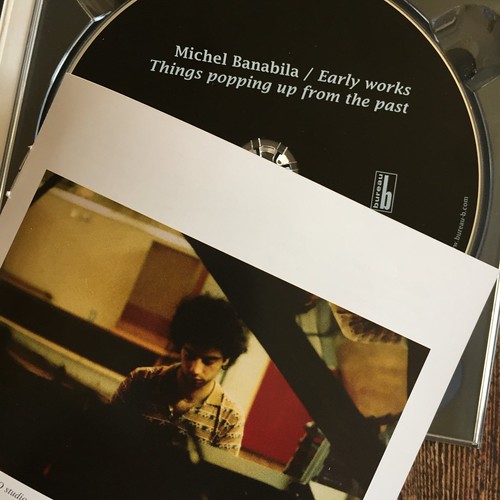
Early Works: Things Popping Up From The Past

The wonderful German Bureau B label released in June 2016 a selection compiled by label boss Gunther Buskies from my early recordings on CD and vinyl


Michel Banabila, born 1961, is a sound artist, composer, and producer.
Banabila releases music since 1983 and has produced musical scores for numerous films, documentaries, theatre plays and choreographies.
This album collects 11 songs from his early years, released on tape, vinyl EPs or limited CD editions: beautiful minimal loop-based electronica, neo-classical pieces and ambient drone music.
A true discovery! (Bureau B)


Early Works: Things Popping Up From The Past (2016 reissue) liner notes:

Numerous threads run through the music of Michel Banabila, whose contemporary work ranges from adventurous electronic cross-breeding of chamber instrumentation, to industrial rhythmic sampling, to outward-bound modular synthesis, to deeply elegiac drones.

What is remarkable about this collection of early pieces is just how many of Banabila’s ongoing fascinations had already taken root, when he was barely half his current age. The child apparently is not merely the father to the man; he is also his music tutor. In particular, there are extended sequences of neoclassical loveliness and dense patches of Fourth World exploration that, matters of specific equipment aside, could have been recorded yesterday. Except that they weren’t.

The classical activity heard here constitutes a romantic attachment to the Old World, filtered through a contemporary sense of proportion. Banabila’s piano, its atmospheric gestures bringing to mind the proto-minimalism of Erik Satie, echoes with a disarming simplicity. The sweetness of the tune masks his determined compositional focus on loop-like repetitions, on the ever so slight variations between pulses, on training the listener’s ear to hear inside the notes, between the notes, to be receptive to matters that are more tactile than tonal. The melody could easily be an additional hundred years old — except for fact that the refined patterning is something that likely only could have been pursued in light of the music of Michael Nyman and Philip Glass. Similarly, a solo harmonium performance circles around a song that could be a maudlin street-corner serenade in a benighted district of a nameless Eastern European city — and yet it has a self-consciousness of the instrument’s breath-like quality that marks it, however subtly, as modern music.

And, of course, this isn’t modern music. This is music several decades after the fact. It is no longer of our time. The equipment on which it was made, notably an early sampler, was limited in various ways, key among them the relatively circumspect set of capabilities, especially in terms of memory storage, and the lack of received performance techniques. The equipment was simple and it was new, and neither factor limited Banabila’s ambition; to the contrary, the tools concentrated his imagination.

If the classical pieces represent the Old World as framed by the new, then the more recognizably “electronic” work here is likewise most at home in a fictional place, an idealized zone. That zone is a quiet neighborhood in the Fourth World, to borrow Jon Hassell’s terminology, one in which digital tools render something that is, for all its technological dependency, ultimately a form of folk music — an otherworldly folk music for another time. At that time and in that place, a percussive guitar figure lends momentum to ethereal synthesized choral vocals. Fidgety percussion plays amid a fierce but restrained guitar line (there are echoes of Laurie Anderson and Adrian Belew). An ambiguous and elongated drone, thick with subliminal activity, beautiful in its toxic anxiety, suggests dire activity on the horizon.

And yet the horizon wasn’t dire. Quite the contrary, what was ahead for Banabila was a long string of releases, a healthy and well-documented career in which so many of these individual threads have been provided time and space to have entire records dedicated to their pursuit. This album of archival works is a document, and what it documents is the continuity inherent in Banabila’s music. It is a map in musical form, and the path it traces is one that crisscrosses back and forth between the Old World and the Next.

Marc Weidenbaum / Disquiet
San Francisco, California
February 2016.


Reviews:

THE RECOUP:
Michel Banabila is a prolific Dutch experimental composer, specializing in minimalist electronica. He’s quite prolific, too; on Discogs, he has fifty-two albums to his credit, and that’s just to his name, not including his side projects. His work has a unifying sound: the beauty of ambient music, as performed by modern technology. Bureau B’s new compilation Early Works does an admirable job of introducing Banabila to the listener unfamiliar with his work. For the most part, the compilation goes straight for the gentle, delicate work. It’s hard not to drift off into a netherworld of pleasantness when listening to “October” and “The Call.” Harold Budd is recalled on “Piano 1” and “Piano 2,” as well as on the gorgeous “Harmonium Improv 1” and “Harmonium Improv 2,” which tempers the delicateness of piano with a hushed, cooling drone that never imposes any heaviness on the listener. Not that he can’t do drone well; “The Lost Drone Tapes” show that he’s a master of that style, too; the sounds and atmosphere is heavy, but it’s never short of beauty. Banabila has released a lot of music over the course of three decades; one can find his work scattered throughout the internet, via Spotify, Youtube, and other sources. But Early Works offers an excellent look at the man’s early years, where it’s obvious that Banabila realized quite early that he is a gifted, talented composer. This music serves as a perfect escape from the heat of an oppressive Summer sun. (Joseph Kyle)

OEDIPE PURPLE:
Alors que son album Marilli figure en bonne place dans notre wishlist, le label Bureau B a eu la bonne idée de ressortir du placard les splendides harmonies de Michel Banabila. Une invitation à la rêverie qu’on ne peut refuser, à l’instar du premier morceau October… On repeat.


NOWAMUZYKA:
Niemiecka wytwórnia Bureau B opublikowała płytę z bardzo rzadkimi utworami Michela Banabily, które powstały na początku jego kariery. Nie tak dawno recenzowałem podwójny album „Tapu sampler” holenderskiego muzyka, kompozytora i producenta, będący zbiorem jego nagrań z lat 2007-2015. Można potraktować ten materiał jako szybki sprawdzian z tego, co w ostatnich latach prezentował Banabila. W przypadku longplaya „Early Works / Things popping up from the past” cofamy się w czasie jeszcze dalej gdzieś w okolice lat 80., ponieważ z tego okresu pochodzą kompozycje. Przypomnę, że artysta aktywnie działa od 1983 roku. Na „Early Works…” znajdziemy jedenaście różnych utworów nie tylko pod względem brzmienia czy użytych instrumentów, ale przede wszystkim pokazujących szeroki wachlarz możliwości tego utalentowanego kompozytora. W takich fragmentach jak „Harmonium improv #1/improv #2” i „Piano No. #1/#2” można doszukać się – jak trafnie zauważył Marc Weidenbaum w swoim tekście – inspiracji twórczością Michaela Nymana oraz Philipa Glassa. Ale na tym krążku są też takie nagrania, które mogłyby być zarejestrowane dosłownie wczoraj, choćby dwa ambientowe „Des Traces Retrouvées I, No. #4”, „The Lost Drones Tape No. #2” i bardziej eksperymentalne „The Workers”. W lekko etnicznym „A Sharp Silver Line” z kolei mamy solówkę gitarową Banabily bliższą stylowi Adriana Belewa z King Crimson. Niesamowite jest to – jak już wspomniałem – że większość utworów z tego zestawu nie kojarzy się z kiczem lat 80., nawet nie ma przepychu jeśli chodzi o syntezatory, a jak już są to raczej w aranżacjach z pogranicza minimalizmu i muzyki klasycznej. Mimo dużej rozpiętości stylistycznej, „Early Works/Things popping up from the past” słucha się jako całości. (Łukasz Komła)


NORMAN RECORDS staff review:
This a collection of early works by Banabila, he has previously done all sorts in his career including theatre. But don’t let that put you off as this collection has some moments that you’ll want to spend time visiting if you are a fan of Michael Nyman or Philip Glass. The opening ‘October’ could in fact come from any number of Woo LPs. Elsewhere we get off kilter piano compositions (‘Piano no 2’), Eno/Fripp-like instrumental scapes with wobbly guitar solos (‘A Sharper Silver Line’) and all manner of variations of oddball drones. Some of it’s disconcertingly angular and some is truly mesmeric, ‘The Call’ in particular runs Eno’s ‘Another Green World’ fairly close in faded 70s nostalgia synth. A delightful collection, your ears will thank you for it. 8/10 (Clinton)

UNDERBELLY:
Need I still explain Michel Banabila? After his recent period of increased productivity, the “Retro-Market” has found him, too. After all, he started releasing records in 1983, so the time is here. This album collects 11 songs from his early years, released on tape, vinyl EPs or limited CD editions. There’s a great variety – besides the kind of electronic loop-based world-ambient that made him so well-known – like two improvisation pieces on harmonium, found back in his enormous collection of tape recordings, never published before, some minimalist Satie-esque piano pieces, and more abstract, textured drones. The overall feel is that of intimacy, withdrawal and sweet melancholy. (Mariette Groot)


VITAL WEEKLY 1037:
'To hear his first album 'Marilli', go to Michel's bandcamp page and listen to an extensive remix version of it, and you can hear the various traces of the original, but reworked, by Banabila and his many friends; it's a highly recommended remix project'. 'For a real glimpse of old days, Bureau B just released this eleven song release, with four previously unreleased pieces, and pieces from 'Des Traces Retrouvees I' and 'Des Traces Retrouvees III' and 'The Lost Drones Tapes'. These pieces no longer work using ethnic voices (as was apparent on 'Marilli'), but purely dwell on Banabila's own playing of the Roland S10 sampler, piano, found objects and harmonium. Banabila's music these days may take many forms, from modular synth to electro-acoustics to ambient, in these old days it was all about moods and textures'. 'The music is dreamy and meditative but never borders on the tired clichés of new age; it sounds naive but after some thirty years it is also surprisingly fresh. It's minimal music and it always remains very playful, never very strict'. 'These eleven pieces are a highly varied bunch but it makes great sense putting these together. Not just because it shows the many sides of Michel Banabila (even back then!), but also because it makes such a great listen. Always atmospheric but with delicate touches on offer, this is a great CD. (FdW)

GONZO CIRCUS 134:
Sinds 1983 overstelpt de Nederlander de mensheid met releases, die meestal behoorlijk interessant zijn. Voor deze collectie ‘vroeg werk’ dook Bureau B de archieven in en komt naar boven met nummers uit ‘Des Traces Retrouvees I’ (1984), ‘Des Traces Retrouvees III’ (1987) en ‘The Lost Drones Tape (1988). Cassettes en een mini-album die al jaren onvindbaar zijn en hier worden aangevuld met vier onuitgegeven nummers die verder bouwen op wat de ooit verschenen stukken al lieten horen. En dat is een Banabila die ondanks de beperkingen van het materiaal in die tijd, inventief aan de slag ging. Harmonium improvisaties, stijlvolle ambient, en piano muziek die erg klassiek aandoet, wisselen elkaar af. We denken meteen aan Erik Satie, vroege Philip Glass, en Michael Nyman, mede door het filmische karakter van de meeste nummers. Banabila zit er dan ook niet om verlegen muziek te componeren die in allerlei disciplines kan worden gebruikt. ‘Early Works / Things Popping Up From The Past’ is een mooie aanvulling op het fysiek beschikbare werk van veelzijdig artiest Banabila (PB)

Untitled POLYPHONIA:
Holenderski muzyk Michel Banabila nie daje nam odpocząć! Płyty z jego najnowszymi nagraniami ukazują się bardzo często. Okazuje się jednak, że również w przeszłości Michel miał wiele do powiedzenia na polu muzyki elektronicznej i nie tylko! Krążek „Early Works / Things Popping Up From The Past„, ukazał się na płycie CD, ale także na płycie winylowej nakładem wytwórni Bureau B, która to wytwórnia specjalizuje się właśnie w wydawaniu wczesnych prac muzyków, którzy utrwalili swoje miejsce na niezależnej scenie muzycznej. Tak, aby mieć to już za sobą, napiszę od razu o tym, co wg mnie jest mankamentem tego wydawnictwa – jedenaście utworów nie stanowi bardzo spójnego przekazu muzycznego, a to dlatego, że każdy z nich jest trochę „z innej bajki” i trochę z innego okresu twórczości – część z lat 80tych, a inne są aż o dekadę młodsze! Jednocześnie ten mankament może stanowić też o sile przekazu tego wydawnictwa! Jeśli nie poszukujemy albumu koncepcyjnego, opartego na podobnych brzmieniach, czy pomysłach realizacyjnych, to „Early Works…” stanowi świetną okazję do tego, by zapoznać się z zupełnie różnymi podgatunkami muzycznymi – od eksperymentów brzmieniowych, przez ambient czy drone, aż po krótkie szkice zagrane na pianinie. Mimo tego, że utwory powstały w latach 80tych i 90tych, nie słychać w nich żadnych inspiracji modnymi w tamtych czasach gatunkami muzycznymi. Banabila wypracował bardzo unikatowy styl, który przenosi na coraz to nowy poziom w kolejnych swoich współczesnych wydawnictwach, a przy okazji „Early Works…” słuchacz dowiaduje się, że już w początkach swojej kariery (którą datuje się na rok 1983), artysta poszukiwał nietuzinkowych środków wyrazu artystycznego. Ciekawe kompozycje to prace oparte na pętlach: „October (Des Traces Retrouvées III)”, „A Sharp Silver Line (Des Traces Retrouvées III)” gdzie można dostrzec podobieństwo do nagrań King Crimson i stylu Andriana Belewa. Moimi osobistymi faworytami są utwory, w których Banabila korzysta z pianina: w „Harmonium improv #1/improv #2” i „Piano No. #1/#2” można dostrzec inspiracje pracami Philipa Glassa – jednocześnie uważny słuchacz odnajdzie w nich tak popularny dzisiaj styl rozwijany przez Nilsa Frahma. Świetne są też momenty dronowe – „The Lost Drones Tape No. #3 (The Lost Drones Tape)” i ambientowe „The Lost Drones Tape No. #2 (The Lost Drones Tape)”. Jak zwykle Michel Banabila nie pozostawia słuchacza obojętnym na swoje dokonania na polu muzycznym. Wszystko wskazuje na to, że po zapoznaniu się z tak ciekawymi początkami kariery Holendra, możemy spokojnie otworzyć umysł, by zagłębić się w jego współczesne dokonania. (Grzegorz Bojanek)


Untitled


Released June 3, 2016.

Michel Banabila:
Roland S10 sampler, piano, found objects, harmonium.

Track 1: ovation guitar by Piet Legerstee.
Track 2: drone by Peter Riebeek.
Track 2: recorded by Peter Riebeek.
Track 1, 5, 6, 9: recorded by Jurgen Brouwer.
Track 3, 4, 7, 8, 10, 11: recorded by Michel Banabila.
Track 2: with kind permission by Trichord Records.
2016 ℗ + © all tracks published by Tapete Songs.
Liner notes booklet & inlay by Marc Weidenbaum.
Audio edits for this compilation: Radboud Mens.
Track 1 - 11: composed by Michel Banabila.
Photography by Marielle Uiterwijk Winkel.
Artwork design by Kerstin Holzwarth.
Compiled by Gunther Buskies.
Mastering by Jonas Förster.

BUREAU B
TAPETE RECORDS

Cat No BB227
CD No CD 123072
EAN CD 4015698004885
LP No LP 123071
EAN LP 4015698004892


Order at UNDERBELLY

Order at NORMAN RECORDS

Order at BOOMKAT


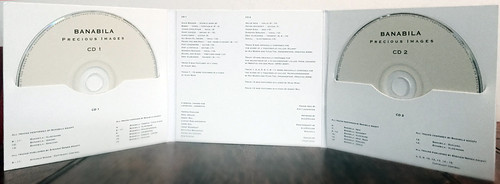
Precious Images

Untitled


A Steamin' Soundworks production. 2CD album, 32 tracks.

CD 1 = compilation.
CD 2 = new tracks.

Steamin' Songs Publishing.


SONOMU.NET : Precious Images.

Unfolding Michel Banabila´s Precious Memories is like opening up an old chest filled with old wind-up toys and brightly-wrapped candies. You want to bury both arms up to the elbow, pulling out one trinket after the other to play with, admire, or slowly savour before moving on to the next. Subtitled ”Datafiles 1999-2008”, this double omnibus includes tracks selected from all his releases on Dutch label Steamin´ Soundworks beginning in 1999. He is a man of many genres, or perhaps more correctly, he is trans-genre, for there seems to be no particular base from which he prefers to work. He just composes. And collaborates eagerly, to the listener´s delight. The first disc displays a range that is giddily eclectic and includes a few clunky little pieces that could have served as interludes on a latter-day Tom Waits record (”Wonderful Mistakes”, ”Sorokin Blues”, ”One for the Road”), a song in collaboration with Moroccoan Sufi singer Bahia El Idrissi, a hyperreal tribal dance ("Do Something About It!"), edgy electro-funk (”Heavy Gravity”) and a groovy bit of space age bachelor pad jazz showcasing Eric Vloeimans´ trumpet (”Damned”). Some of the programmed rhythms will remind you of Brian Eno´s ”Another Green World ” or ”Nerve Net”, like ”A Strong Sense of Urgency”. Central to most of the pieces is the human voice, often dozens of them threaded together to create a kind of dada poetry. What unites them all is the way Banabila tweaks and crafts them just enough to defy expectations. Take for example the slow and laidback late night jazz session ”A Virtual Meeting”, with muted trumpet, bass clarinet and fleet-fingered piano cruising prettily above quiet squonks and squeeks. A perfectly executed hybrid. Although Banabila appears to relish combining the digital with the acoustic, there are some nice, purely electronic pieces featured as well, like ”Low Pulse + High Noiz”. There is little on the first disc you could call "ambient", except perhaps the two pieces which conclude it, in particlar the beautiful ”Voiz Recycled”, with its smattering of Jon Hassell-like horn, that I would happily hear extended far beyond its eight-and-a-half minutes. Disc two contains music made for television and theatre in 2008. Banabila claims not only to be inspired by photography, video, film and theatre, but also to ”think” in terms of transforming visual impression into sound. Perhaps necessarily, most of the pieces featured here do not have the strong personalities of many of the tracks on its sister disc, since they were intended to complement a foreground. But there are moments when the music is too engrossing to merely take in passively. The sweet meanderings of ”Migrations” is an exciting musical journey that could very well represent a trip around the globe or at least reflect how the globe is setting up shop in and influencing Europe. It´s a true mongrel and all the more loveable for it. Another attention-grabber, "Ears Tell Us Where We Are in Space", showcases Dutch guitarist Anton Goudsmit and is hauntingly introspective, with a slight Jaco Pastorius patina. The album ends with a slow ambient descent beginning with ”Night”, continuing with ”Crime Scene” – hardboiled noir again featuring the sensitive, muted monochromes of Vloeimans - and the dark ”A Moody Guy´s Audible Dream” with Polish electronics wiz Zenial. As an introduction to the work of Michel Banabila it is laudable. As a retrospective over his recent career, it is something for him to be very proud of. (Stephen Fruitman).


released October 13, 2008.


Untitled


Buy at CD Baby

Hilarious Expedition


Theatre music.

Originally made for 'Eiland' , (a theatre play by Orkater) , 'Beam Me Up' (multimedia performance by Angelika Oei & R.A. Verouden), 'Mama Please Call Me' (Tegenlicht documentary by Marije Meerman), and 'Never Let Go' (short film by Claudia Hauri).

Note:
The 2 CDr digipak release from 2005 was an extended mix with 41 tracks, without pauses. The iTunes release does not have included the free downloads from the version here on bandcamp.
Crime Scene (originally on the 2CDr version) is now only available on Precious Images in a remix with Eric Vloeimans: banabila.bandcamp.com/track/crime-scene


UNDOMUNDO:
This double cd release called 'Hilarious Expedition' is pretty different from everything. This is a compilation from four theatre productions and two films, and pretty much experimental, it reminded me of Bertrand Burgalat's "Quadrille" soundtrack. It's composed of field work, pizicatto orchestra sounds, ambience, vocal snippets etc. It's really a Hilarious journey which spans over 41 songs. The pastoral orchestral song 'Bouwtekening' will give you the idea. (Mersenne-Twister).

CHAIN DLK:
Hilarious Expedition is a very worthwhile listen--there are some great tracks to cherry-pick: "Salar's Dream," on Disc 1 with its sad Gypsy violin; the freaky, computer-voiced "Speech" and "My Brain Is Electric;" and the hushed, subtle menace of "Metals" on Disc 2. Most of the music is not "hilarious" at all, but downright somber and brooding. I would only recommend a work of this scope and magnitude (nearly two and a half hour's worth) to serious soundtrack enthusiasts (Perry Bathos).

KWADRATUUR. BE:
Een gelimiteerde dubbelcd met maar liefst 41 (!) tracks; de nieuwste uitgave van de Nederlandse ambientmeester Michel Banabila is niet bescheiden. Deze release is dan ook een geheel van gecomponeerde stukken voor theater en filmproducties in 2004. Hoewel deze bijdragen bij momenten muzikaal onderbouwd zijn, betreft het hier een hutsepot van erg filmische klankcombinaties waarbij de beelden enkel door de fantasie kunnen worden aangevuld. Zoals Banabila met vorige platen al duidelijk maakte: die fantasie mag erg weelderig genoemd worden. Voor zijn beeldende producties moet Banabila een onmetelijk groot klankarchief aangelegd hebben. Vooral de eerste plaat van deze dubbelaar bestaat uit niet meer dan een samenraapsel van verhakkelde geluiden, veelal afkomstig uit andere films of de straat, die af en toe met ver dreigende, elektronische impulsen werden aangevuld. Dat maakt het allemaal niet eenvoudig om te doorluisteren. Gelukkig heeft de man in deze collectie van impressies ook regelmatig wel degelijk muzikaal onderbouwde bijdragen gestopt. Die variëren van wandelende jazzstukken ('Betegelaars') over spookachtige walzen ('Plein (1)') tot diep industriële, elektronische stukken ('Shortwave') of ritmisch opgebouwde puzzels uit geluiden van straatwerken ('Overlast'). Verder steekt Michel Banabila zijn voorliefde voor de piano ook niet onder stoelen of banken en dat geeft vaak sfeervolle, rustgevende momenten tussen de soms drukke geluidscollages. Ook die worden echter regelmatig overgoten met een veelvoud aan achtergrondklanken die van op het marktplein, uit taalcassettes, b-films of andere geluidsbronnen afkomstig zijn. Een mooie uitzondering vormt de diepe triphop van 'Bicycle Exotica' die met een kabbelend loopje en een wandelende piano een sfeervol lied vormt dat doorheen de Amsterdamse achterbuurten zou kunnen klinken. Verder verraden titels als 'Oproer!', 'Vreemd Gesprek (1-2-3)' of 'Plein (1-2-3-4)' op het eerste schijfje echter abstracte muzikale onderwerpen. Het tweede schijfje bevat gelukkig een pak meer muzikale impressies en toont Banabila van zijn prachtige ambient-en dubkant. Heerlijk relaxte en zweverige elektronische bijdragen rusten op een bedje van triphop of teren op zelf uitgevonden ritmen die uit toverland ontsnapt lijken. Ook de met Sandhya Sanjana ingezongen bijdrage 'Speech' vormt een muzikale verheerlijking van Oosterse klanken en werd door het Japanse Respect Record ook mee opgenomen in zijn Ryukyu Underground sampler. Verder neemt de akoestische gitaar vaak de plaats in van de piano als sfeermaker, wat zorgt voor een erg warm en rijk gevoel. Drukte van geluiden heeft plaatsgemaakt voor minimalisme en dat maakt het tweede plaatje een stuk aangenamer dan het eerste. Op deze dubbelaar toont Banabila twee totaal verschillende muzikale aspecten van sfeerbeelden creëren. Het eerste plaatje leent zich met een veelheid van alledaagse klanken prima tot het aanvullen van toneel, terwijl het tweede zich met zijn filmische, sfeervolle impressies meer leent tot een filmische omkadering. Dat bewijst dat deze kunstenaar veel met zijn omgevingsgeluiden bezig is en goed weet wat hij doet. Verder levert dat in dit veelvoud van muzikale creaties niet enkel erg verrassende, maar ook erg mooie resultaten op. (Johan Giglot).

VITAL WEEKLY 463:
A very mixed bag this time from the dutch ambient master Michel Banabila, which proves that he is still very capable of a surprise. Maybe the variety can be explained by the fact that this double cd brings together work Banabila composed for six different occasions: four theatre productions and two films. But also Banabila seems to be in the mood for experiment. Not that he leaves the ambient-path, but he is trying hard to expand the universum of his approach of ambient music. Thirdly for the projects included here, Banabila worked with a even greater variety of musicians. Jazz and impro musicians from the Rotterdam scene as well as some more well known musicians like Ernst Reijeseger and Eric Vloeimans. Other musicians have a background in pop. His old mate Yasar Saka with whom he made two ethnic flavoured ambient cds in the past is also involved. All these aspects help to constitute the wide spectrum of Banabila's music. That Banabila is open for jazz influencens we already know since his third "Voiznoiz" album where he cooperated with trumpetter Eric Vloeimans. The critics let us know that this was a very succesfull collaboration. Maybe it's because of this succes that Banabila continues here to work with jazz and impro musicians. Again with Eric Vloeimans but also with more unorthodox musicians from the Rotterdam impro-scene. In melting together ambient and jazz his music is sometimes comparable to that of M.F.Cote. He is not afraid for extremes. He even combines ambient music with completely free improvised parts that are of a totally different order. For example, in a track like "Plein (1)" we hear a Rota-like filmtune, but the free improvised interludes give it a special twist. Of course we hear on this double the trip hop - with or without ethnic touch - as we know from earlier recordings. But other pieces offer a different meal: assemblages of fieldrecordings, often with the human voice in the center. "Mobiles" is a very funny piece based around the sounds of mobiles. The musical form perfectly illustrates our hasty and never ending culture of communication. "Phonema (2)" is a curious attempt of dadaistic soundpoetry, something one does not expect from Banabila. "Bouwtekening" ends with an orchestral climax that is never heard before in the work of Banabila. "Crime scene" starts with a long percussive intro that brings Organum to my mind. In "Salar's Dream" the violinplaying of Salar Asid from Iraq introduces some explicit Eastern influences. "Bottle Groove" is a very bluesy piece, etc., etc. The crosscultural "Hilarious Expedition" proves once more that Banabila is able to integrate great many influences and ideas in his concept of ambient music with great subtlety and souplesse. Through his multifaced talent he is able to introduce new challenges within the realms of comfort. (DM)


CALEIDOSCOOP:
'De eerste cd, waarop de muziek voor de theaterproducties, bevat als je het totaal in ogenschouw neemt een soort musique concrète met een Franse, nachtelijke atmosfeer. Op kleiner niveau bekeken is het in feite een continue afwisseling van stijlen, uiteenlopend van ambient, theatermuziek, industrial, plunderphonics en uiteraard wereldmuziek. Het doet soms denken aan Zelwer en zou zo in de prestigieuze Made To Measure -serie van het Crammed label passen. Prachtige muziek, die misschien nog het meest aansluit bij zijn Voiznoiz-serie. De tweede cd, waarop de muziek voor de films, doet meteen meer industrieel en elektronisch aan. Ook hier duikt zo nu en dan de wereldmuziek weer op en tevens vele andere stijlen. Maar het is abstracter en experimenteler en het doet meer aan zijn twee Spherics CDs denken. Het bevat soms ook grillige elementen die aan een band als The Residents herinneren. Toch ademt ook deze CD sfeer uit en wel een mysterieuze. Hierdoor klinkt het geheel consistent terwijl de muziek fijn gevarieerd is. Het is een expeditie die de hele wereld overgaat en middels vele soorten muziek beschreven wordt. Met niets en niemand te vergelijken. Een uniek klankenpalet, dat ook nog eens lekker is om naar te luisteren. Banabila levert een meesterwerk af !' (Jan Willem Broek)


PLATOMANIA:
Opmerkelijke release van een opmerkelijk muzikant. Met een opmerkelijk oeuvre: in de vele jaren dat hij al meedraait maakte hij zowel ambient-, jazz-, dance- als wereldmuziek. Niet echt in een hokje te vangen dus. Wie denkt Banabila te kennen zal toch waarschijnlijk behoorlijk verrast zijn bij de eerste beluistering van Hilarious Expedition: een bont allegaar van theater- en filmmuziek (o.a. voor de Orkater produktie 'Eiland') waarin het gehele kaleidoskopische verleden lijkt samen te komen. Ik moest er in ieder geval even goed voor gaan zitten. Na de eerste luisterbeurt maakte verbazing en verrassing plaats voor bewondering. Twee CDs (41 tracks!) vol schetsen, soundscapes, experimenten en subtiele melodieën waarbij je van de ene verbazing in de andere valt ! Het is bijna onmogelijk om referenties voor deze muziek te benoemen, maar als het echt moet ; zoek het dan ergens tussen Hector Zazou en een instrumentale Spinvis. Of zoiets. (Peter van Cooten, maart 2005)

Released February 10, 2005.

All tracks recorded, composed and produced by Banabila. (2005) TRBOP 01
(This was the first Tapu Records release.)


Eiland from Michel Banabila on Vimeo.


Cards On The Table


'Cards On The Table' was a Staalplaat release in 2000 by Michel Banabila, Hannes Vennik & Bobby.

"Cards On The Table" is not a traditional music release. The material was brought in by three players at their numerous meetings. It involves no instruments, but everybody brought sound material on tape, which was collated and collaged on harddisc. By using a deck of playing cards, various combinations and mixes were proposed. To enhance the idea of shuffling a deck of cards, the CD was presented as a"shuffle" mode CD. Everytime you play this a new total composition arises. During talks the three discussed the atmosphere, rather then rhythms, chords or melodies. In just under 19 minutes you get 28 tracks which quickly change atmospheres, locations. Rhythms come and go, resulting in a frentic collage. Edited with great care with lots of surprises. This CD was a 5" CD with 3" playing. The print is all on the jewel case (like Staalplaat's Material Series) and also comes with a Mexican table cloth and of course a playing card.

STAALPLAAT

2000 © steamin' songs publishing amsterdam.

Released April 1, 2000.

Discogs

Composed by Michel Banabila, Hannes Vennik & Robin Schaeverbeke.

Artwork design Geert-Jan Hobijn

Des Traces Retrouvées

Part 1 (45 RPM vinyl)


www.discogs.com/Michel-Banabila-Des-Traces-Retrouvees/release/850396

Track 4 is available on CD & vinyl LP, fully remastered, via Bureau B / Tapete Records (June 2016):
'EARLY WORKS - THINGS POPPING UP FROM THE PAST'

released October 19, 1984

Performed & written by Michel Banabila
Bass (V) by Peter van Straten
Guitar (V) Otto Janszen
Cover by Biquénôssà, Boudewijn van der Wagt
Photography by Mathieu Benistant
Recorded & mixed by Peter Riebeek

TRICHORD / MB191084
---------------------------------------------

Part 2 (45 RPM vinyl)


www.discogs.com/Michel-Banabila-Des-Traces-Retrouvees-2/release/1734791

released May 30, 1985

Denise Anken: vocal (I)
Michel Banabila: found objects, tape treatments, pianola, bottlesounds, percussion (I & II)
I, II, III & VI recorded at Studio 150 Amsterdam.
IV & V recorded at Peter Hoeks studio.
Photography by Matthieu Benistant.
Trichord Records / MB300585

---------------------------------------------

Part 3 (cassette)


www.discogs.com/Michel-Banabila-Des-Traces-Retrouvees-3/release/2658866

released December 1, 1987

Track 2 (October), track 6 (The Call) and track 9 (The Workers) are available via Bureau B / Tapete Records, June 2016, on vinyl and CD, fully remastered : 'Early Works - Things popping up from the past' soundcloud.com/bureau-1/bb227-michel-banabila-early-works

All tracks composed by Michel Banabila.
1, 3, 4, 5 © Steamin' Songs publishing.
2, 6, 9 © Tapete Songs publishing.


Bass – Pien Selliger (track: 14)
Design [Inlaycard design] – Jurgen Brouwer
Engineer – Jurgen Brouwer (tracks: 1- 9, 11-14), Peter Hoeks (tracks: 10)
Flute – Koos Derwort (track: 13)
Ovation guitar – Piet Legerstee (track: 2)
Mastered by [digital mastering At The Mix-lab] – Jurgen Brouwer
Percussion – Michel Banabila (tracks: 11 + 14)
Photography – Matthieu Benistant
Producer – Banabila, Brouwer.
Sampler [S10-sampler] – Michel Banabila
Sounds [soundprogressing] – Gerard van Wolferen (track: 8), Kees Went (track: 8)
Synthesizer [synthesizerprogramming] – Willem Cramer (tracks: 5 ,8, 13)
Voice – Michel Banabila (track: 1)
Woodwind [sipsi] – Michel Banabila (track: 10)

Oscar Smit / OOR

The Transformation of a 1983 LP

Marilli vinyl LP (1983)


Remixed (2015)


Disquiet Junto (2015)


Marilli was the first full-length album that I self-released as a 33 1/3 rpm vinyl LP. It dates back to the very first time I began to experiment in a studio.

I was like a kid entering a toy shop, totally excited and, of course, I got hooked forever. Anyway, Marilli consists of quite simplistic and somewhat hilarious recordings. It was recorded on 8-track tape in three studios across Amsterdam: Hero Wouters, WHG and SPN.

The sounds include balafon, kalimba, a Korg MS-20, voices, bird calls, tape, keyboards, percussion, and a Mexican turtle flute, plus contributions from musician friends on bass, cello, drums, steelpan and guitar.

There was no sampler used, but I "borrowed" some voices from other records.

Marilli was reissued by Seance Centre in 2017: www.seance-centre.com/shop/michel-banabila-trespassing

These are remixes made in 2015.
Much thanks to the participants for their creative reworks.
I also like to thank all the wonderful musicians who contributed to the original album, and whose sounds are now re-emerging here in a totally new way:

Lesley Joseph - steelpan

Piet Lichtveld - guitar

Cecil Wespel - bass

Willem Melker - drums & guitar

Paul Newsum (R.I.P.) - guitar & percussion

Niek Stafleu - cello

Martijn Veldhoen - percussion

Atti Bauw - guitar

Untitled

Original info on Marilli on discogs: www.discogs.com/Michel-Banabila-Marilli/release/2057842

A special thanks to Eduard Vingerhoets and Richard Johnson.


Reviews / quotes:

AMBIENTBLOG:
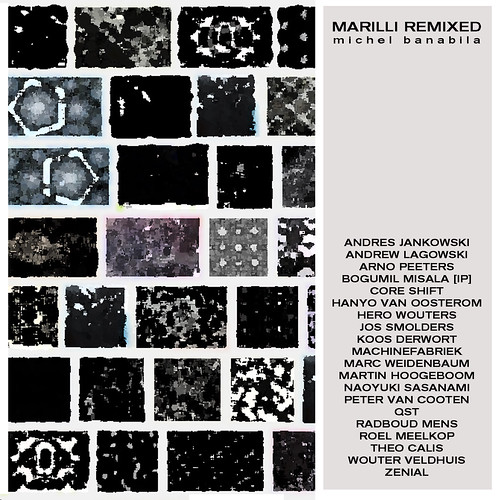
I still clearly remember hearing an unknown artist performing on a sunday afternoon radio program in 1984 (‘Spleen, VPRO). I learned that Michel Banabila had self-released his debut album called Marilli – which I immediately bought from the only record shop in Amsterdam that stocked it. That was the beginning of a long and adventurous fan-relationship: I have been following Banabila’s music for over 30 years now! The music he currently creates is very different from what he created back then: Banabila considers his debut as a ‘quite simplistic and somewhat hilarious recording […] Quite embarrassing, really […] The overall effect is extremely naive, the sounds were nice and organic, but my “composing” process was not’. While this may be true from the viewpoint of the artist that has grown and looks back on his early work, the original album still has the same feeling for me… it presented new sounds, a new freedom, a new ‘world fusion’ music (remember: this was relatively short after the release of Eno/Byrne‘s ‘My Life In The Bush Of Ghosts’). (Marilli also marked the start of a new collective called Chi which did some remarkable multimedia ‘fourth world ambient’ performances.) “You can’t change the past”, Banabila concludes and he decided that there will be no re-release of the original Marilli. But things took a different turn when 2015 saw renewed interest in the debut album. Former Chi-members Hanyo van Oosterom and Koos Derwort made a remix of the first album track and that became was the launch of a new project named Marilli Remixed: 23 remixes of the original analog recording by artists from all over the world (including Michel Banabila himself). ‘I asked them (the remixers) to skip the voices in their remixes, and to only use sounds from the record itself. (They) Came up with these really amazing works to transform the album into a more minimalist 2015 version. It has become a remarkable collection, especially for those that still can remember the original album, of course. But that’s not necessary – those that dón’t know the original will find pleasure in the 2015 remixes too. No matter Banabila himself may think of his original work, it clearly was worth remixing: the respect for the original material is felt in all details. (Peter van Cooten)

Untitled

GONZO CIRCUS #132:
We zeiden het al, Michel Banabila is een veelzijdig musicus. Dat is hij in zijn solowerk, dat is hij misschien nog wel meer in zijn samenwerkingen met anderen. Dat laat hij horen op ‘Tapu Sampler 2016’ en op ‘Marilli Remixed’. ‘Marilli’ was zijn eerste album, een lp die hij in 1983 uitbracht. Die lp, ondermeer geïnspireerd op het baanbrekende ‘My Life In The Bush Of Ghosts’ van Brian Eno en David Byrne, is niet meer te verkrijgen. Banabila wil dat graag zo houden, ook toen een label hem vroeg of ze een heruitgave mochten verzorgen: de muziek was te zeer gemaakt met een benadering waar hij niet op terug wil komen. Maar het materiaal aan anderen toevertrouwen om er remixes van te maken is natuurlijk een heel andere zaak. Onder de genodigden kom je namen tegen als Jos Smolders, Radboud Mens, Roel Meelkop, Frans de Waard en Machinefabriek - niet de minsten. Ook Banabila zelf nam zijn oude werk geducht onder handen: hij verknoopte zes nummers van de lp. Het resultaat is een droomversie van muziek die op zich al gebaseerd was op een gedroomde werkelijkheid, waarin culturen versmelten zonder een spoor van wrijving en conflict.(RvP)


Hefty Dutch raer inkoop, Michel Banabila - Marilli !

A photo posted by RedlightRecords Amsterdam (@redlightrecordsamsterdam) on


REMIXERS:

Andres Jankowski [1605munro)
1605munro.com

Andrew Lagowski
lagowski.com

Arno Peeters
tapetv.nl

Bogumil Misala [IP]
soundcloud.com/ip-identity-problem

Core Shift [Mike Kramer]
soundcloud.com/coreshifter

Hanyo van Oosterom
numoonlabrecordings.bandcamp.com

Hero Wouters
herowouters.nl

Jos Smolders
earlabs.org

Koos Derwort
bam-boo.bandcamp.com

Machinefabriek
machinefabriek.nu

Marc Weidenbaum
disquiet.com

Martin Hoogeboom
soundcloud.com/martin-hoogeboom

Naoyuki Sasanami [Naotko]
soundcloud.com/naotko

Peter van Cooten
ambientblog.net

QST [Frans de Waard]
fransdewaard.com

Radboud Mens
radboudmens.bandcamp.com

Roel Meelkop
r0m.nl

Theo Calis
discogs.com/artist/1266654-Theo-Calis

Wouter Veldhuis
organic-industries.bandcamp.com

Lukasz Szalankiewicz [Zenial]
zenial.pl

Compiled by Michel Banabila.
banabila.com

2015 ℗ Tapu records / 013TR

Photos from remixers: equipment / workspace & screenshots arrange windows:

The Transformation of a 1983 LP

Untitled

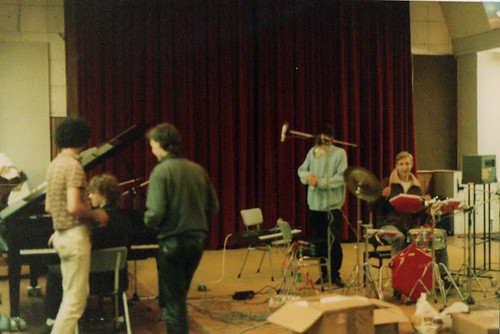
Marilli, Amsterdam 1983


Resident Advisor: www.residentadvisor.net/feature.aspx?2530.