1. Amazonas - Naná Vasconcelos
2. Roulette - Lolina
3. /End - Terrapin
4. Armenian Song - Gurdjieff
5. From Here - Molly Berg & Stephen Vitiello
6. Got Away - Sussan Deyhim & Richard Horowitz
7. Yalli Hawak - Asmahan
8. Anthem Of The Trinity - Terry Riley
9. Song Of The Highwire Shrimper - Tim Hecker
10. Urub - Masayoshi Fujita & Jan Jelinek
11. Chapter M (Karenina) - Thomas Fehlmann
12. So Ney - Cluster
13. Swisid Mekanize Reijman - HHY & The Macumbas
An extended noisy remix from Danube (Imprints 2018) for the new film by Nan Wang: 'Pareidolia', on IFFR 2019 (Bright Future selection)
In Pareidolia, analog abstract patterns made on 16mm film are used as source material for finding similar figurative images, interpreted by an online search engine. Hundreds of these matching images were edited into abstract film clips, resulting in an exciting visual and psychological cinematic experience.
This film was made mining the Thomas Jefferson's Grid in Google Earth.
By superimposing a rectangular grid on the earth surface, a grid built from exact square miles, the spherical deviations have to be fixed. After all, the grid has only two dimensions.
The north-south bounderies in the grid are on the lines of longitude, which converge to the north. The roads that follow these bounderies must dogleg every twenty-four miles to counter the diminishing distances: Grid Corrections
Read more on Grid Corrections at the wonderful BLDGBLOG
KINDAMUZIK:
Drie namen voor een beestje waarin drie gezichten te horen zijn; feedback - check!, modulaire synthesizer - check!, radiogolven - check! Heb je nog helemaal niks aan als je geen idee hebt wat het is, wat je ermee moet en hoe je er een beluisterbaar album of twee van moet maken. Enter: Michel Banabila; jarenlange ervaring in de achterzak, experiment hoog in het vaandel en dan vooral: nieuwsgierigheid naar waar de apparatuur hem voor verrassingen plaatst. Op deze twee albums jakkert Banabila dartel over knopjes; hij lijkt druk in de weer met podmeters en patchkabels. Een antenne plukt fragmenten statische ruis en stukjes uitzending uit de ether. Her en der knarst iets. Een pruttelende golftoon komt op; feedback dreigt nadrukkelijk platwalsend een mengpaneel zonder inputs over te nemen. Gaat daar nu de deurbel? Of is het toch een op hol geslagen brokje elektronica ergens in de keten? Banabila weet verdraaid goed wat hij kan doen, maar laat ook los. Hij weet speels vrijheid te behouden en daardoor ademen de platen een letterlijk experimenteel musique concrète-achtig aura. Verknipt en elektroakoestisch, maar ook vloeiend en verhalend; geïmproviseerd, maar ook met een hand aan de trapleuning van de rode draad. Naar beneden stuiken is er dan ook niet bij. Machinerie komt tot leven en blijkt ook gewoon een speelgoeddoos. De spullen moeten bijeen gebracht worden als op een assemblageband; tegelijk ben je wel eens wat kwijt, verkeerd neergelegd, file kwijt of corrupt, bandje terugspoelen. Drievlakselektronica kan een steriele bedoening worden waarin kille processen zich achter glimmende frontjes afspelen, met daartussen een bult spaghetti aan kabels. Ongetwijfeld zal het in Banabila's studio zo'n zooitje geweest zijn aan apparaten. Zijn absolute meerwaarde bestaat eruit dat hij de machines tot een warmbloedigheid wekt; modulaire processen en golven uit de lucht in interfererende botsingen brengt, luistert en die feedback weer kunstig inzet. En dan kom je ergens in de hoek van 8 bit-achtige gekte, Asmus Tietchens, Felix Kubin en ook de grootmeesters van de GRM, zoals Guy Reibel, uit. Nederconcreet; een nieuw genre ? (Sven Schlijper)
Michel Banabila:
feedback, A-100 modular, monotron, webSDR, fieldrecording, tape.
Radboud Mens:
sinewaves, clicks and bass (3)
Edited and recorded in Logic Pro.
1,2,4,5,6 composed by Michel Banabila.
3 composed by Michel Banabila & Radboud Mens.
AMBIENTBLOG
FMR3 is the third and final (?) release in Michel Banabila‘s series of experiments in combining the three sound sources from the title.
It opens in quite a radical way with a loud synthetic gong that immediately draws full attention, followed by a minimal machinelike noise – an industrial meditation.
Modular synths are very fashionable, but too often the musical results only interesting for the nerdy buttonfreaks using them – there’s too much of ‘what does thís button do??’. But not in Banabila‘s hands.
By using clever combinations of different sources, and by careful manipulation, his compositions – even the most minimal ones – get a fascinating cinematic tension.
In Banabila‘s diversely branched discography, the FMR series is connected to his electronic works (like The Department of Electrical Engineering releases) and thus quite a lot more experimental than his works for theatre, his jazz-related outings or his crossovers with world-music.
Michel Banabila still manages to combine the best of a lot of musical worlds in his rapidly growing discography, and there’s no sign of slowing down! (Peter van Cooten)
released January 31, 2016.
Michel Banabila:
feedback, A-100 modular, webSDR, soft.synths, sampler, fieldrecordings.
Lukas Simonis:
guitar - feedback sounds [1,3,6].
Track 2 recorded live at Noodlebar, PinkPank Rotterdam, January 23th, 2016.
GONZO CIRCUS:
Michel Banabila is een veelzijdig componist. Hij werkt bij voorkeur met synthesizers waar hij een duizelingwekkende veelheid aan klanken uit tevoorschijn peutert. Hij schrijft voor ensembles, verwerkt omgevingsopnamen in zijn muziek. Die muziek is te horen bij films en, vanzelfsprekend, in optredens - onder meer in het bloeiende en groeiende circuit van analoge elektronica. Dat laatste genre komt volop aan bod op ‘Feedback + Modular + Radiowaves II’, zoals de titel al aangeeft het tweede album in een serie waarvan onlangs ook een derde deel verschenen is. Banabila zet contrasterende geluiden tegenover en achter elkaar: onstuitbaar verende toontjes, een langgerekt dor raspen, bliepjes en bloepjes, een opgewekt borrelen, een langs het verschiet snellend fluitje. ‘Basic Patch’ is een onafgebroken stoet van klankwagentjes, het ene nog maller en merkwaardiger dan het volgende. Soms heb je het gevoel een immens losbarstend onweer te horen naderen, maar dat wordt al snel onschadelijk gemaakt met ritmes waar het hoofd onwillekeurig glimlachend op gaat meedeinen. Het afsluitende ‘Radio Sky’ ontvouwt zich langzaam met nasaal trillende bassen en rondspokende fluittonen, alsof hij je na al die opwinding en variatie toch wat rust wil gunnen. (Rene van Peer)
Some of these recordings arose from earlier mix-versions of these tracks, originally made by Banabila for the dance performance ZOUT (2010), by Conny Janssen Danst and Anne Soldaat.
Sources of inspiration include themes like electricity and the work of Nikola Tesla, Released in collaboration with Lumberton Trading Company and AudioTong.
Reviews:
ETHER REAL magazine
"Un album riche mais qui reste cohérent, expérimental mais abordable, bref une excellente surprise". Fabrice Allard.
AMBIENTBLOG
"The music is mechanic, loud, intrusive, but also has a distinct human factor to it. It is clearly Banabila doing the engineering here, obviously enjoying his new 'mad scientist' incarnation. Michel Banabila daringly cuts loose from all expectations based on his earlier work and clearly finds new inspiration in this new direction...now let's hope that his fans are brave enough to follow him there". Peter Van Cooten.
VITAL WEEKLY 837
"Indeed, this is indeed something else. I see, I hear. Like much of his other work, this too deals with rhythm, but its all more straight forward, almost like a (minimal) techno record in the best tradition of say Raster Noton (such as in ‘Machinery Aesthetics’ or in the usage of electrical interference sampled into a rhythm in ‘Guerilla Tactics’), but also with more bigger beats in ‘A Cold Wind Over Europe’, or, opposite ways, more ambient in ‘More Signals From Krakrot’, however ending with a strong, linear stomp and lots of guitars and reverb. Very electronic as well as electric, this is at times Pan Sonic/Goem/Alva Noto like and when the beats take more space, its not so much my cup of tea, but Banabila is right: not all of his works deal with all that I already mentioned, but he has more on his plate indeed. That makes me curious about more of this indeed". (FdW)
CONCERTZENDER
De Rotterdamse electronische muziekmaker Michel Banabila blijft verrassen door zijn steeds evoluerende stijl. Twee recente uitgaven bewijzen hoe hij van zogeheten 'world ambient' componist is doorgegroeid naar een echte klankbeeldhouwer. Hij maakt het zijn luisteraars niet al te makkelijk, maar zijn broeierige, duistere en vaak schurende composities zijn van een hypnotiserende schoonheid. Mariette Groot.
CALEIDOSCOOP
The Latest Research From The Department Of Electrical Engineering, een hele mond vol, is volledig elektronisch. Nieuw is dat Banabila zich hier van een meer noisy kant laat horen en zelfs gebruik maakt van industriële beats. De muziek lijkt als bron geluiden te bevatten die gegenereerd worden door allerlei elektrische apparaten. Daar overheen giet hij zijn typisch bevreemdende, mysterieuze saus, waarin ook akoestische geluiden van onder meer de piano te ontwaren zijn. Hij voegt daar nog wereldse elementen en robuuste beats aan toe. Ondanks het hardere geluid blijft hij dicht bij zichzelf en zit het geheim in de vele subtiele details. Per luisterbeurt openbaren zich nieuwe geluiden. Een rustiger nummer als “Monochrome Pictures” bijvoorbeeld is van een ongekende schoonheid, terwijl andere nummers weer weten te imponeren met die onaardse, prachtige krachtige muziek. Het is een meeslepend werk vol luisteravonturen, dat werkelijk in geen categorie thuis te brengen valt. Om enigszins een idee te krijgen moet je een geëlektrocuteerde cocktail van Beaumont Hannant, Nouvelles Lectures Cosmopolites, Hector Zazou, Disjecta, Venetian Snares, The Third Eye Foundation en Bump & Grind voorstellen. Een nauwelijks te beschrijven meesterlijk album vanuit een parallelle realiteit ! Jan Willem Broek.
GONZO CIRCUS
De Rotterdammer bouwt gestaag aan een indrukwekkend oeuvre. Zijn discografie mag er dan ook zijn. Uit de titel van zijn nieuwe album zou je al kunnen opmaken dat het om een enigzins experimenteel album gaat, waar eerder door hem gehanteerde stijlen als wereldmuziek en jazz ontbreken. Het is dan ook even schrikken als de cd begint ; hij opent met een stevige elektronische knal, waarna een eerste track met een stevige portie rauwe elektronica volgt die net zo goed door Cobra schilder Karel Appel gemaakt zou kunnen zijn. Breekpunt van het album is 'More Signals From KrakRot', een 10 minuten durende ambienttrip gemaakt met de Poolse geluidskunstenaar Zenial. Wat mij betreft mag Banabila blijven experimenteren met elektronica. Oscar Smit.
DE FRET
Delen van de muziek voor de dansvoorstelling ZOUT van Conny Janssen & Anne Soldaat vormden de basis voor deze nieuwe productie van Michel Banabila. Deze beeldende uitgangspunten hebben gedurende het creatieve compositieproces geleid tot een uitzonderlijke fraaie Banabila-uitgave. Op 'The Latest Research..' horen we de prachtige sfeervolle filmische inkleuring van Banabila terug. Klasse ! Hessel Veldman.
Ambientblog.net:
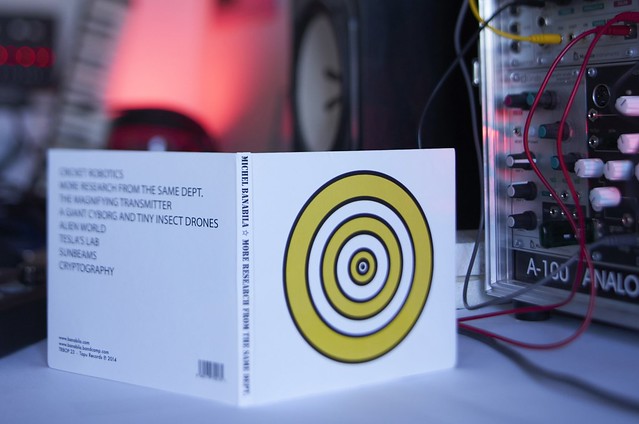
With The Latest Research from the Department of Electrical Engineering (2011), Michel Banabila dived deeper into more experimental electronic territory he started exploring on releases like Spherics (2001, 2003) and Signals from Krakrot (2008). The sounds on this album are radically different from his more romantic, more acoustic ethno-jazz releases, but they never lost the characteristic 'human touch'. On More Research from the Same Dept., Banabila is vigorously searching for the heart and soul of electrical machinery, like an explorer presenting his discoveries. He places himself in the background… letting the machines tell their own story. There is no thriving beat to guide you this time. Instead, you'll be immersed into manipulated and layered sounds of fluorescent tubes, humming fridges and plug interferences. The sounds of the Electrical Engineering Department are at their best when you play them loud enough... Just follow Banabila to the heart of the Department ... and maybe hear the Cyborg talk to you. (Peter van Cooten).
Include Me Out blog:
Here is Michel Banabila's future music. Yes, we know The Future is now, but he calls tracks A Giant Cyborg And Tiny Insect Drones, Cricket Robotics and Alien World, so he is thinking way ahead, as far as I know. Unless he's developed such things in his research department and been far Out There. This is what they sound like, anyway. Here is the crackle and blip of things to come. No dramatic drones of whooshing spaceships or colliding planets here. Instead, subtle tones and clicks, with occasional heavy buzzing and the drama of an intense but temporary jolt to the system. Cryptography is particularly effective, summing up the method and means by which Banabila sends his messages, like coded alien language.
Vital Weekly 921:
Although active for maybe thirty years now, it seems that Michel Banabila is working his ass off in the last couple of years, having lots of new releases all the time, and playing around with his mates from Rotterdam, such as Radboud Mens, Rutger Zuydervelt and Roel Meelkop. Here's his latest album, which we, perhaps, should see as the follow-up to 'The Latest Research From The Department Of Electrical Engineering' (Vital Weekly 837), which I may regard with some hindsight as the album which turned me back to Banabila's music. Before that I assumed that his music was more or less third world music, ethnic perhaps yet electronic. That album proofed me wrong and since then I have a keen ear for his music. Banabila uses a variety of instruments from electric sources, such as Korg monotribe and monotron and EX24 sampler, but also soft synths, found objects, fluorescent tube sounds, refrigerator sounds and plug sounds and creates some excellent electronic music with that. Nothing third world, nothing even remotely exotic, unless you think abandoned factories are exotic places; some of Banabila's music sound straight from such sites of industrial desolation. Some bits are still functioning but not all of it. Banabila's music is a construction of sounds, sometimes in the form of a collage and at other times in more straight forward moving lines, sustaining sounds. A work of electronic music indeed, and to some extends also from the world of musique concrete. However, none of these eight pieces last very long and Banabila doesn't apply very complex compositional techniques - maybe that's the only thing that has any relation to the world of 'pop' - whatever that means in this context. Electrical interference is sampled into a rhythm, phrases are repeated, and on top there is a whole extra layer of weirdness. Intelligent, experimental music. Not too difficult or alienating, but wonderfully accessible. Excellent release! (FdW)
Inactuelles Blog:
Michel Banabila, sculpteur de l'imperceptible sonore. Musicien, artiste sonore, friand de collaborations diverses qui mélangent disciplines et styles, auteur de musiques pour des films, documentaires, chorégraphies, le néerlandais Michel Banabila a participé à plus de trente albums. Je l'ai connu grâce à son travail sur Travelog avec Machinefabriek, pseudonyme de Rutger Zuydervelt, autre musicien important de la scène électronique néerlandaise. Avec More research from the same dept., il rompt clairement avec une approche musicale encore traditionnelle, où mélodies et rythmes renvoient à une expressivité plus ou moins sentimentale.
Huit titres sans pratiquement aucun instrument, tout au plus de brefs passages de piano ou clavier sur "Tesla's lab" ou "Sunbeams", respectivement titres six et sept. Pour le reste, huit titres résolument électroniques, bruitistes : sons de réfrigérateurs, de tubes luminescents, d'objets trouvés, enregistrements divers, et, bien sûr, échantillonneur, modulateur, synthétiseurs et autres logiciels de traitement du son. On pourrait s'attendre à une musique glaciale, désincarnée. Il n'en est rien. Comme d'autres partisans de la musique électronique, expérimentale, je pense par exemple à Morton Subotnick, ou encore à Mathias Delplanque, Pierre-Yves Macé en France, il parvient à rendre passionnante son odyssée vers l'intérieur des sons du quotidien, à peine écoutés, qui peuplent notre univers. Mais ici, tout s'écoute à fort volume, c'est conseillé pour s'immerger dans ce monde étrange. "Cricket robotics" donne le ton : des sons amplifiés, fortement stratifiés par des coupures multiples, des sons qui tourbillonnent, surgissent en grésillant, des silences, un peu comme si l'on écoutait une bande d'ondes courtes, mais tout cela orienté par la captation d'une montée inexorable de sons qui oscillent à grande vitesse, sombrent dans une sorte de trou noir démultipliant les graves, tout cela sous-tendu par des sons courbes de drones qui s'agitent sous la surface. Étonnant, et vivant ! Le titre éponyme sonne très industriel : signaux de machines qui s'entrechoquent, se mélangent..."The Magnifying Transmitter" amplifie des bruits lumineux ( si j'ose dire !), nous plaçant au cœur des émissions sonores, dans la matrice trouble des bruits plus complexes qu'on ne le pense, le tout animé par des ponctuations sourdes paradoxalement beaucoup plus fines que bien des battements techno. À nouveau, comme le premier titre "Cricket robotics" le titre suivant, "A giant cyborg and tiny insect drones" renvoie aux insectes. Ce n'est pas un hasard. Ces micro buits amplifiés nous plongent dans le monde de l'imperceptible, du minuscule, celui des vibrations élémentaires, des frictions d'ailes multiples, des montées et baisses de tension. Quelque chose se tord, s'agite entre les fréquences, une musique ténue, têtue, désireuse de venir au jour. Morceau énigmatique et superbe ! Tout le reste s'écoutera d'autant mieux que vous aurez supporté ces prolégomènes intransigeants. "Alien world" est une merveille de dentelle électronique, jouant du contraste entre fond dense de drones et sons cristallins, fins et transparents, comme irisés par une lumière rasante, avant une fin marquée par des sons percussifs graves, sourds, tandis que des poussières sonores forment un gravier mœlleux. "Tesla's lab" nous plonge dans la tourmente élémentaire des drones : on voit les planètes s'éloigner les unes des autres, les particules s'agiter dans le vide intersidéral. Car ce monde infime, c'est le même que celui des espaces cosmiques, d'une certaine manière, même si Michel Banabila s'en défend dans la présentation de sa musique, ce sont les rayonnements mutiples des astres, des corps, des particules, essentiellement comparables, l'infiniment petit consonant avec l'infiniment grand. Un piano s'invite dans ce laboratoire extraordinaire, pose des notes parcimonieuses, curieusement décalées, étrangères, dans une lumière pulsante de forces antagonistes et solidaires. Écoutez au casque, vous y serez !! "Sunbeams" rejoint les visions éthérées d'un Chas Smith, réjouira les amateurs de musique électronique ambiante : pièce plus onctueuse en raison des claviers en nappes radieuses, mais cependant également parcourue par la folie douce des mouvements de particules. Au total, une pièce enivrante, une pièce de transe lente, une des plus rythmées, envahie sur la fin par des traversées sonores crépitantes. "Cryptography" parachève cette belle trajectoire : palpitations, petits marteaux piqueurs, interrruptions, court circuits sonores, déflagrations, disent la vie secrète et merveilleuse des choses. Lumière de l'obscur, beauté des chocs et des convergences, Michel Banabila conduit un fascinant orchestre subliminal. Un grand disque de musique électronique, expérimentale, pour les amateurs d'autres paysages sonores.
Mousique nl.:
More Research From The Same Dept is een vervolg op Banabila’s album uit 2011 dat The Latest Researcht From The Department Of Electric Engineering heette, hetgeen een mijlpaal in zijn ouvre was, omdat Banabila daarmee duidelijk de weg van electronische industriële noise inslaat. Daarvoor had hij al wel meer experimenten met zuiver electronische muziek gedaan, maar was hij toch vooral bekend van meer electro-acoustisch georiënteerde en vaak jazzy muziek (waarvan hij onlangs nog een mooi overzicht heeft gegeven op de verzamelaar Float). Op MRFTSD gaat Banabila verder op deze weg. We horen pure witte ruis, kraak, diverse electronische en metaalachtige geluiden (alsof je daadwerkelijk in een of andere machinewerkplaats rondloopt), drones, pianoklanken etc. Wat Banabila hier doet is niet perse nieuw en hij is ook zeker niet de enige die dit vandaag de dag nog doet. Wel bekruipt mij bij sommige van die releases wel eens het gevoel dat het allemaal wel erg stuurloos en willekeurig is, alsof de muzikant zelf ook niet goed weet wat er gaat gebeuren als hij aan bepaalde knopjes draait. Bij Banabila niet, MRFTSD is een intrigerende, onheilspellende en filmische compositie, de man weet heel goed waar hij mee bezig is en hoe hij spanning op kan bouwen, ook met (schijnbaar) abstracte geluiden. De futuristische titels als Cricket Robotics, A Giant Cyborg And Tiny Insect Drones en Alien World passen goed bij de sfeer die deze plaat oproept: dit zou heel goed de soundtrack bij een sci-fi movie kunnen zijn. Of, wellicht nog beter: bij een film van Tarkovski. Binnen het al indrukwekkende ouvre van Banabila kun je dit album gerust een meesterwerk noemen.(Peter Tuin)
FOURTH DIMENSION.NET:
Picture yourself in a slightly altered mental state, in a room with someone lightly playing a small African drum while an orchestra slowly begins to tune down the hall. Gradually, your mind is drawn into the mix of sound, drawing out textures and harmonies that may only be imagined, the atmosphere growing heavier and more foreboding as time passes. So begins this four-track album from prolific Dutch artist Michel Banabila – slowly, beguilingly and with a slightly sinister undercurrent. Nothing is overstated or showy but, by the end, I was struck with a profound sense of unease. The second track builds from the rhythmic chugging of what sounds like a machine press into a lumbering rhythm that falls short of being danceable, while at the same time having an undeniable propulsive quality. The third track is likewise built around rhythm, but this time it is a slow groove with shimmering, ghostly atmospherics hanging delicately in the background. The final piece is a slow burn, distant voices and snippets of violins churning at the bottom of a cauldron. I’ve broken this down between tracks because I find that each one is so different from the others that it’s almost the only way to approach it. The release as a whole is a collection of disparate elements. But those disparate elements are very good- hypnotizing, almost and suffused with atmosphere. I found that the third track lets the side down a little, but the others are high enough quality that I’ll forgive it. There is an almost soundtrack-like element to Banabila’s work. I’d love to see the movie. (KM)
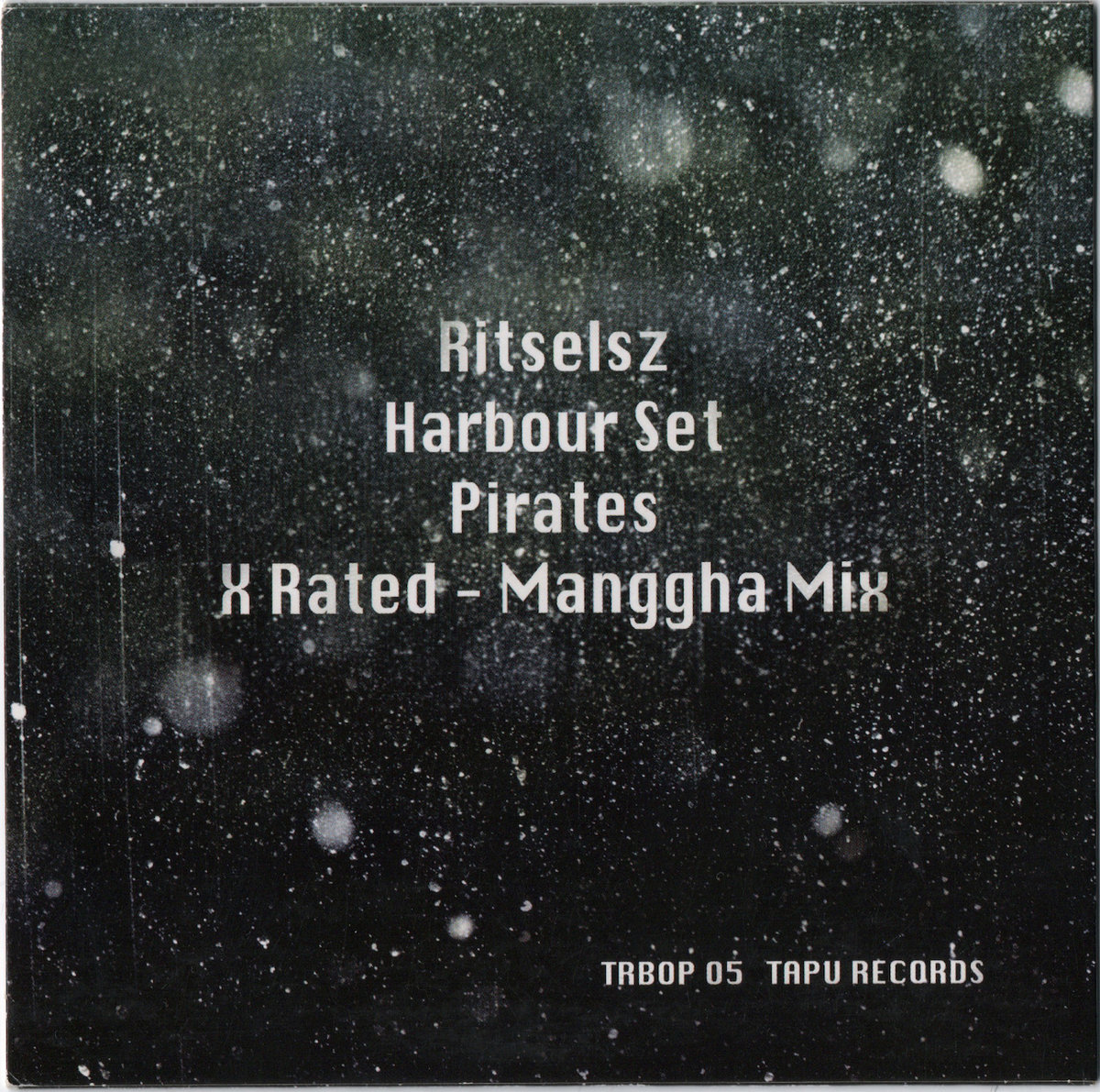
Tapu Records TRBOP 05. / Released November 28, 2010.
'Cards On The Table' was a Staalplaat release in 2000 by Michel Banabila, Hannes Vennik & Bobby.
"Cards On The Table" is not a traditional music release.
The material was brought in by three players at their numerous meetings. It involves no instruments, but everybody brought sound material on tape, which was collated and collaged on harddisc.
By using a deck of playing cards, various combinations and mixes were proposed. To enhance the idea of shuffling a deck of cards, the CD was presented as a"shuffle" mode CD.
Everytime you play this a new total composition arises.
During talks the three discussed the atmosphere, rather then rhythms, chords or melodies.
In just under 19 minutes you get 28 tracks which quickly change
atmospheres, locations. Rhythms come and go, resulting in a frentic
collage. Edited with great care with lots of surprises.
This CD was a 5" CD with 3" playing. The print is all on the jewel case
(like Staalplaat's Material Series) and also comes with a Mexican
table cloth and of course a playing card.