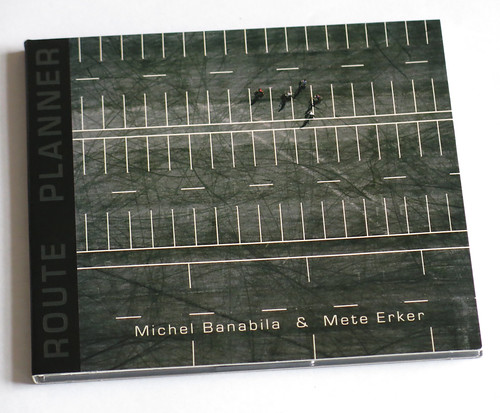
Pierre Bastien and Michel Banabila return with Nuits Sans Nuit, their second collaboration following their Baba Soirée debut from 2023.
Recorded as an intuitive exchange between Rotterdam and Valencia, the album emerged from a simple ping-pong process: Banabila sculpted sounds and atmospheres, to which Bastien responded with his distinctive instrumental palette: flute-augmented cornet, mechanised log drum, and more. Mixed by Banabila, the result is a raw yet immersive work that resonates with a somnambulant, wide-awake presence.
Pierre Bastien: "The dreamlike quality of our recordings reminded me of a book I read years ago: ‘Nuits Sans Nuit Et Quelques Jours Sans Jour’ by Michel Leiris. Around that same time, some fifty years ago, I was playing in Nu Creative Methods with Bernard Pruvost, a duo that appears on the Nurse With Wound list. Since then, Pruvost has turned to painting, and his work is as dreamlike as our music. We asked him to contribute one of his paintings for the album cover."
"I don't know how to describe the feeling of these crazy times we live in," says Banabila. "Les plus désespérés sont les chants les plus beaux,” Bastien quotes De Musset.
Wordless yet deeply expressive, the album invites listeners into a space of contemplation, where meaning emerges through immersion — like ritual music carrying an unspoken message. Echoes of saudade, blues, fado, and soleá surface in the duo’s playful noise, reimagined through their singular vocabulary.
PIERRE BASTIEN
Cornet augmented with rotary flutes (1), Sintir (2), Rabab and pipe (3), Roll piano (4), Mechanized steel drums (5), Prepared cornet (2, 6, 10, 11), Mechanized log drum / Sanza / Hand drum (7), Cornet and mechanized zheng (8), Mangbetu harp kundi, Talking drum tama (9).
MICHEL BANABILA
Software instruments, Sampler, Melodica (9), Wooden flute (2), Found objects (1+11), Percussion (1, 2, 4), Field recording (5+6), Mexican Turtle Flute (9), E-bow effects (8), Voice (8), Mix.
It was back in February 2012 that Michel contacted me to say he had sent me an mp3 "with a funny melody". "I am just wondering if you can play that. Exactly with the same tuning", he said. I had a listen and thought "You must be joking", as what I was presented with appeared to have no fixed notes nor conventional tuning, and sounded almost impossible to play. (I learnt later that the synthesized tune he had sent me was a melodic tracking - via software - of the musical pitches inherent in the voice of a man talking, recorded in Ghana by his friend Mark Dingemanse from the Radboud University). I put the strange sounding melody on repeat so that I could listen to it again and again, and by playing along continuously with it I eventually found the required notes on the trombone. After a week I could play the whole thing. And that was 2012. More recently, I found myself thinking, "Whatever happened to that tune". I had done a lot of work on it, and it seemed to have disappeared with no resulting composition appearing. So, I searched through my archives, found mine and Michel's original recordings, and played around with them until I had the beginnings of something coherent. At this point I contacted Michel, and he performed his usual magic, and eight years later we have our composition! Over the years Michel and I have occasionally swapped musical ideas, and our 'B-side' is the result of another such exchange, from a recording a year earlier. (Robert Jarvis, Faversham, December, 2020)
This single is a download only.
Robert Jarvis: trombone.
Michel Banabila: synth & sampler.
Recorded in Faversham & Rotterdam via file sharing.
Written & performed by Robert Jarvis & Michel Banabila.
Cat. nr. TR121220.
2020 ℗ Tapu Records.
UPC 195497778669.
Cover art by Michel Banabila.
An extended noisy remix from Danube (Imprints 2018) for the new film by Nan Wang: 'Pareidolia', on IFFR 2019 (Bright Future selection)
In Pareidolia, analog abstract patterns made on 16mm film are used as source material for finding similar figurative images, interpreted by an online search engine. Hundreds of these matching images were edited into abstract film clips, resulting in an exciting visual and psychological cinematic experience.
1.Michel Banabila & Mehmet Polat - In A Dark Time (03:07)
2.Michel Banabila & Mehmet Polat - Dream Stories (02:03)
3.Michel Banabila & Eric Vloeimans - Autumnal Equinox (01:12)
4.Michel Banabila & Eric Vloeimans - Forest Road (01:47)
5.Michel Banabila & Eric Vloeimans - Trust In You (02:06)
6.Michel Banabila & Mehmet Polat - Jabal Haraz (04:34)
7.Michel Banabila & Eric Vloeimans - Little Steps (01:56)
8.Michel Banabila & Mehmet Polat - Aerial View (01:00)
9.Michel Banabila & Eric Vloeimans - Looking Back (03:06)
10.Michel Banabila & Mehmet Polat - In Search For A Quiet Place (04:26)
11.Michel Banabila & Eric Vloeimans - Plume (02:20)
12.Michel Banabila & Eric Vloeimans - Speed Walk (03:52)
13.Michel Banabila - Eric Vloeimans - Mehmet Polat - Forest Road - Discovery Mix (04:52)
New Land credits:
Mehmet Polat: oud. Eric Vloeimans: trumpet. Michel Banabila: keys & electronics.
I was contacted by photographer Gerco de Ruijter a few years ago. When he showed me his work I was immediately impressed. He often uses a kite with a camera attached to make photos (kite photography). All beautiful art. This is a nice documentary about how he works:
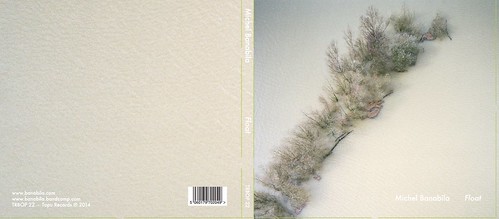
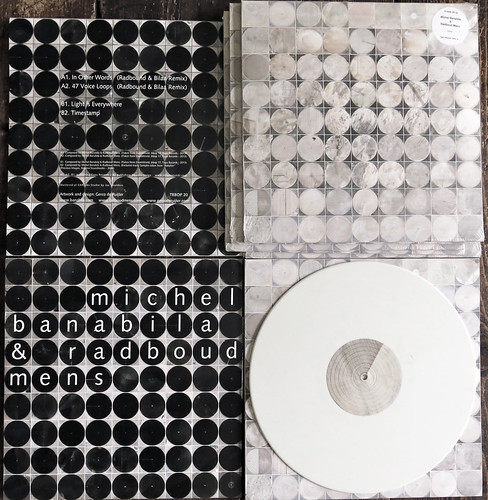
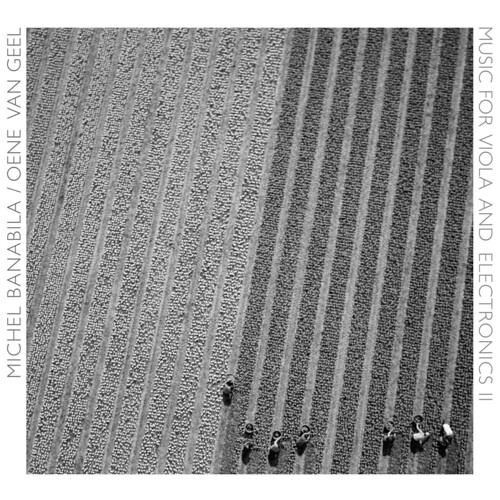
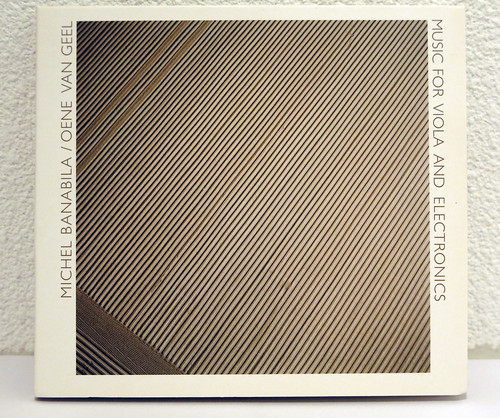
We became good friends. To my surprise it turned out he has known my music for quite a while.. and he proposed to make an album cover. That was the start of a long collaboration that is still going on. These are some of the covers he made for my albums:
12 inch vinyl EP Banabila & Mens
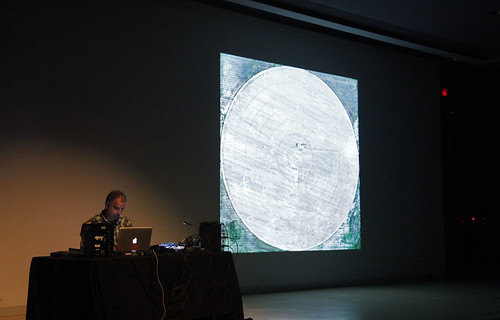
Four years ago he asked me to do the sound design for his short film 'Crops'.
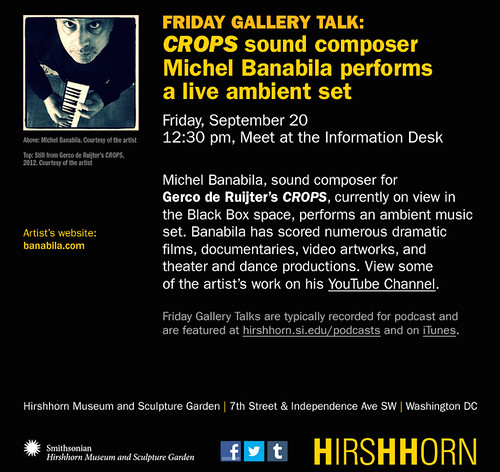
The response was really amazing ... the film was shown at many film festivals all over the world and we had an installation for 3 months in the Hirshhorn Museum in Washington where I also did a solo performance (electronics / ambient) and a small Q&A:
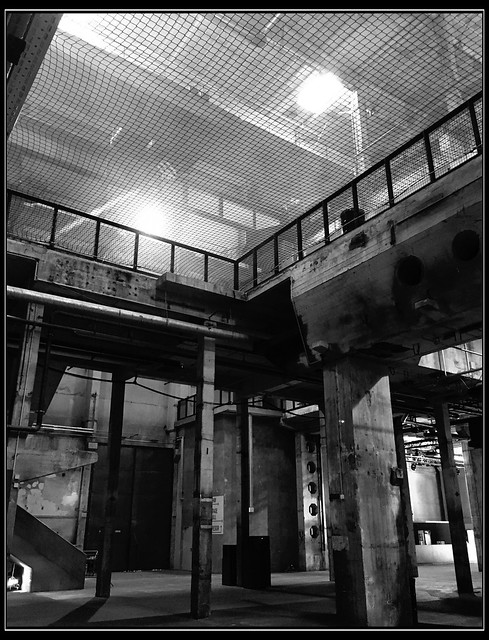
After the premiere at Cafe Oto where we presented our vinyl reissue from The Original Recordings from 1986 at Astral Industries in February, this time The Chi Factory played at the wonderful Atonal Festival in Berlin, to present the Bamboo Recordings by Koos & Hanyo. We had a lot of fun and got nice response. The Kraftwerk building is really impressive.
We don't have the instruments from the old days anymore, like self made stuff, log drums, found objects, an old Teac recorder, and more, but we performed in Berlin with 3 members of the original Chi set up; Hanyo on drums, bass, Rhodes, and vocals, Koos on his bamboo flutes and on clarinet, and me with a laptop. I was a member of The Chi Factory from January 2016 until December 2016.
Chi Factory photos by Camille Blake and Helge Mundt.
The concert was an experimental mixture of jazz, contemporary, traditional music and ambient, using acoustic instruments , field recordings, many voice samples and electronics. Thank you Atonal!
Michel Banabila / Hanyo van Oosterom / Jacobus Derwort
This morning I had a small recording session at my home with Maryana Golovchenko.
She sang a beautiful traditional entitled "Oj, Na Gori Suhyj Dub" (A dry oak on the mountain).
I added some synth and just finished the mix. It sounds dreamy .. a bit like a little meditation.
You can listen here
It's funny when I told her I just returned from Biała Woda, we realized I was not really that far from where this tune actually comes from, which is a place in the area of the Eastern Carpathian Mountains..
Note: this song was extended with a beautiful cello melody by Maarten Vos in November during the preparations for HOME, a dance performance by Conny Janssen Danst. "Oj, Na Gori Suhyj Dub" is now available on CD at the performances of HOME.
Maryana and I recorded together before, our first recording was for Jump Cuts, a track called Field Trip:
A file sharing collaboration by
All n4tural, Michel Banabila, Grzegorz Bojanek, Oene van Geel, Radboud Mens, Yuko Parris, and Rutger Zuydervelt.
Reviews:
NOWAMUZYKA. PL:
Żyjemy w takich czasach, że nie trzeba siedzieć w jednym pokoju, aby wejść w muzyczny dialog. Czasem bywa tak, że na odległość powstają lepsze kompozycje od tych, które są wynikiem realnego spotkania.
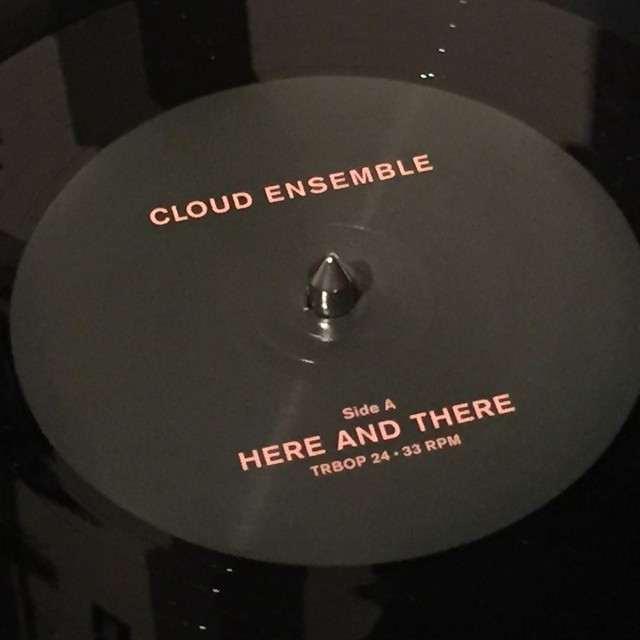
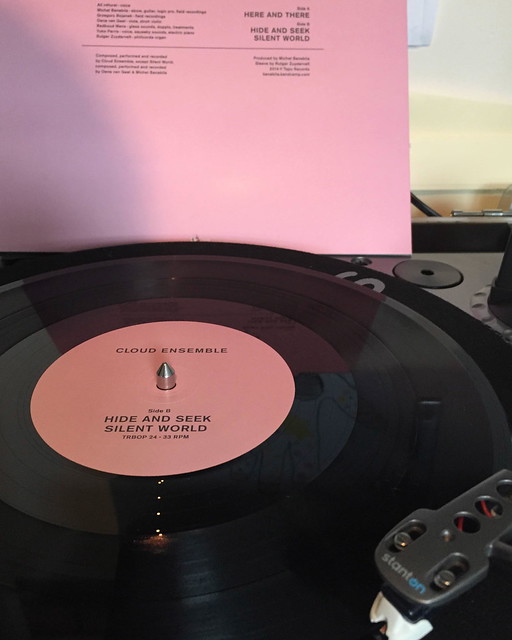
Pomysł na utworzenie kolektywu Cloud Ensemble zrodził się w grudniu 2013 roku, kiedy to Grzegorz Bojanek zagrał wspólny koncert z Michelem Banabilą w krakowskiej Alchemii podczas festiwalu Re:source. Pod nazwą Cloud Ensemble ukrywa się siedmiu artystów pochodzących z różnych stron świata (USA, Holandia, Polska oraz Trynidad i Tobago). W składzie formacji pojawili się tacy twórcy jak All n4tural (wokal), Michel Banabila (ebow, gitara, field recording), Grzegorz Bojanek (sample, field recording), Oene van Geel (skrzypce, skrzypce Stroha), Radboud Mens (glass sounds, dopplo, treatments), Yuko Parris (śpiew, fortepian) i Rutger Zuydervelt (organy Philicorda) znany jako Machinefabriek.
Niespełna kilka dni temu grupa Cloud Ensemble na stronie Bandcamp opublikowała swoją debiutancką EP-kę. Materiał można nabyć w postaci dziesięciocalowego winyla. Minialbum otwiera wyborna kompozycja „Here and There”, gdzie wokal Yuko Parris, a szczególnie jego barwa, bardzo przypomina mi głos japońskiej artystki Sanae Yamasaki (aka Moskitoo). Ten utwór z jeden strony ma coś w sobie z klimatu nagrań duetu No-Man, a z drugiej – mógłby spokojnie znaleźć się w katalogu wytwórni 12k. W numerze „Hide and Seek” poznajemy nieco inne oblicze projektu Cloud Ensemble. Muzycy zawędrowali w okolice twórczości Portishead (delikatny trip-hopowy rytm) oraz tria Jansen/Barbieri/Karn (elektroniczne wstawki basowych pochodów) z czasów ich albumu „ISM”. Nastrój wycisza się wraz z kompozycją „Silent World”, której najbliżej do „Trenów” Jacaszka i muzyki filmowej Clinta Mansella.
EP-ka „Cloud Ensemble” jest swobodną wypowiedzią kilku artystów, którym udało się stworzyć zajmujący i również przejmujący materiał. Muzyka Cloud Ensemble jest emocjonalna, ale w żaden sposób nie kojarzy się z patetycznym klimatem. Warto zauważyć, iż EP-ka bardzo dobrze wypada pod względem spójnego brzmienia. Ciężko uwierzyć, że ten minialbum nie został nagrany podczas wspólnej sesji w studiu nagraniowym. Grupa Cloud Ensemble zaprezentowała świeże spojrzenie na ambient i elektronikę z udziałem żywych instrumentów. Twórcy z powodzeniem weszli w porozumienie i wypada tylko czekać na długogrający krążek. (Łukasz Komła)
UTILITY FOG - FBI RADIO:
Gorgeous dream-pop from Cloud Ensemble, it's a bit shoegaze, a bit drone-influenced, and totally recommended. (Peter Hollo)
KINDAMUZIK:
Oogjes dicht, snaveltjes toe en zet de naald in deze 10 inch; de schaapjes die je telde worden wolkjes die voorbijtrekken en er verschijnen regenbogen om je heen. Het kinderlijke stemmetje dat langs waait, zucht zachtjes als een elfje. Een overdosis aan verkleinwoorden, is het niet? Tja, het verbaasde mij ook altijd dat er zoveel mensen nodig waren om de fragiele mopjes dreampop van Efterklang of Múm te maken. Cloud Ensemble kent ook al zeven leden.
De ietwat shoegaze-achtige, dromerige ambient-pop van Cloud Ensemble is er een van de beter gelaagde soort. Er gebeurt stiekem best veel op verschillende niveaus, maar je moet de oren wel vakkundig spitsen. Dus: sssssst. Dat werkt gewoon het best. Dan omvatten de drie nummers die bij elkaar zo'n twintig minuten duren, je als een weldadige mist. Hier geen tasten in enig duister, want de philicorda, de viool, de met e-bow bespeelde elektrische gitaar en de diverse elektronische instrumenten zijn tussen etherisch klinkend glas en knisperende fieldrecordings prima te onderscheiden.
Het zijn de details die uit de nevelen opdoemen die Clound Ensemble tot een knap gemaakte plaat maken. De composities an sich zijn ook om door een ringetje te halen. En laten we wel wezen, de spelersploeg - met onder meer Banabila, Zuydervelt (Machinefabriek) en Mens aan boord - is gewoon een supergroep waarvan je niet minder verwacht. Zoals wel vaker bij zo'n topteam zijn de losse delen sterker dan het geheel. De eigenwijze scherpe kantjes worden node gemist. Zo is het veiligheid troef. Al is het feit dat het werk eigenlijk gewoon een pastiche op Múm, vroege Goldfrapp, Massive Attack en een klein beetje Fennesz is, natuurlijk nauwelijks een diskwalificatie. (Sven Schlijper)
GONZO CIRCUS #121:
De drie tracks op de 10inch van Cloud Ensemble klinken vergeleken met 'More Research From The Same Dept.' redelijk gewoon. Echter nadere en diepere beluistering logenstraft die gedachte onmiddelijk. De nummers kwamen tot stand via file-sharing. Muzikanten die meededen waren o.a. Michel Banabila, Machinefabriek, Radboud Mens, en de zangeres Yuko Parris. Het tien minuten durende 'Here and There' is opgebouwd uit diverse drones waartussen de stem van Parris, omgevingsgeluiden, gitaarakkoorden, flarden viool en andere bescheiden effecten. Mooie intrigerende ambient. 'Hide and Seek' is een geheimzinnige, melancholieke song; dichter kwamen mensen als Machinefabriek en Radboud Mens nooit bij popmuziek ! (Oscar Smit)
POLYPHONIA:
Debiutancka EPka widmowej formacji Cloud Ensamble jest jak rozdrobniona i wypuszczona na wiatr garść pyłu… Niesie naszą wrażliwość, nasz zmysł słuchu w rejony, które dla miejskich wyjadaczy objawią się jako mityczne i nieistniejące miejsca, zaś dla miłośników ambientu i harmonii, będą niczym przybycie do przystani. Nie istnieje lepsza zachęta do wejścia w ten świat subtelnej harmonii niż jej wysłuchać, jest to bowiem płyta magiczna, jedna z tych, które serwuje się na koniec audycji radiowych. Wyjątkowy dźwięk i wyjątkowe wokale Yuko Parris czynią ją pozycją obowiązkową do odsłuchania.
Cloud Ensamble to formacja niezwykła bo mimo, że brzmi niczym band wieloletnich przyjaciół została stworzona zdalnie. Dowodzi to, że udział artystów o niezwykle subtelnej wrażliwości w koncepcyjnym i kompletnym dziele współpracy „na miarę naszych czasów” może dać wynik wyjątkowy i warty kontynuacji.(Jarek Grzesica)
NORMAN RECORDS:
As you’d expect from a file-sharing project such as this, which features All n4tural, Michel Banabila, Grzegorz Bojanek, Oene van Geel, Radboud Mens, Yuko Parris, and Rutger Zuydervelt, it brings together a broad palette of sounds and textures: elegiac strings; warm organs; breathy vocals; atmospheric samples and ethereal guitars. What’s more surprising is the sense of cohesion achieved throughout the EP. The overall sound is lush but downbeat; like a more ambient, exploratory and cinematic Sigur Ros on the two vocal tracks and then successfully synthesising elements of brooding electronica and ‘world music’ on the melancholic closer, ‘Silent World’.
This definitely sits at the more sophisticated end of the experimental music spectrum and is little too slick for my crude lug ‘oles. Nevertheless, it will undoubtedly hit the right spot for lovers of atmospheric and dreamy contemporary film scores. (Jim)
We (Michel Banabila and Rutger Zuydervelt) met quite a while ago, in our hometown Rotterdam. It felt inevitable to work together. Both restless and busy with all sorts of projects, it took a while though to truly make it happen. Things got more serious once we finally got together to talk about the collaboration, in September 2012. We agreed to start slow, and then really kick it off early 2013. But in all our enthousiasm, we quickly got caught up in an unstoppable workflow. Swapping files back and forth, layering and processing each other's sounds, it immediately felt like a match made in heaven. In an incredibly short, though highly inspiring time span, the album 'Banabila & Machinefabriek' was created. A 40+ minute journey through warm drones, mysterious crackling and outbursts of digital noise. Obviously, we are both immensly proud of the result.
VITAL WEEKLY 860:
Both Zuydervelt and Banabila live in Rotterdam, so it's hardly a surprise that the two of them would meet up and work together. They started in September 2012 with the idea to take time and kick it off next year, but as soon as they started they got into lots of interesting results, so that now, early December 2012 there is already the first release. Forty minutes in total, with nine pieces, from a handful of seconds to nine minutes. A fine album, I think. It combines the interests of both, the drone like material of Machinefabriek and experimental electronics of Banabila, while both of them keep a keen ear on the ground to make it also musically interesting. A vibrant album I should think in which a lot happens. Digital noise sits along nicely with more subdued music, and sometimes within one piece. It seems as if Banabila also knows how to keep Zuydervelt on track in trying something new, with improvised bits on the guitar such as in "Flares". I like the fact that this is more noisy record than I would expect from Zuydervelt, with a whole lot of new ideas harvested here.(FdW)
FLUID RADIO:
Their first, eponymous record together demonstrates this shared aptitude for cooperation, their respective approaches blending so seamlessly that it’s hard to tell where one ends and the other begins. It could be argued that the album is too dramatic and too flooded with ambient warmth to be a Machinefabriek record, and also too playful and fluid to be credited to Banabila alone, yet the overall impression is of the workings of a single entity rather than the juxtaposition of two different styles. Although electronic sound sources predominate, with a fair few field recordings thrown in for good measure, the ‘acoustic’ appears privileged over the ‘electro’ in that I could almost describe the air pushed by my speakers as syrupy, so full and weighty is the sound. Highs are piercing and lows throbbing, yet never irritatingly so; this is music that is strongly present, without being overbearing. The idea that “two heads are better than one” may not be new, but if putting it into practice is increasingly the norm, for Banabila and Machinefabriek it is an approach that has reaped rich dividends. Nathan Thomas.
AMBIENTBLOG;
Since both can also have quite a different musical focus, it's interesting to see where these ends meet when they are working together. When they finally met, the spark obviously exploded into a flame: "We agreed to start slow, and then really kick it off early 2013. But in all our enthousiasm, we quickly got caught up in an unstoppable workflow. Swapping files back and forth, layering and processing each other's sounds, it immediately felt like a match made in heaven. In an incredibly short, though highly inspiring time span, the album 'Banabila & Machinefabriek' was created." On "Banabila & Machinefabriek " , their shared interest is in creating abstract electronic soundscapes, with a dynamic range varying from immersive calm sounds to noisy eruptions. This means their album is not exactly 'easy listening', it can be a challenging but adventurous listen. Their interaction is immaculate: it is surprisingly hard to distinguish the Banabila elements from those added by Machinefabriek. The sum of their contribution is definitely "more" than just both separate parts. Considering some of the noisy outbursts in Bad Wiring and Dead Air, this album may probably not be to anyone's liking. But everyone else - especially those who know the previous works of Banabila and/or Machinefabriek - should definitely check out this release ! Peter van Cooten.
includemeout2.blogspot.nl:
These finely-tuned forays into hiss, crackle and anti-Pop are designed to play through as one long trip on the CD, but in digital form it's broken up into 9 tracks. All the same, it sounds seamless; ever-shifting sands of sound (!) seduce and spring surprises. Just as your lulled into a sense of security you get sucked into black holes like 'Frost' and 'Bad Wiring'. Even the calm is frequently fused with static unease, as on 'Slow Wave 1', which evolves to the point where a robot Fred Astaire taps across the sound stage. At least, that's what I imagine.
NORMAN RECORDS:
At one point there’s a sudden brain-splattering barrage of computer mayhem which led to exclamations of “this is hard work!” in the office, but it slowly eases into a blurry shivering dronescape which heads into Deathprod-esque territory, which I guess is their way of saying sorry for splattering your brain. Basically this is a measured and varied tapestry of blissful ambience, glitchy melodic sound art that’s not afraid to step out of your comfort zone and slap you round the chops, expertly crafted by two men who know their way around a soundwave. 8/10 Mike.
SOUND COLOUR VIBRATION:
Michel Banabila & Rutger Machinefabriek are two musicians from Rotterdam whose recent collaboration has really taken me into a rewarding sonic experience. With the two artists having their own careers respectfully, the collaboration serves as a joining of forces in which is as surreal as it comes in terms of the musical pallet expressed. Exotic minimal tones find crackles and other digital decaying noises in a nestled and dreamy state. Created as one continuous piece stretched over nine songs, the overwhelming sense of emotion present is incredible.
Music devoid of harmony in the way this album is normally has little climaxes, little identity and carries on a shallow and most times hollow body. Banabila & Machinefabriek is a stunning example of how to extract a lot of life into regions where most things can’t flourish. It speaks of life and this world in a strikingly potent form, creating spirals of windows into the human condition and the fluorescent aura of the cosmic surroundings this world offers. It’s everything and nothing all at once; the void and opening of something new in this dimension.
Banabila & Machinefabriek is a highly experimental album that glows with some of the most breathtaking ambiance I have ever heard. This is gorgeous music that evolves slowly and every bit of patience is demanded to fully realize what this world represents and contains. The nature of how this album glows specifically goes well beyond a simple explanation of “noise” and has become a type of sound I truly love. This is the type of recording that proves how special and important this generation is and has continued to be in the name of 20th and 21st century atonal music. Erik Otis.
ATTN magazine : Banabila & Machinefabriek.
By the sounds of it, the sheer magnitude of creative momentum driving this remote collaboration was unforeseen by either participant. Initially expecting to carry the construction process through into early 2013, Machinefabriek and Banabila found themselves caught in a more spontaneous and pacier file-swapping process than they ever anticipated – the slow burn seemingly burst into flames, and I get the sense that the record’s sense of fluidity and constant movement is a direct result of the collaborative “hot-potato” subsequently played out by its two partakers.
In fact, the steady-handed over-analysis and refinement that usually characterises these sorts of collaborations is completely absent – instead, the album is abundant with sudden explosions and dramatic changes in direction that feel more akin to the irreversible actions of an improvisational gut instinct. Take the opening of “Dead Air”, which bleeps and gurgles like a jammed jet plane GPS before erupting into white noise, modem malfunction and trapped intercom voices, like the sound of a catastrophic mid-flight mayday. Who saw that coming?
Elsewhere, the transitions are smoother in their execution but no less drastic in their atmospheric overhaul. The end of “Flares” sounds like a submarine maneuvering a gigantic underwater sewer system (complete with the metronomic, echoing beeps of radar), emerging suddenly in amongst the aggressive electronic chatter and ominous low drones of “Bad Wiring”. Just as the audio files that comprised the collaboration’s building blocks were tugged back and forth between the two artists, the listener is hauled to and fro between unstable circuit rooms and expanses of lush woodland, thrust into snatches of field recording before being sent spiralling into concrete hangars stacked with whirring machinery. It’s dizzying, but there’s a real sense of ecstasy within the total loss of control. Jack Chuter.
Released December 12, 2012.
Music by Michel Banabila and Rutger Zuydervelt,
Rotterdam, The Netherlands, October 2012.
"Glitchdroneworldbeat collaboration to die for" (Peter Hollo / Utility Fog - FBI Radio)
When Michel Banabila and Rutger Zuydervelt (Machinefabriek) finished their first collaborative album, it felt like they were just getting started. Suprised by how fluent and natural their collaboration went, it was obvious that this wasn't over yet...
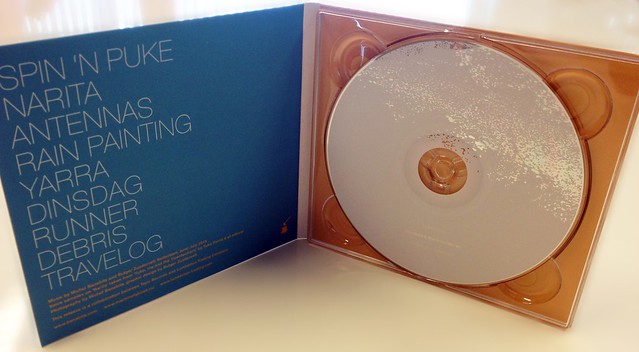
While 'Banabila & Machinefabriek' was quite an abstract affair, it's successor 'Travelog' is lighter, playful and rhythmic. Some moments might recall the mighty Tape, while others showcase motoric krautrock influences and subtle hints of African rhythms. All in all, this album clearly radiates the joy of its creative process and sees Banabila and Machinefabriek on the top of their game.
Reviews / comments:
Soundcolourvibration:
"Travelog is a collection of ambient and atmospheric soundscapes mixed with emotion filled layers and recordings that tell stories only possible in this medium. Their vivid use of space sets the stage for a performance of a lifetime."
Disquiet.com (via twitter):
"The entire new Banabila & Machinefabriek album is my new jam. Yow. Glitch ambient sonic travel heaven" - Marc Weidenbaum.
Cyclic Defrost:
There’s a deeply meditative feel to much of the music here, making ‘Travelog’ one of the most cohesive yet hard to categorise headphone soundtracks I’ve heard for a while. (Chris Downton).
Incendiary Magazine:
This record has a quality of something special, of something indefinably GOOD about it; in fact so good I think I can get away with calling it brilliant. One thing’s for certain, I can’t get enough of it at the moment. (Richard Foster).
All music by Michel Banabila & Rutger Zuydervelt.
Photography : Michel Banabila.
Artwork : Rutger Zuydervelt.
Voice samples on ‘Narita’ taken from ‘Yuko, me and the Troentechairs’ by Yuko Parris & all n4tural.
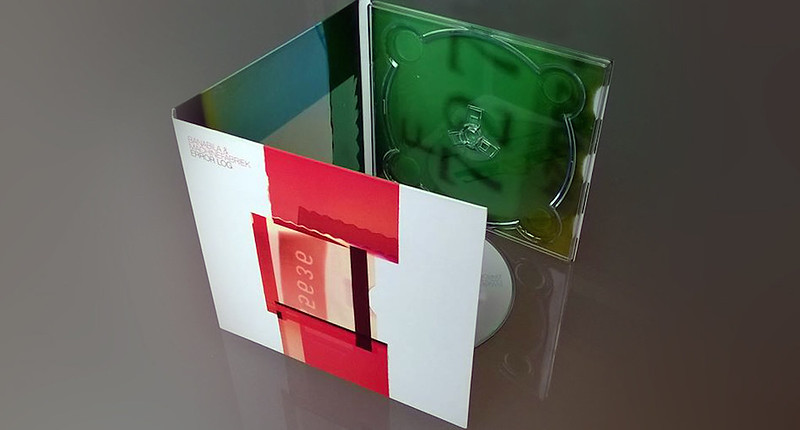
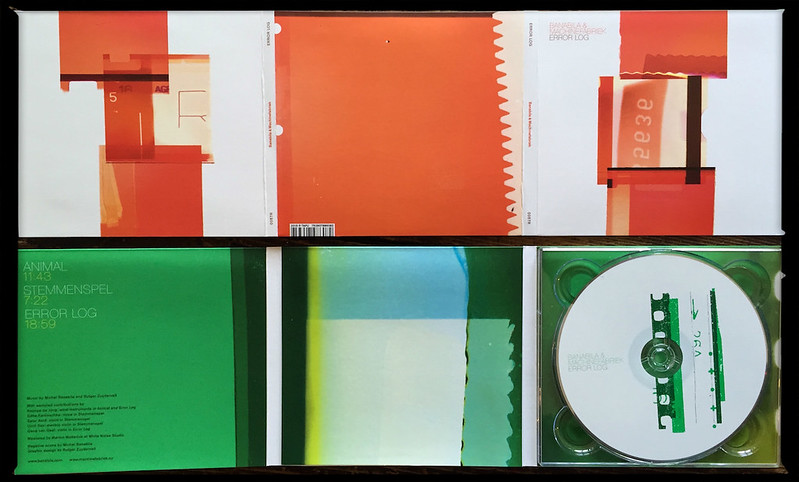
Tapu presents the third album by Banabila & Machinefabriek. Whereas its predecessor Travelog had a charming brightness, Error Log is abstract and dystopian. The album is comprised of three long monolithic tracks, based on electronics and heavy sampling of acoustic instruments. Howling bass clarinet, warped voices, cinematic strings, Muppet drums and glitchy electronics are used to create a delirious sound universe. Keimpe de Jong (wind instruments), Edita Karkoschka (voice), Salar Asid (violin), Umit Sav (electric violin) and Oene van Geel (violin) all contribute their masterful sounds. The cd comes in a 3 panel full colour matte digipak, with found error negative scans by Michel Banabila, designed by Rutger Zuydervelt (Machinefabriek). Total time 39 minutes
FLUID RADIO:
Straight away “Error Log” announces a very different musical experience from Banabila and Machinefabriek’s previous ambient-inspired collaborations from a couple of years ago. This time the electronics are thick and grungy, with greater exploration of each timbre and texture; strong contrasts are created with warm string chords and glimmering guitar that go straight for the heart-strings. Falling vocals and muttered words are drawn straight from the acousmatic playbook, but the overall tone is much closer to analogue synthedelica: warm, squelchy, and sculpted into vague, shallow peaks and valleys rather than precise formations. If the path followed by “Music for viola and electronics II” seemed relatively fixed and linear, “Error Log” is an album for drifters and wanderers; where the former fixes an image, the latter leaves an impression. Well worth checking out. (Nathan Thomas)
CALEIDOSCOOP:
Banabila & Machinefabriek brengen op beide vorige CDs een mix van abstracte elektronica, experimentele ambient, veldopnames en ludieke samples, die ze op hun unieke wijze fraai vormgeven. Nu is de derde cd Error Log een heugelijk feit. Je krijgt 3 langgerekte tracks waarin ze de elektronica harder op de voorgrond stellen. Daarnaast stappen ze van die meer kille en robuuste elektronica op subtiele wijze ook weer over naar prachtig warme akoestische stukken. Hiervoor mogen ze rekenen op bijdragen van Keimpe de Jong (blaasinstrumenten), Edita Karkoschka (stem), Salar Asid (viool), Umit Sav (elektrische viool) en Oene van Geel (viool). De rijk gedetailleerde composities blijven mede door dit contrast maar ook door de prachtige vondsten (bijvoorbeeld knetterend haardvuur dat overgaat in elektronisch geknetter) spannend tot op de laatste seconde. Daarnaast is het ook gewoon weer een bij de strot grijpend en schoon elektro-akoestisch hoorspel. Een klasse apart die twee! (JanWillem Broek)
UTILITY FOG / FBI Radio:
Dutch experimental artists Michel Banabila & Rutger Zuydervelt aka Machinefabriek have been collaborating for a few years now, and each album seems to change tack in quite a dramatic fashion – although never diverging too much from the two artists' formidable talents. They started with a droney, experimental release, followed by something more in keeping with Banabila's jazzy world-tronica, and the new one is again more abstract, featuring a number of talented Dutch musicians on wind instruments, strings, and voice. The acoustic instruments are mangled in their machines but it's lovely to hear them cutting through here and there. (Peter Hollo)
VITAL WEEKLY 984:
This is the third collaborative effort of Michel Banabila and Rutger Zuydervelt, also known as Machinefabriek. The first two were released in 2013, in a time span of nine months (see Vital Weekly 860 and 898), but no doubt it's not easy to get these two busy bees together, hyper active as they seem in working with electronic music, collaborating with others and playing live. There was, I think, quite some difference between the first two releases; the first one was perhaps what we could expect from both of them: ambient like, digital noise, improvised and yet very much composed. 'Travelog', the second one (the first being untitled) seemed less abstract, more songs (as in 'songs' as in 'pop') like, with great little melodies somewhere. So the third one was highly anticipated by me. 'Error Log' has three pieces (divided in such a way that it says 'release me on LP too, please'), which are quite long, compared to the shorter songs on the previous release. It's however not exactly a return to their first release either; it seems they are exploring the ambient side here more and more, but also in a more orchestral way, especially in 'Stemmenspel' and the title piece. 'Animal', the eleven-minute opening piece here works with more loosely improvised sound embedded in larger clouds of sound. It's all right, but not their finest moment. The violins and voices of 'Stemmenspel' (play of/with voices) have an orchestral feeling, along with those swift changes we know from Zuydervelt, the melody of Banabila and the electronic treatments of both. It moves the listener gently through an excellent set of moods and textures, almost like a soundtrack. The field recordings of the title piece are just a start to move into quite a cosmos of drones (courtesy of the guitar), small rhythms and rainy day recordings; Here too a fine trip, spanning some nineteen minutes but perhaps less soundtrack material. Having said that: it's an excellent piece, which once again brings out the best of both composers. Perhaps this third CD is less of a surprise, but it explores their joint interests further. (FdW)
Released May 14, 2015.
Music by Michel Banabila and Rutger Zuydervelt.
With sampled contributions by:
Keimpe de Jong: wind-instruments in Animal and Error Log
Edita Karkoschka: voice in Stemmenspel
Salar Asid: violin in Stemmenspel
Umit Sav: electric violin in Stemmenspel
Oene van Geel: violin in Error Log
Mastered by Marlon Wolterink at White Noise Studio
Negative scans by Michel Banabila
Graphic design by Rutger Zuydervelt
Proposal for a soundart installation consisting of a room with 47 speakers.
47 loops of my voice, some time stretched, each loop a different length. For every loop there is one speaker.
The volume of each track for each speaker changes by an automated mix. The starting point of each loop is random, and as they move towards each other, endless new combinations can occur.
Inspired by / dedicated to Cornelius Cardew & The Scratch Orchestra 'The Great Learning' - paragraph 7 (1971)
AMBIENTBLOG:
As the title indicates, the basic ingredients for these tracks are 47 layered and looped recordings of Michel's own voice - and since each loop has a different length the result is a choral work in endless variations in which the same combination of fragments will hardly ever be repeated (a generative music principle often used by Brian Eno).
Although the originating process and the philosophical fundaments may differ, those of you that paid attention at experimental music history class will probably immediately recognise "The Great Learning, Paragraph 7 " as composed and performed by Cornelius Cardew and the Scratch Orchestra in 1971 - a piece that Banabila acknowledges to be one his greatest musical influences ever.
The result is "MltVz9" - a mesmerisingly calm vocal ocean, whispering messages probably only your subconscience will understand...
But it does not stop there.
The second version of this track repeats the process but with the loops heavily processed and mutilated, feeling like washes of instrumental noise unrelated to human vocal. Next, the album concludes with a mix of these two versions, in which the voices seemingly struggle with their unnatural counterparts.
Throughout his work, Michel Banabila has always been experimenting with all aspects of the human voice. This album is his ultimate hommage to the composer and the musical score he has admired for all his life. (Peter van Cooten - 04-18-2013).
SUBJECTIVISTEN:
"Een biologerend hoorspel dat zich als een ambientalbum laat beluisteren." (JanWIllem Broek)
SONOMU.NET:
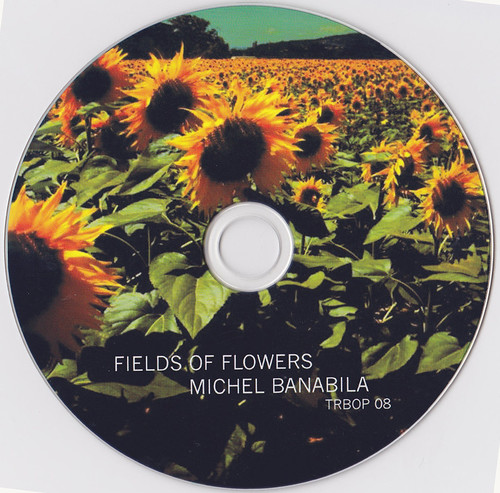
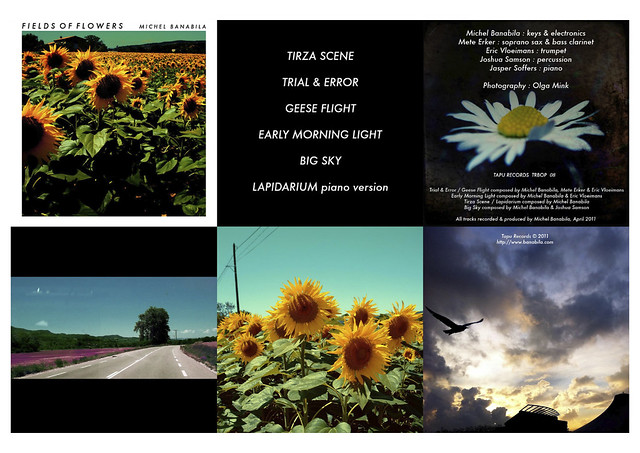
Would Jon Hassell be flattered by the homage or sue for plagiary? Hardly the latter, I think, considering his wide-open mind on sampling and influence. Fields of Flowers is a brief, luminous set self-described as ”ambient jazz” flavoured with a dash of world music by a sensitive group of players led by Michel Banabila, a mercurial figure in Dutch electronic music, flitting with ease from genre to genre. It is gallant proof that he has utterly mastered this one, creating subtle, shifting electronic fields in which his soloists and lead instrumentalists bloom – saxophonist/clarinetist Mete Erker lyrically on ”Tirza Scene”, trumpeter Eric Vloeimans on ”Early Morning Light” and both together on ”Trial & Error” and ”Geese Flight”. It is the three middle tracks which so snugly fit the Hassellian, fourth-world template, which is not to diminish them in the least. In fact, the introspective ”Trial & Error”, harnessed ritual momentum of ”Geese Flight” and impressionist landscape of ”Early Morning Light” are rare treats flawlessly executed. Joshua Samson, who makes two appearances, is a confident and very musical percussionist. Also a rare treat, the piano coda ””Lapidarium”, played by Jasper Soffers. (Stephen Fruitman).
MIXEDWORLDMUSIC:
Zes nummers, in het voor kenners en liefhebbers inmiddels bekende idioom: fraaie langzame elektronische klanktapijten met improvisatie, ditmaal van trompet en saxen. (Bram Posthumus).
CALEIDOSCOOP: Fields of Flowers.
Hij creëert bijzondere, verrassende muziek die veelal omhuld wordt door een atmosferisch, bevreemdend en mysterieus kader. Zijn elektronische composities met diverse wereldse samples worden hier op bijzonder fraaie wijze ingekleurd door trompettist Eric Vloeimans, saxofonist/klarinettist Mete Erker, percussionist Joshua Samson en pianist Jasper Soffers. Met Vloeimans heeft Banabila al vaker op succesvolle wijze samengewerkt, wat hen zelfs een Edison Jazz Award oplevert. De muziek is hier weer van een parallelle realiteit en bestaat uit een mix van ambient, jazz, elektro-akoestische muziek en avant-garde. Ter referentie moet je denken aan Nils Petter Molvær, Bugge Wesseltoft, Mari Boine, David Sylvian, Talk Talk en Jon Hassell in een wereldse productie van Hector Zazou. Onbeschrijflijke, zinnenstrelende pracht met een enorme diepgang. Banabila is en blijft een unicum met zijn geheel eigen en bovenal magistrale muziekuniversum. (Jan Willem Broek)
Released May 3, 2011.
Michel Banabila: keys, electronics, percussion.
Mete Erker: soprano sax, bass clarinet.
Joshua Samson: percussion.
Jasper Soffers: piano.
Eric Vloeimans: trumpet.
Some of these recordings arose from earlier mix-versions of these tracks, originally made by Banabila for the dance performance ZOUT (2010), by Conny Janssen Danst and Anne Soldaat.
Sources of inspiration include themes like electricity and the work of Nikola Tesla, Released in collaboration with Lumberton Trading Company and AudioTong.
Reviews:
ETHER REAL magazine
"Un album riche mais qui reste cohérent, expérimental mais abordable, bref une excellente surprise". Fabrice Allard.
AMBIENTBLOG
"The music is mechanic, loud, intrusive, but also has a distinct human factor to it. It is clearly Banabila doing the engineering here, obviously enjoying his new 'mad scientist' incarnation. Michel Banabila daringly cuts loose from all expectations based on his earlier work and clearly finds new inspiration in this new direction...now let's hope that his fans are brave enough to follow him there". Peter Van Cooten.
VITAL WEEKLY 837
"Indeed, this is indeed something else. I see, I hear. Like much of his other work, this too deals with rhythm, but its all more straight forward, almost like a (minimal) techno record in the best tradition of say Raster Noton (such as in ‘Machinery Aesthetics’ or in the usage of electrical interference sampled into a rhythm in ‘Guerilla Tactics’), but also with more bigger beats in ‘A Cold Wind Over Europe’, or, opposite ways, more ambient in ‘More Signals From Krakrot’, however ending with a strong, linear stomp and lots of guitars and reverb. Very electronic as well as electric, this is at times Pan Sonic/Goem/Alva Noto like and when the beats take more space, its not so much my cup of tea, but Banabila is right: not all of his works deal with all that I already mentioned, but he has more on his plate indeed. That makes me curious about more of this indeed". (FdW)
CONCERTZENDER
De Rotterdamse electronische muziekmaker Michel Banabila blijft verrassen door zijn steeds evoluerende stijl. Twee recente uitgaven bewijzen hoe hij van zogeheten 'world ambient' componist is doorgegroeid naar een echte klankbeeldhouwer. Hij maakt het zijn luisteraars niet al te makkelijk, maar zijn broeierige, duistere en vaak schurende composities zijn van een hypnotiserende schoonheid. Mariette Groot.
CALEIDOSCOOP
The Latest Research From The Department Of Electrical Engineering, een hele mond vol, is volledig elektronisch. Nieuw is dat Banabila zich hier van een meer noisy kant laat horen en zelfs gebruik maakt van industriële beats. De muziek lijkt als bron geluiden te bevatten die gegenereerd worden door allerlei elektrische apparaten. Daar overheen giet hij zijn typisch bevreemdende, mysterieuze saus, waarin ook akoestische geluiden van onder meer de piano te ontwaren zijn. Hij voegt daar nog wereldse elementen en robuuste beats aan toe. Ondanks het hardere geluid blijft hij dicht bij zichzelf en zit het geheim in de vele subtiele details. Per luisterbeurt openbaren zich nieuwe geluiden. Een rustiger nummer als “Monochrome Pictures” bijvoorbeeld is van een ongekende schoonheid, terwijl andere nummers weer weten te imponeren met die onaardse, prachtige krachtige muziek. Het is een meeslepend werk vol luisteravonturen, dat werkelijk in geen categorie thuis te brengen valt. Om enigszins een idee te krijgen moet je een geëlektrocuteerde cocktail van Beaumont Hannant, Nouvelles Lectures Cosmopolites, Hector Zazou, Disjecta, Venetian Snares, The Third Eye Foundation en Bump & Grind voorstellen. Een nauwelijks te beschrijven meesterlijk album vanuit een parallelle realiteit ! Jan Willem Broek.
GONZO CIRCUS
De Rotterdammer bouwt gestaag aan een indrukwekkend oeuvre. Zijn discografie mag er dan ook zijn. Uit de titel van zijn nieuwe album zou je al kunnen opmaken dat het om een enigzins experimenteel album gaat, waar eerder door hem gehanteerde stijlen als wereldmuziek en jazz ontbreken. Het is dan ook even schrikken als de cd begint ; hij opent met een stevige elektronische knal, waarna een eerste track met een stevige portie rauwe elektronica volgt die net zo goed door Cobra schilder Karel Appel gemaakt zou kunnen zijn. Breekpunt van het album is 'More Signals From KrakRot', een 10 minuten durende ambienttrip gemaakt met de Poolse geluidskunstenaar Zenial. Wat mij betreft mag Banabila blijven experimenteren met elektronica. Oscar Smit.
DE FRET
Delen van de muziek voor de dansvoorstelling ZOUT van Conny Janssen & Anne Soldaat vormden de basis voor deze nieuwe productie van Michel Banabila. Deze beeldende uitgangspunten hebben gedurende het creatieve compositieproces geleid tot een uitzonderlijke fraaie Banabila-uitgave. Op 'The Latest Research..' horen we de prachtige sfeervolle filmische inkleuring van Banabila terug. Klasse ! Hessel Veldman.
Ambientblog.net:
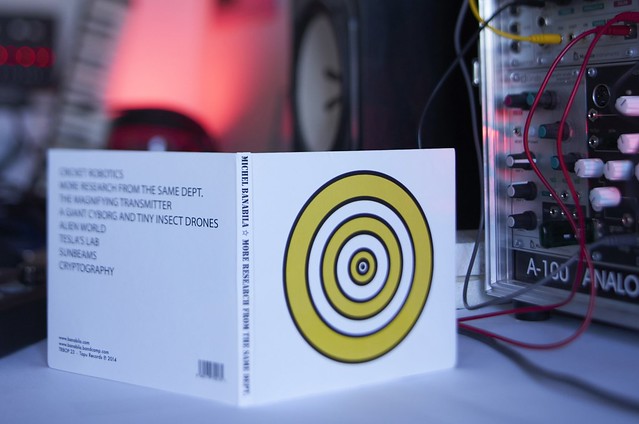
With The Latest Research from the Department of Electrical Engineering (2011), Michel Banabila dived deeper into more experimental electronic territory he started exploring on releases like Spherics (2001, 2003) and Signals from Krakrot (2008). The sounds on this album are radically different from his more romantic, more acoustic ethno-jazz releases, but they never lost the characteristic 'human touch'. On More Research from the Same Dept., Banabila is vigorously searching for the heart and soul of electrical machinery, like an explorer presenting his discoveries. He places himself in the background… letting the machines tell their own story. There is no thriving beat to guide you this time. Instead, you'll be immersed into manipulated and layered sounds of fluorescent tubes, humming fridges and plug interferences. The sounds of the Electrical Engineering Department are at their best when you play them loud enough... Just follow Banabila to the heart of the Department ... and maybe hear the Cyborg talk to you. (Peter van Cooten).
Include Me Out blog:
Here is Michel Banabila's future music. Yes, we know The Future is now, but he calls tracks A Giant Cyborg And Tiny Insect Drones, Cricket Robotics and Alien World, so he is thinking way ahead, as far as I know. Unless he's developed such things in his research department and been far Out There. This is what they sound like, anyway. Here is the crackle and blip of things to come. No dramatic drones of whooshing spaceships or colliding planets here. Instead, subtle tones and clicks, with occasional heavy buzzing and the drama of an intense but temporary jolt to the system. Cryptography is particularly effective, summing up the method and means by which Banabila sends his messages, like coded alien language.
Vital Weekly 921:
Although active for maybe thirty years now, it seems that Michel Banabila is working his ass off in the last couple of years, having lots of new releases all the time, and playing around with his mates from Rotterdam, such as Radboud Mens, Rutger Zuydervelt and Roel Meelkop. Here's his latest album, which we, perhaps, should see as the follow-up to 'The Latest Research From The Department Of Electrical Engineering' (Vital Weekly 837), which I may regard with some hindsight as the album which turned me back to Banabila's music. Before that I assumed that his music was more or less third world music, ethnic perhaps yet electronic. That album proofed me wrong and since then I have a keen ear for his music. Banabila uses a variety of instruments from electric sources, such as Korg monotribe and monotron and EX24 sampler, but also soft synths, found objects, fluorescent tube sounds, refrigerator sounds and plug sounds and creates some excellent electronic music with that. Nothing third world, nothing even remotely exotic, unless you think abandoned factories are exotic places; some of Banabila's music sound straight from such sites of industrial desolation. Some bits are still functioning but not all of it. Banabila's music is a construction of sounds, sometimes in the form of a collage and at other times in more straight forward moving lines, sustaining sounds. A work of electronic music indeed, and to some extends also from the world of musique concrete. However, none of these eight pieces last very long and Banabila doesn't apply very complex compositional techniques - maybe that's the only thing that has any relation to the world of 'pop' - whatever that means in this context. Electrical interference is sampled into a rhythm, phrases are repeated, and on top there is a whole extra layer of weirdness. Intelligent, experimental music. Not too difficult or alienating, but wonderfully accessible. Excellent release! (FdW)
Inactuelles Blog:
Michel Banabila, sculpteur de l'imperceptible sonore. Musicien, artiste sonore, friand de collaborations diverses qui mélangent disciplines et styles, auteur de musiques pour des films, documentaires, chorégraphies, le néerlandais Michel Banabila a participé à plus de trente albums. Je l'ai connu grâce à son travail sur Travelog avec Machinefabriek, pseudonyme de Rutger Zuydervelt, autre musicien important de la scène électronique néerlandaise. Avec More research from the same dept., il rompt clairement avec une approche musicale encore traditionnelle, où mélodies et rythmes renvoient à une expressivité plus ou moins sentimentale.
Huit titres sans pratiquement aucun instrument, tout au plus de brefs passages de piano ou clavier sur "Tesla's lab" ou "Sunbeams", respectivement titres six et sept. Pour le reste, huit titres résolument électroniques, bruitistes : sons de réfrigérateurs, de tubes luminescents, d'objets trouvés, enregistrements divers, et, bien sûr, échantillonneur, modulateur, synthétiseurs et autres logiciels de traitement du son. On pourrait s'attendre à une musique glaciale, désincarnée. Il n'en est rien. Comme d'autres partisans de la musique électronique, expérimentale, je pense par exemple à Morton Subotnick, ou encore à Mathias Delplanque, Pierre-Yves Macé en France, il parvient à rendre passionnante son odyssée vers l'intérieur des sons du quotidien, à peine écoutés, qui peuplent notre univers. Mais ici, tout s'écoute à fort volume, c'est conseillé pour s'immerger dans ce monde étrange. "Cricket robotics" donne le ton : des sons amplifiés, fortement stratifiés par des coupures multiples, des sons qui tourbillonnent, surgissent en grésillant, des silences, un peu comme si l'on écoutait une bande d'ondes courtes, mais tout cela orienté par la captation d'une montée inexorable de sons qui oscillent à grande vitesse, sombrent dans une sorte de trou noir démultipliant les graves, tout cela sous-tendu par des sons courbes de drones qui s'agitent sous la surface. Étonnant, et vivant ! Le titre éponyme sonne très industriel : signaux de machines qui s'entrechoquent, se mélangent..."The Magnifying Transmitter" amplifie des bruits lumineux ( si j'ose dire !), nous plaçant au cœur des émissions sonores, dans la matrice trouble des bruits plus complexes qu'on ne le pense, le tout animé par des ponctuations sourdes paradoxalement beaucoup plus fines que bien des battements techno. À nouveau, comme le premier titre "Cricket robotics" le titre suivant, "A giant cyborg and tiny insect drones" renvoie aux insectes. Ce n'est pas un hasard. Ces micro buits amplifiés nous plongent dans le monde de l'imperceptible, du minuscule, celui des vibrations élémentaires, des frictions d'ailes multiples, des montées et baisses de tension. Quelque chose se tord, s'agite entre les fréquences, une musique ténue, têtue, désireuse de venir au jour. Morceau énigmatique et superbe ! Tout le reste s'écoutera d'autant mieux que vous aurez supporté ces prolégomènes intransigeants. "Alien world" est une merveille de dentelle électronique, jouant du contraste entre fond dense de drones et sons cristallins, fins et transparents, comme irisés par une lumière rasante, avant une fin marquée par des sons percussifs graves, sourds, tandis que des poussières sonores forment un gravier mœlleux. "Tesla's lab" nous plonge dans la tourmente élémentaire des drones : on voit les planètes s'éloigner les unes des autres, les particules s'agiter dans le vide intersidéral. Car ce monde infime, c'est le même que celui des espaces cosmiques, d'une certaine manière, même si Michel Banabila s'en défend dans la présentation de sa musique, ce sont les rayonnements mutiples des astres, des corps, des particules, essentiellement comparables, l'infiniment petit consonant avec l'infiniment grand. Un piano s'invite dans ce laboratoire extraordinaire, pose des notes parcimonieuses, curieusement décalées, étrangères, dans une lumière pulsante de forces antagonistes et solidaires. Écoutez au casque, vous y serez !! "Sunbeams" rejoint les visions éthérées d'un Chas Smith, réjouira les amateurs de musique électronique ambiante : pièce plus onctueuse en raison des claviers en nappes radieuses, mais cependant également parcourue par la folie douce des mouvements de particules. Au total, une pièce enivrante, une pièce de transe lente, une des plus rythmées, envahie sur la fin par des traversées sonores crépitantes. "Cryptography" parachève cette belle trajectoire : palpitations, petits marteaux piqueurs, interrruptions, court circuits sonores, déflagrations, disent la vie secrète et merveilleuse des choses. Lumière de l'obscur, beauté des chocs et des convergences, Michel Banabila conduit un fascinant orchestre subliminal. Un grand disque de musique électronique, expérimentale, pour les amateurs d'autres paysages sonores.
Mousique nl.:
More Research From The Same Dept is een vervolg op Banabila’s album uit 2011 dat The Latest Researcht From The Department Of Electric Engineering heette, hetgeen een mijlpaal in zijn ouvre was, omdat Banabila daarmee duidelijk de weg van electronische industriële noise inslaat. Daarvoor had hij al wel meer experimenten met zuiver electronische muziek gedaan, maar was hij toch vooral bekend van meer electro-acoustisch georiënteerde en vaak jazzy muziek (waarvan hij onlangs nog een mooi overzicht heeft gegeven op de verzamelaar Float). Op MRFTSD gaat Banabila verder op deze weg. We horen pure witte ruis, kraak, diverse electronische en metaalachtige geluiden (alsof je daadwerkelijk in een of andere machinewerkplaats rondloopt), drones, pianoklanken etc. Wat Banabila hier doet is niet perse nieuw en hij is ook zeker niet de enige die dit vandaag de dag nog doet. Wel bekruipt mij bij sommige van die releases wel eens het gevoel dat het allemaal wel erg stuurloos en willekeurig is, alsof de muzikant zelf ook niet goed weet wat er gaat gebeuren als hij aan bepaalde knopjes draait. Bij Banabila niet, MRFTSD is een intrigerende, onheilspellende en filmische compositie, de man weet heel goed waar hij mee bezig is en hoe hij spanning op kan bouwen, ook met (schijnbaar) abstracte geluiden. De futuristische titels als Cricket Robotics, A Giant Cyborg And Tiny Insect Drones en Alien World passen goed bij de sfeer die deze plaat oproept: dit zou heel goed de soundtrack bij een sci-fi movie kunnen zijn. Of, wellicht nog beter: bij een film van Tarkovski. Binnen het al indrukwekkende ouvre van Banabila kun je dit album gerust een meesterwerk noemen.(Peter Tuin)