Four extremely beautiful piano arrangements by Jeroen van Vliet (2020) led me to the idea of starting a small collection of different versions of some of my compositions, which became this compilation album 'Translations', also including 3 originals for reference. I am happy to know such great musicians and feel most grateful for all those amazing contributions over the years. (Michel Banabila, November 12, 2020)
Composed by Michel Banabila.
1, 2, 4, 5 recorded & arranged by Jeroen van Vliet.
3 recorded & arranged by Jasper Soffers & Michel Banabila.
6, 7, 8, 9, 10, 11, 12 recorded by Michel Banabila.
6 arranged by Maarten Vos & Michel Banabila.
7, 8, 9, 10 arranged by Michel Banabila.
6 & 7 mastered by Marlon Wolterink.
1, 2, 4, 5 produced by Jeroen van Vliet.
3, 6, 7,8, 7, 9, 10, 11, 12 produced by Michel Banabila.
Cover photo by Gerco de Ruijter.
Typography by Rutger Zuydervelt.
A special thanks to Stephan Matthieu.
Cat. nr. P9112020TR.
2020 ℗ Tapu Records.
UPC 195497583812.
Friday, 13 November 2020

Wednesday, 22 July 2020
Zoosemiotics
After staying too much inside, my recording space shifted slightly to the park in front of my door
Released July 17, 2020


This single is a download only.
Cat. nr. TR18072020.
UPC 195081714141.
2020 © Tapu Records.
music written & produced / artwork by: michel banabila
Released July 17, 2020
This single is a download only.
Cat. nr. TR18072020.
UPC 195081714141.
2020 © Tapu Records.
music written & produced / artwork by: michel banabila
Sunday, 10 May 2020
Friday, 13 March 2020
Thursday, 27 February 2020
Spherics III (EP)
Synthwave.
This EP collects the last part in this series.
Part one (2001): banabila.bandcamp.com/album/spherics
Part two (2003): banabila.bandcamp.com/album/spherics-ii
Cover art redesign by Rutger Zuydervelt.
Mastering by Marlon Wolterink / White Noise Studio.
Composed, performed & produced by Michel Banabila.

Notes:
Secunde (track 2) is a synth version of: banabila.bandcamp.com/album/secunde
There are no guitars on this album, everything has been done with keys. Instruments used: Logic EVP88 with distortion, Omnisphere, Novation V Station, EastWest SD2, Qu-Bit Nebulae.
This EP is a download only.
Cat. nr. TR2020D01.
UPC 195081074276.
2020 © + ℗ Tapu Records.
Tuesday, 14 January 2020

Thursday, 26 December 2019
Movements (music for dance)
YIN YUE for PENNSYLVANIA BALLET:
A1 - DRAGONFLY II
Original soundtrack for the choreography 'A Trace of Inevitability'
by Yin Yue with Pennsylvania Ballet, in accordance with Yin Yue Dance Company & Pennsylvania Ballet.
This music was commissioned by Pennsylvania Ballet and premiered at 'World Premieres 2019' in the Merriam Theater, Philadelphia, USA, November 7th, 2019.
Musicians on Dragonfly II:
Peter Hollo: cello
Gareth Davis: bass clarinet
Oene van Geel: viola & stroh violin
Gulli Gudmundsson: el. bass, double bass & e-bow
Michel Banabila: midi instruments, sampling, electronics
PATRICK O’ BRIEN for CUNY DANCE INITIATIVE:
B1 - ILLICIT ACQUIREMENT
Composed for the choreography 'Enough' by Patrick O’Brien with Patrick O’Brien Dance Collective.
This music was commissioned by Patrick O’Brien with support from CUNY Dance Initiative and premiered in LaGuardia Performing Arts Center, New York, USA, November 14th, 2019.
CONNY JANSSEN for CONNY JANSSEN DANST:
C1 - CROWDS (Big Data Poetry Mix)
Was originally created for Big Data Poetry, an audio visual live performance by Geert Mul & Michel Banabila and was used in the choreography 'Home' by Conny Janssen for Conny Janssen Danst with Michel Banabila & Maarten Vos, and premiered in the Rotterdamse Schouwburg, Rotterdam, NL, January 20th, 2017.
C2 - I WON’T PLAY YOUR GAME
C3 - GUERRILLA TACTICS
C4 - NEW ENERGY FORMS
Were commissioned by Conny Janssen Danst for the choreography 'Zout' by Conny Janssen with Conny Janssen Danst & Anne Soldaat and premiered in the Rotterdamse Schouwburg, Rotterdam, NL, February 13th, 2011.
ANNABELLE LOPEZ OCHOA for SAN FRANCISCO BALLET and BJM DANSE MONTREAL
D1 - JUMP CUTS II
Was created for 'Guernica' in accordance with Annabelle Lopez Ochoa Company & San Francisco Ballet and premiered in the War Memorial Opera House, San Francisco, USA, April 24th, 2018.
D2 - A STRONG SENSE OF URGENCY
Was used in the choreography 'Zip Zap Zoom' by Annabelle Lopez Ochoa, in accordance with Annabelle Lopez Ochoa Company & BJM Danse. Zip Zap Zoom premiered in San Diego CA, USA, October 18th, 2009.
 NORMAN RECORDS:
These eight tracks represent a decade of Banabila’s career - ‘Dragonfly II’ and ‘Illicit Acquirement’ premiered barely a month before 'Movements (Music For Dance)' came out while closing number ‘A Strong Sense of Urgency’ dates from 2009. When heard in this light it becomes fascinating to chart the development of Banabila’s practice across these ten years. The earlier pieces are concerned more purely with rhythm, channelling a cinematic sense of foreboding through driving drumlines that verge on techno at times. Vatican Shadow is not a million miles away, though the dance context inevitably gives tracks like ‘Crowds (Big Data Poetry Mix)’ a bit more of a high-art feel.
While this sound remains in the recent work, Banabila’s touch has become more deft of hand. This is apparent from before you even put ‘Dragonfly II’ and ‘Illicit Acquirement’ on - both tracks are afforded a whole side of wax here, their length a testament to Banabila’s widened scope. While they do eventually blossom into driving groove-based music - ‘Illicit Acquirement’ has a cool Venetian Snares-type thing going on - their opening passages are characterised by a hitherto-unheard lack of drums. There’s both Penguin Cafe and Steve Reich to ‘Dragonfly II’s nimble-fingered string work, and ‘Illicit Acquirement’ begins with some of the most abstracted sounds on 'Movements (Music For Dance)'. Banabila executes both moves expertly, successfully broadening his sonic palette without sacrificing the emotion and muscularity of those earlier compositions. (Fred MG)
Released December 25, 2019
All tracks composed, performed & produced by Michel Banabila.
Design: Yasar Saka / YAY Music & Media.
Front cover photo: Deberían Permitir (Buenos Aires, 2012)
by Mista Stagga Lee under CC 2.0 license
creativecommons.org/licenses/by/2.0
Back photo Yin Yue: Arian Molina Soca.
D2 (A Strong Sense Of Urgency) was licensed from Steamin'Soundworks with kind permission by Roel Kruize / published by Steamin’Songs. All rights reserved © + ℗ Steamin’Soundworks. More info: steamsounds.com
Joost Kroon: drums on Jump Cuts II.
Pressed at Deepgrooves, Leeuwarden.
Executive producer: Nico van Hemmen.
Mastering & remastering by Marlon Wolterink at White Noise Studio.
DISTRIBUTION:
NORMAN RECORDS (EU)
normanrecords.com/records/179690-michel-banabila-movements-music-for-dance
SQUIDCO (US)
www.squidco.com/r.cgi?p=28431
Cat. nr. NVH01TR.
2020 © + ℗ Tapu Records.
AMBIENTBLOG review
Monday, 9 December 2019
Winter Sketches
Recycled cassette tape material in preparation for live improvs at Perifeer, Deventer and Public Records, Brooklyn - November 2019.
Final recordings at home in Rotterdam, December 2019.
Modified tape player made by instagram.com/mypandashallfly
Video by Nan Wang - nanwang.org
Released December 10, 2019
Michel Banabila: tapes & granular sampler.
Mastering: Marlon Wolterink / White Noise Studio.
2019 © Tapu Records
Cat.nr. 091219TR
Banabila live @ Perifest 2019 [excerpt] from Michel Banabila on Vimeo.
Sunday, 24 November 2019
Pennsylvania Ballet trailer
PA Ballet World premieres 2019 from Michel Banabila on Vimeo.
Performed by Pennsylvania BalletMusic: Michel Banabila
Thursday, 24 October 2019
Enough - Patrick O' Brien Collective (November 14th, 2019)
World premiere November 14th, 2019 - LaGuardia Performing Arts Center, New York, USA
Choreography by Patrick O'Brien
Featuring 'ILLICIT ACQUIREMENT' (a 20 minute new commissioned work) by Michel Banabila
Choreography by Patrick O'Brien
Featuring 'ILLICIT ACQUIREMENT' (a 20 minute new commissioned work) by Michel Banabila
A Trace of Inevitability - Yin Yue / Pa Ballet World Premieres (November 7th, 2019)

DRAGONFLY II (a 23 minute extended version)
Choreography by Yin Yue
Music by Michel Banabila
Peter Hollo: cello
Gareth Davis: bass clarinet
Oene van Geel viola & stroh violin
Gulli Gudmundsson: el.bass, double bass
Michel Banabila: midi instruments, sampling, electronics
Premiere November 7th, 2019, Merriam Theater, Philadelphia, USA
http://paballet.org/world-premieres-choreographers-composers-designers
trailer
Wednesday, 2 October 2019
The Woods
This is a new collaboration: coming soon online to all portals, 'The Woods' (Sonicontinuum / 2019).
An 11 minute single by Alex Haas & Michel Banabila, featuring the amazing Bill Laswell.

The Woods is a single from the upcoming album Ruins by Alex Haas. Alex Haas (born 1963, NYC, USA,) label owner of Sonicontinuum, has been working with many renowned artists including U2, Brian Eno, Eric Clapton, Kronos Quartet, Pat Metheny and Bill Laswell. His first collaboration with Dutch composer Michel Banabila started in April on Collector, a track from Banabila's album Uprooted (Tapu Records / 2019). They then decided to renew their collaboration on The Woods, and Alex invited his long time collaborator, Bill Laswell to join this recording. The Woods became an atmospheric organic blend of experimental ambient, 4th world exotica and lush electronics. Synths and treated guitars by Alex Haas are mixed with Banabila's electronically processed voices, keys and field recordings, together with deep bass sounds by Laswell. Mixed and produced by Alex Haas. mastered by Marlon Wolterink. The Orchard release date: November 22, 2019.
alexhaas.com
sonicontinuum.com
banabila.com
billlaswell.net
Alex Haas: synths & treated guitars.
Michel Banabila: voices, keys & field recording.
Bill Laswell: bass and pedals.
Photo and design: Alex Haas.
Mixed and produced by Alex Haas.
Composed by Alex Haas & Michel Banabila.
Mastering by Marlon Wolterink / White Noise Studio.
Catalog nr. AHS30917.
2019 © Sonicontinuum.

Thursday, 26 September 2019
Sunday, 25 August 2019
Mix for Dublab.de
In Laura Not's series "Sounds Unsaid"
tracklist
1. Amazonas - Naná Vasconcelos
2. Roulette - Lolina
3. /End - Terrapin
4. Armenian Song - Gurdjieff
5. From Here - Molly Berg & Stephen Vitiello
6. Got Away - Sussan Deyhim & Richard Horowitz
7. Yalli Hawak - Asmahan
8. Anthem Of The Trinity - Terry Riley
9. Song Of The Highwire Shrimper - Tim Hecker
10. Urub - Masayoshi Fujita & Jan Jelinek
11. Chapter M (Karenina) - Thomas Fehlmann
12. So Ney - Cluster
13. Swisid Mekanize Reijman - HHY & The Macumbas
Tuesday, 18 June 2019

Tuesday, 23 April 2019
Mix for RedLight Radio
SET LIST 04-18-2019 RedLight Radio
1. Field Rec intro
2. Feldman & Brown - Durations IV.1
3. Jan Jelinek - What You Should Know About Me
4. Oren Ambarchi and Martin Ng - Surfacing Edit
5. New Composers from St. Petersburg - Astra
6. New Composers from St. Petersburg - Something Is Happening With Me
7. Erik Honoré - Procession
8. Central African Pygmies - Bow-Harp & Vocal
9. Michel Banabila - Melodica & Bells (Red Light Radio Remix)
10. Michel Banabila - The Lost Drone Tape 3
11. Fennesz & Sparklehorse - Music Box Of Snakes
12. Alva Noto - Xerox Spiegel
13. Thurayya Qaddura - Fatakatu Lahziki (Time Wept) - mixed -
14. Jon Hassell - Last Night The Moon Came Dropping Its Clothes In The Street

Visit The Something Something

1. Field Rec intro
2. Feldman & Brown - Durations IV.1
3. Jan Jelinek - What You Should Know About Me
4. Oren Ambarchi and Martin Ng - Surfacing Edit
5. New Composers from St. Petersburg - Astra
6. New Composers from St. Petersburg - Something Is Happening With Me
7. Erik Honoré - Procession
8. Central African Pygmies - Bow-Harp & Vocal
9. Michel Banabila - Melodica & Bells (Red Light Radio Remix)
10. Michel Banabila - The Lost Drone Tape 3
11. Fennesz & Sparklehorse - Music Box Of Snakes
12. Alva Noto - Xerox Spiegel
13. Thurayya Qaddura - Fatakatu Lahziki (Time Wept) - mixed -
14. Jon Hassell - Last Night The Moon Came Dropping Its Clothes In The Street
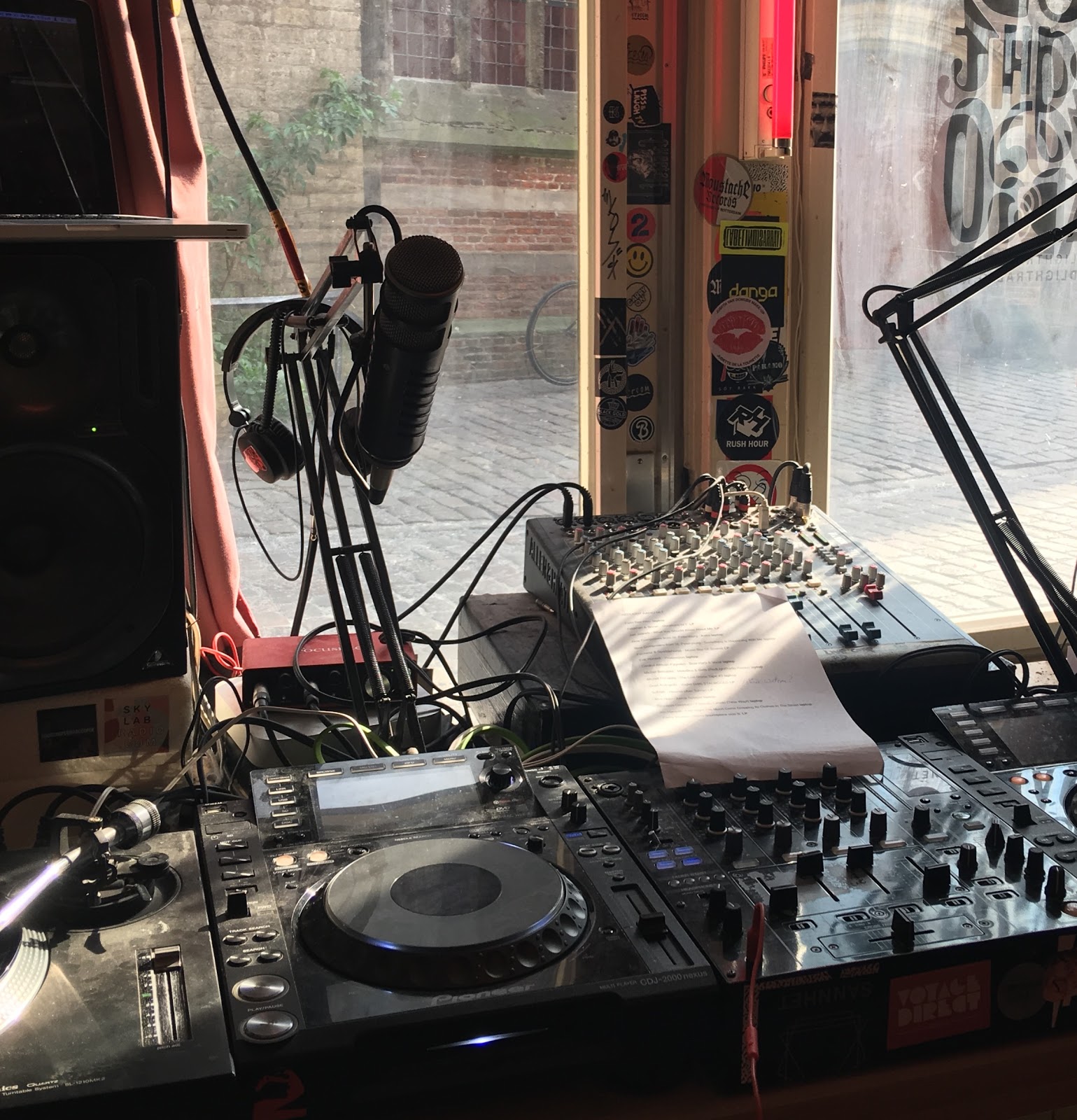
Visit The Something Something

Thursday, 4 April 2019
Uprooted
UPROOTED
Peter Hollo: cello (1,2,3,4,5)
Alex Haas: synths & electronics (3)
Gareth Davis: bass clarinet (1,2,3,4,5)
Stijn Hüwels: guitar & electronics (3,4,5)
Oene van Geel: viola and stroh violin (1,3,5)
Gulli Gudmundsson: el. bass, double bass and ebow (1,2,3,5)
Michel Banabila: soft. instruments, sampler, electronics (1,2,3,4,5)
DRAGONFLY
SOLAR WAVES
COLLECTOR
BREAKING POINT
BREATHE
The Uprooted Orchestra.
“Orchestral.” The word’s an adjective, certainly, an unambiguous one. It depicts amassed instruments working in synchrony according to a fixed document prepared in advance. But what if “orchestral” were uprooted? What if “orchestral” referred to what we heard, not how it was recorded? What if “orchestral” welcomed electronic instruments not just into the pit, but into the compositional process?
For that is the sound of Michel Banabila’s Uprooted, this album of beautiful, striated, patient music — patient on the surface, deep with turmoil underfoot. When bass clarinet and harmonium rise above a misty string section halfway through “Breathe,” that’s orchestral. When woodwinds trill and pulse against piano on “Dragonfly,” that’s orchestral.
Over the years, Banabila has made his share of experimental ambient, wherein future roots cultures are foreseen through a low-tech looking glass. On Uprooted, the tech is transparent. The album has touches of Fourth World, most notably on “Collector” and "Breathe," but Uprooted is orchestral, full stop.
It’s also an album entirely forged of material sampled by Banabila from improvisations by invited musicians. Those samples were then constructed into a whole by Banabila, layered sinuously rather than triggered on a rhythmic grid. The fixed orchestral document here is the recording, and it marks the close of the composer’s efforts, not the start of the performers’.
Marc Weidenbaum.
San Francisco, March 2019.
Cat. nr. 026TR
Limited edition / 150
Design by Yasar Saka
Artwork by Gerco de Ruijter
Alex Haas courtesy of Sonicontinuum
Mastering by Marlon Wolterink / White Noise Studio
All tracks composed & produced by Michel Banabila
2019 © + ℗ Tapu Records / banabila.bandcamp.com

Downloads: 4-9-2019. Limited edition CD: 4-16-2019.
HEADPHONE COMMUTE
A CLOSER LISTEN
AMBIENTBLOG
Saturday, 23 February 2019
'And We Fall And We Murmur And We Sing'
Now on bandcamp: And We Fall And We Murmur And We Sing. (March 14th, 2019)
I collaborated on a second project with Martin Hoogeboom.
With Ulrich Langenbach, Aoki Satoru and Wodwo.

Previous collaboration with Martin Hoogeboom (January 14, 2016):
I collaborated on a second project with Martin Hoogeboom.
With Ulrich Langenbach, Aoki Satoru and Wodwo.

Previous collaboration with Martin Hoogeboom (January 14, 2016):
Wednesday, 16 January 2019
Nan Wang - Pareidolia (IFFR 2019)
An extended noisy remix from Danube (Imprints 2018) for the new film by Nan Wang: 'Pareidolia', on IFFR 2019 (Bright Future selection)

In Pareidolia, analog abstract patterns made on 16mm film are used as source material for finding similar figurative images, interpreted by an online search engine. Hundreds of these matching images were edited into abstract film clips, resulting in an exciting visual and psychological cinematic experience.

In Pareidolia, analog abstract patterns made on 16mm film are used as source material for finding similar figurative images, interpreted by an online search engine. Hundreds of these matching images were edited into abstract film clips, resulting in an exciting visual and psychological cinematic experience.
Thursday, 13 December 2018
Michel Banabila & Willem Cramer: Texture Syndicate EP
Texture Syndicate from Michel Banabila on Vimeo.
Michel Banabila & Willem Cramer first worked together in Chi (1984-1986), (banabila.blogspot.com/2016/08/chi-original-recordings_6.html) and later in East Meets West (1990-1991), (banabila.blogspot.com/2016/08/east-meets-west-hoy-babo-hoy.html). In 1996 they collaborated with Chris Grem making a score and performing live in a dance production by Lieber Gorilla. (banabila.blogspot.com/2016/08/lieber-gorilla-visioenen.html) This 2018 EP is their first new collaboration in 22 years. Viola sounds were contributed by Oene van Geel and violin sounds were contributed by Salar Asid. Willem Cramer is a composer & multi instrumentalist, living and working (like Banabila) in Rotterdam. www.willemcramer.com/audioWillem Cramer: ebow guitar, bass, synthesizer & programming.
Michel Banabila: sampler, turntable & synthesizer.
Oene van Geel: viola (1 & 2).
Salar Asid: violin (2).
Composed, recorded, & produced by Michel Banabila & Willem Cramer. Artwork by Michel Banabila.
A special thanks to Marc Weidenbaum for suggesting the album title.
Mix & mastering by Willem Cramer.
This release is a download only.
2018 © Tapu Records.
Cat. Nr. 025TR.

Thursday, 6 December 2018
Imprints

Cok van Vuuren: electric guitar (5, 6).
Oene van Geel: viola (1, 2, 3), stroh violin (5).
Michel Banabila: turntable & sampler (1 - 7), synth (2 - 6), voice (5).
Artwork / design by Rutger Zuydervelt.
Mastering by Marlon Wolterink / White Noise Studio.
'A Sense Of Place' video by Nan Wang / NanWang Org.
Imprints promo video by Dejan Radovanovic / Ummagumma.
Recorded, composed, mixed & produced by Michel Banabila.
except track #3 composed by Michel Banabila & Oene van Geel.
Catalog nr. 024TR.
UPC 193483228464.
2018 © Tapu Records.
This album is a download only.
Nan Wang & Michel Banabila: A Sense Of Place from Michel Banabila on Vimeo.
Michel Banabila - Imprints from Michel Banabila on Vimeo.
trailer by Dejan Radovanovic.

Sunday, 21 October 2018

Wednesday, 26 September 2018

Friday, 31 August 2018
VoizNoiz part 1 reissued on 2LP vinyl by Steamin' Soundworks
First album from the VoizNoiz series (CD / 2000 - Pork Recordings , Tone Casualties) reissued by Steamin' Soundworks on a 2LP vinyl album (ltd 234), including a 16 minute remix by Michel Banabila & Oene van Geel. Expected in October 2018, available via Norman Records. Fully remastered by Marlon Wolterink. 175G vinyl in hardback gatefold sleeve. Photography Jacky van Dijk / design Rutger Zuydervelt. More info at Steamin' Soundworks Bandcamp & Steamsounds.com

Remix (Side D) by Michel Banabila & Oene van Geel:

Remix (Side D) by Michel Banabila & Oene van Geel:
Sunday, 29 July 2018
Saturday, 7 July 2018
Zeeland
Zeeland: field recordings / ambient.
Sounds for an upcoming project by Gerco de Ruijter.


Sounds for an upcoming project by Gerco de Ruijter.
Between Sweet and Salt / #2 Plompe Toren from Gerco de Ruijter on Vimeo.


Monday, 19 March 2018
Monday, 12 March 2018

Thursday, 1 March 2018
Guernica (SF Ballet trailer)
New San Francisco Ballet video trailer online for Annabelle Lopez Ochoa's upcoming choreography 'Guernica', featuring my track 'Jump Cuts'
Just Above The Surface
Listing boats, field recordings, loops, polyrhythms and sonic incantations: Just Above The Surface - Michel Banabila (new album) .

Artwork Gerco de Ruijter.
A CLOSER LISTEN: The title is an inversion of expectations; we’re used to reading the words, “just below the surface.” Sound artist Michel Banabila has been defying classifications for years, and here he does so once again. The irony is that while the attention is drawn to the sounds that lie just above the surface ~ tape noise, viola, bass clarinet ~ there’s still a lot going on just below. Take for example the dolphin noises in “The Ripple Effect” (which we believe to be Gareth Davis, sounding like a dolphin), providing imagery to accompany the track. Tumbling bass and boat samples reflect the ripples while the clarinet imitates the unpredictable nature of the sea. In the final minute, slow drum hits add drama while unexpected melodies emerge from the aether. Gerco D. Ruijter’s cover art is a perfect match for the music. Ruijter’s art finds abstraction in concrete images, typically snapped from above. In this image one might see the aforementioned ripples, but one might also see mountains or frosted plains. The same is true of Banabila’s music. “Snake Bite” features Oene van Geel and Salar Asid on viola and violin. For the first half, it sounds like an elegy until Banabila turns it into a dirge, exposing the dual nature of death and remembrance. The title “Out of Sync” highlights the friction, as loops circle at different speeds, the howls of dogs set against the cries of gulls. Again a breakthrough arrives in the final minute, a sudden synching akin to the saying that even a broken clock is correct twice a day. If we had a year-end list featuring track titles, we’d certainly include “Cassettes and Polaroids in the 21st Century.” Just as a great cover can draw attention to great music, a great title can prompt one to take a spin, especially when the track is instrumental. (In contrast, consider the title “Dreams” – not a Banabila track! – and ask yourself, “Am I curious about that song?”) Before we put the digital needle down, we’re already thinking about lost formats, engaging in pleasant nostalgia while wondering what the piece will sound like. Thanks to Marcin Barski’s contributions, it implies the abraded memories of bygone days. Once again, Banabila revisits the ripple effect, as if the entire project had been recorded on a quiet boat. The waves have died down. Just above the surface, all is calm. (Richard Allen)

Michel Banabila at OCCI, Amsterdam, 2017.
AMBIENTBLOG:
Just Above The Service, his latest release, is released almost casually, unannounced. It is a digital only release, which is an understandable choice at this time – but I feel a bit sorry for those that treasure all things physical… this music deserves to be available on a less ethereal level. Because of the music, but also because of the stunning cover artwork by Gerco de Ruijter. There are six long tracks (most around 9 minutes) and a (shorter) closing track which is taken from a Disquiet community release dedicated to Bassel Khartabil (coder and open-source advocate from Syria, imprisoned and executed). With the exception of the last track, the material for this album was created with parts and fragments made for a live performance. Banabila’s flawless wide-screen production is created with the help of some friends he worked with before (Oene van Geel, viola, Salar Asid, violin). As far as I know it is the first time that Gareth Davis adds his bass clarinet sound to Banabila’s music: on the shuddering opener The Ripple Effect. Martin Barski adds tape sound on Tapes and Polaroids in the 21st Century (great title!) It is fascinating how easily Banabila navigates between different kinds of styles and moods, even within the span of one single track. From emotional, melancholic to abstract experimental, from subdued calm to a threatening tribal rhythm that makes your palms sweat. And the transitions never sound forced. (Peter van Cooten)

Gareth Davis
IRREGULAR CRATES:
Why isn’t Michel Banabila more famous? This is music which deserves large cinema screens and at least as much press as Nils Frahm and his Erased Tapes cronies! I’ve a few of Banabila’s releases – I came across them through my buddy Rutger Zuyderveldt aka Machinefabriek – very attentive Netherlands sound designer folks the pair of them – and their four albums together. Banabila is more overtly ‘musical’ than Rutger, and these tracks present a nice worldview and warm electronics which you could imagine being on reel to reel tapes. And one thing I like about Michel’s work is that it’s not afraid to be emotional at times… very warm. There’s impressive instrumentation and very good mixing. Listing boats, field recordings, loops, polyrhythms and sonic incantations. I wrote that without even reading the title ‘Just Above The Surface’ and it does what it says. I feel I am following a day, perhaps a few, from boats on surfaces of different depths. It’s as if we start on marsh land with all the rich birdlife and move through passages where we witness – from a distance – activity far out at sea. Can’t always make out the horizons as the album but I’m happy at this surprise release and the journey I’ve been on. Ferry to Holland please (Dr. Chris Dooks)
WSZYSTKIE STANY SKUPIENIA:
Ziennik pokładowy = doprawdy straciłem rachubę ile już czasu płyniemy po tych nieznanych człowiekowi wodach. mapy pokładowe od wielu mil zdają się zgodnie rozrysowywać nasze wielkie zagubienie. jaskółczy niepokój koją skutecznie ataki lekkiej agarofobii i przyjemnej maligny słonecznej - błogosławiony udar wielkiego dnia. kapitan nasz, Michel Banabila, wydaje się mieć w tym wszystkim plan specjalny. od początku wędrówki zapętlał wrażenia z prawdziwie marynarskim sznytem, roztaczał wokół chmury dźwiękowych wrażeń, mieszał syntetyczne z prawdziwie organicznym. a wszystko to miksturą doświadczenia, co każe się sobie poddać. i niby leżę w miejscu, lecz kołyszę się coraz śmielej. dryfuję, niemącony życiem, prosto w egzotykę kolejnego Wdechu.

Released January 10, 2018.
All tracks composed & performed by Michel Banabila.
Gareth Davis: bass clarinet on The Ripple Effect.
Additional sampled parts contributed with kind permission by:
Oene van Geel (viola) and Salar Asid (violin) on Snake Bite.
Marcin Barski (tapes) on Cassettes and Polaroids in the 21st Century.
Title of track 4 borrowed with kind permission by Bence Meijer.
Some of the material in this album was originally made for an ableton live performance at the Haperende Mens Festival, Amsterdam, December 2017. haperendemens.nl
Track 6 added with kind permission of Rupert Lally & Marc Weidenbaum. Source: afutureincommons.bandcamp.com/album/a-future-in-commons-a-tribute-to-bassel-khartabil

1-5 recorded in December 2017, Rotterdam.
6 recorded in August 2017, Rotterdam.
Mastering: Marlon Wolterink / White Noise Studio
whitenoisestudio.com
This album is a download only.
2018 © Tapu Records / 021TR
Saturday, 2 December 2017
Trespassing
Trespassing is out now. A Séance Centre release.
Available at Rush Hour

2LP vinyl record in a gatefold sleeve, featuring with archival pics, essay and artwork by Alan Briand.


2LP vinyl record in a gatefold sleeve, featuring with archival pics, essay and artwork by Alan Briand.

Friday, 17 November 2017
C020TR: Sound Years limited edition cassette tape
Out now Sound Years on cassette

RUSHHOUR: MICHEL BANABILA - SOUND YEARS - TAPU RECORDS: Sound Years is a Michel Banabila sampler, segueing selected tracks from ten previous albums along with one new work into two gentle, chilled-out continuous pieces. This has the diversity and variation of a various artists chillout compilation, but impressively, it’s all the work of one man (and a couple of guest appearances). Smoothness is the order of the day here. Gentle piano melodies, occasional plaintive guitar strums, and found sounds including the classics such as falling rain ambiences and tropical birds, blend with the mellowest flavours of electronica chill-out such as the deftly twisted and re-pitched vocal samples in “Earth Visitor”. Other sections are more pared-down, simple warm drones, deep vocal sustains and cultured resonance.

RUSHHOUR: MICHEL BANABILA - SOUND YEARS - TAPU RECORDS: Sound Years is a Michel Banabila sampler, segueing selected tracks from ten previous albums along with one new work into two gentle, chilled-out continuous pieces. This has the diversity and variation of a various artists chillout compilation, but impressively, it’s all the work of one man (and a couple of guest appearances). Smoothness is the order of the day here. Gentle piano melodies, occasional plaintive guitar strums, and found sounds including the classics such as falling rain ambiences and tropical birds, blend with the mellowest flavours of electronica chill-out such as the deftly twisted and re-pitched vocal samples in “Earth Visitor”. Other sections are more pared-down, simple warm drones, deep vocal sustains and cultured resonance.
Saturday, 30 September 2017
Michel Banabila, Eric Vloeimans, Mehmet Polat: New Land
Just finished new recordings with two great musicians; Mehmet Polat & Eric Vloeimans.

With Eric I recorded before on our award winning album VoizNoiz 3 - Urban Jazz Scapes (2002)
and with Mehmet I recorded before on Migrations (2010).
I also played live together with Mehmet and Eric in Rotterdam in 2011.

New Land track titles:
1.Michel Banabila & Mehmet Polat - In A Dark Time (03:07)
2.Michel Banabila & Mehmet Polat - Dream Stories (02:03)
3.Michel Banabila & Eric Vloeimans - Autumnal Equinox (01:12)
4.Michel Banabila & Eric Vloeimans - Forest Road (01:47)
5.Michel Banabila & Eric Vloeimans - Trust In You (02:06)
6.Michel Banabila & Mehmet Polat - Jabal Haraz (04:34)
7.Michel Banabila & Eric Vloeimans - Little Steps (01:56)
8.Michel Banabila & Mehmet Polat - Aerial View (01:00)
9.Michel Banabila & Eric Vloeimans - Looking Back (03:06)
10.Michel Banabila & Mehmet Polat - In Search For A Quiet Place (04:26)
11.Michel Banabila & Eric Vloeimans - Plume (02:20)
12.Michel Banabila & Eric Vloeimans - Speed Walk (03:52)
13.Michel Banabila - Eric Vloeimans - Mehmet Polat - Forest Road - Discovery Mix (04:52)
New Land credits:
Mehmet Polat: oud.
Eric Vloeimans: trumpet.
Michel Banabila: keys & electronics.

Michel Banabila & Mehmet Polat. (2011)

Eric Vloeimans & Michel Banabila. (2011)
Buy the album on bandcamp:
Thursday, 3 August 2017
Coming soon, on Séance Centre: Trespassing
Trespassing 2LP vinyl album

Tegentonen Festival Paradiso 1984

Michel Banabila, Amsterdam, early 80's

website Séance Centre

Tegentonen Festival Paradiso 1984

Michel Banabila, Amsterdam, early 80's

website Séance Centre
Tuesday, 13 June 2017
Solénopole : Guide de musiques 'imaginogènes': Emission SolénoMix Michel Banabila
Solénopole : Guide de musiques 'imaginogènes': Emission; SolénoMix MICHEL BANABILA: Véritable explorateur inclassable, Michel Banabila a pris le contrôle de notre émission pour nous offrir un mix exclusif et subtil. Un So...

http://solenopole.blogspot.nl/2017/06/emission-solenomix-michel-banabila.html
Playliste de l'émission:
ALVIN CURRAN
"Maritime Rites" (New World Records)
[00:00 - 02:18]
CORNELIUS CARDEW
"The Great Learning"
(Bôlt)
[01:29 - 03:44]
MICHEL BANABILA
"In Other Words" (Tapu Records)
[03:22 - 05:14]
SUSSAN DEYHIM
"Capture"
[04:56 - 06:23]
HOLGER CZUKAY
"Longing For Daydreams"
LP "Moving Pictures" (Mute)
[06:00 - 09:10]
BRIAN ENO & JAMES
"Hammer"
LP "Wah Wah" (Fontana)
[08:51 - 11:00]
HOLGER CZUKAY & ROLF DAMMERS
"Boat Woman Song"
LP "Canaxis" (Spoon records)
[10:45 - 13:37]
MORTON FELDMAN & EARLE BROWN
"Durations IV" (Time records)
[12:47 - 16:56]
MILTON NASCIMENTO
"A Chamada"
[16:26 - 20:40]
BRIAN ENO
"Shadow"
LP "Ambient 4 (On Land)"
[20:28 - 23:22]
BANABILA & MACHINEFABRIEK
"Kaleidoscope"
CD "Macrocosms" (Tapu records)
[23:06 - 27:44]
STEVE REICH
"Electric Counterpoint 1. Fast"
CD "Ripples - Minimalistic Music For Multiple Guitars" (Pirol)
[27:37 - 34:30]
BRIAN ENO & DAVID BYRNE
"Number 8 Mix"
LP "My Life In The Bush Of Ghosts" (Virgin)
[34:27 - 37:52]
SEBASTIAN ARGOL
"On The Road"
LP "Yol" (Warner Bros. records)
[37:42 - 39:01]
ERIC DOLPHY
"Something Sweet, Something Tender"
[39:01 - 45:04]
CENTRAL AFRICAN PYGMIES
"Women's Wedding Song"
[44:30 - 47:16]
TERRY RILEY
"In C" (Dacapo records)
[45:55 - 48:24]
ERIK SATIE
"Prelude de la porte heroique du ciel"
[47:32 - 53:21]
ALVIN CURRAN
"Maritime Rites"
[52:39 - 53:47]
Friday, 19 May 2017
New reviews for Sound Years [12" transparent vinyl LP]

Mixed by Michel Banabila.
Side A
(this side has the tracks jointed, making it one uninterrupted mix):
A1. Close To The Moon (previously unreleased / 2016)
A2. Earth Visitor (from Earth Visitor / 2016)
A3. E.T. (from Traces / 2007)
A4. Gorlice (from Live in Gorlice / 2014)
A5. 47 Voice Loops (from 47 Voice Loops / 2013)

Side B
(this side has the tracks jointed, making it one uninterrupted mix):
B1. Stone Bridge (from Hilarious Expedition / 2005)
B2. Niki Jumpei (from Gardening / 2012)
B3. TAPE (mix 3) (from Bouwwerk / 2010)
B4. Shortwave (from Hilarious Expedition / 2005)
B5. Radio Spelonk (from Music for viola and electronics II / 2015) with Oene van Geel
B6. Vuka Vuka! intro (from Songs from Vuka Vuka! / 2005)
B7. The Turtle Came Back (from Gardening / 2012)
B8. Yarra (from Travelog / 2013) with Machinefabriek
CHAIN D.L.K.:
“Sound Years” is a Michel Banabila sampler, segueing selected tracks from ten previous albums along with one new work into two gentle, chilled-out continuous pieces. This has the diversity and variation of a various artists chillout compilation, but impressively, it’s all the work of one man (and a couple of guest appearances). Smoothness is the order of the day here. Gentle piano melodies, occasional plaintive guitar strums, and found sounds including the classics such as falling rain ambiences and tropical birds, blend with the mellowest flavours of electronica chill-out such as the deftly twisted and re-pitched vocal samples in “Earth Visitor”. Other sections are more pared-down, simple warm drones, deep vocal sustains and cultured resonance. The second side opens with a slightly more cinematic bent- a real orchestra warming up alongside a virtual one, broad sci-fi choral pads and robotic noises have us floating outside a spaceship. The ambience gradually gets more down-to-earth, with plaintive violin lines (from guest Oene Van Geel I think) and micro-cut vocal snippets glitching away in “Radio Spelonk”. While some of the elements are cliché, they are used tastefully in a way that freshens them up. Even the cockerel crowing sound, used to great effect by The Orb, makes an appearance. In fact The Orb is a comparison worth making; if you like either of The Orb’s most recent two albums, then you should absolutely check “Sound Years” out. To someone unfamiliar with Banabila’s work, this is a seriously impressive and accomplished retrospective. A wide orchestral palette and some absolutely top-notch production, with a beautiful sense of space and an ability to shift subtly between warm and cold atmospheres, makes this an aural joy in its own right. The transitions are seamless and this absolutely stands up as its own work, without any of the unsatisfying incompleteness you sometimes get in compilations. It’s released on Banabila’s own Tapu Records. Several of the original albums from which these tracks are sourced are legitimately available to download for free online, and this compilation will definitely make you want to peruse things further. (Stuart Bruce)
 NORMAN RECORDS staff review:
These are troubling times, or maybe it’s just because it’s the middle of the week, but fret not for Michel Banabila is here to bring the balm. This lovely guy has a background in producing scores for film, documentaries, theatre and video art. Banabila finds uses for discarded objects and makes tapestries with these along with his electronics, field recordings and shortwave radio bites. The results are greater than the sum of these parts though, of course. The sounds he makes are spectacularly gorgeous and immaculately crafted, so let’s get into it now... The record opens with the wondrously twilit ‘Close To The Moon’, acoustic oriental instrumentation gently plucked from some mystical faraway place and picking its way through some serene Fripp / Eno type sound bedding. Hints of guitar bubble up amongst the most luscious synth pads and subtle recordings of birdsong, low in the mix. This all segues seamlessly into some Frahm-ish piano and found sounds, Bjorkian vocals flitting in and out. The piano weaves a lovely melody gently around eastern instrumentation, gradually speeding up together with backwards vocals to create a slightly disorienting effect, before warm droning ambience washes back in. It’s as good as having the most relaxing bubble bath. Exotic birdcalls drift back in, soft lulling vocals and heavenly harp all combine to seduce this tired writer. Delicious. Is it time for bed yet? **** (Jamie)

POSTAMBIENT:
アンビエントという視点からオランダの音楽を探していた時に知った、世代もバックグラウンドも異なる2人の作曲家が、ジャーマン・エレクトロニクス周辺の復刻を手掛けるbureau Bのカタログに加わったことが、とても印象深いことでした。ひとりは、1925年ハールレム出身、著名なクラシック音楽一家に育ち、96年デン・ハーグで死去したJurriaan Andriessen(ユリアーン・アンドリーセン)。もうひとりは、1961年アムステルダムでオランダ人の母とイエメン出身の父との間に生まれた、現在ロッテルダムを拠点に活動するMichel Banabila(ミシェル・バナビラ)。ユトレヒト音楽院で父に作曲を学び、メシアンに師事したアンドリーセンは、元々アカデミックな現代音楽の世界で活躍していましたが、50歳代にさしかかった70年後半にPhilip GlassやWendy Carlosの影響から、自ら「トランス・シンフォニー」と呼ぶミニマルなシンセサイザー・ワークに開眼。先のbureau Bに取り上げられた「The Awakening Dream」は、Clusterや初期Kraftwerkにも通じるアナログでトリッピーなコズミック・サウンドを作り上げたシンセ期の代表作。プレアンビエントなアンドリーセンに対して、かたや次世代のバナビラはEno & ByrneやJon Hassellといったオリジネーターに直接的な影響を受けた、ポストパンク以降のオランダにおけるアンビエント・ミュージックの先覚者と見ることができます。 バナビラが同郷の映像作家Hero Wouters(ヘロ・ヴォウタス)のスタジオでアルバム制作に取り組みはじめたのが、彼が19才であった80年前後のこと。インドネシア、ガーナ、レバノンといった国々の民族音楽と、ジャズやミニマル・ミュージックといった要素をポストパンクの越境的感覚で再構築した「マリリ」、連作「発見された痕跡」などのソロ作を発表。Hanyo van Oosterom(ハンヨ・ファン・オーステロム)率いる第四世界音楽グループChiでの活動を経て、80年代末から90年代にかけては、トルコ、スリナム、ベルギーなどの多国籍フォーク・グループEast Meets Westや、トルコ出身のマルチ奏者Yaşar Saka(ヤシャール・シャカ)とのデュオなど、イエメン人の血を継ぐ自身の音楽的ルーツを探す旅のように、民族音楽志向をさらに広げた精力的なライブ活動を繰り広げ、ワールド・ミュージックの潮流の中で大きな評価を獲得していきました。その後トリップホップ〜クラブジャズから、グリッチ〜デジタル・ミニマリズム、実験的なエレクトロアコースティック、サティを思わせるピアニズムや室内楽に及ぶ多様なアプローチで、舞台芸術、ドキュメンタリー、映画、ビデオアートのための音楽を制作。初期のイマジナリーな民族性やミニマリズム的手法は、時代ごとに様相を変えながら、現在まで途絶えることなくバナビラの音楽の基幹になっていると思います。 この「Sound Years」は、過去12年の間に制作した既発アルバムから選ばれた13の楽曲からなるコンピレーション・アルバム。00年代以降の主要作を俯瞰しつつ、しかし単なるサンプラーではなく、遠く離れた広大無辺な宇宙空間と顕微鏡内のミクロな世界との間を漂泊するバナビラ特有の離郷的詩情を各作品から拾い集めるように、セルフミックスによって新しい物語へと昇華した、近年の最高作と呼ぶにふさわしい内容。昨年リリースされた初期編集盤「Early Works」と対比をなし、近年に初期作を発見した新しい層のリスナーにとっては数多くのバナビラ作品を辿るためのひとつの切り口となる(おそらく新作では最後の)ヴァイナル・フォーマットでリリースされたことにも少なからぬ意義を感じます。(Tomoyuki Fujii)

AMBIENTBLOG:
Sound Years is a compilation of previously released tracks (with the exception of the previously unreleased opening track Close To The Moon). All are hand-picked by Michel Banabila himself and mixed into two continuous tracks – one for each side of the vinyl album. The selection is taken from various projects: some of them from theatre works, some of the more recent experimental electronic music, an occasional live recording, and a selection of his collaboration works with Oene van Geel and Rutger Zuydervelt (Machinefabriek). The oldest tracks are taken from 2005’s Hilarious Expedition, the newest are from 2016. They are selected to create a continuous uninterrupted flow. The sound is immediately recognisable as Banabila‘s – especially in his trademark use of ‘alien vocal’ samples (like in E.T. and Vuka Vuka!). The set is a perfect demonstration of Banabila‘s mastership of creating moods and atmospheres. A soft, warm, comfortable selection that is slightly unnerving and ‘outerworldish’ at the same time. Sound Years can perhaps be seen as Banabila‘s companion to KLF’s ‘Chill Out’ album: a slow walk through quiet (yet alien) landscapes. Unknown, full of surprises, yet always vaguely familiar. (Peter van Cooten)

HEAR AND NOW:
Sound Years is a mix curated by Dutch musician Michel Banabila from recordings created variously for stage productions, documentaries, soundtracks and other releases from the previous 11 years. As you can see, it was released in a quiver inducing vinylophiles pleasure-dream - a clear platter of sound exploration. The Bandcamp link above takes you to an edit of the release. I enjoy Michel's music for it's imaginative panoramas which are enhanced by his engagement with avant and sound art methodology. Michel is a master of experimental ambient and this is where he excels. Exterior environments/field recordings are integral to many of his works. Musique concréte too. This exploratory aspect of his work is tempered by his inclusion of jazz, blues, African, Indian/Asian, classical/opera and other popular forms. Through these methodologies, he creates intriguing musical hybrids that, I feel, expand the musical traditions he utilises into original and unique soundworlds. I feel he is at the forefront of unalienating avant and creating more accessible approaches, that welcome the unfamiliar listener, rather than estrange them. The A-side opens with a previously unreleased track Close To the Moon. It's the kind of track that makes Michel's music so likeable, sounds are often tweaked through processing, creating aural hallucinates of the original sound. Oblique familiarity creating intrigue. An arcane vocal burbles. Tricked strike sound akin to a tabla floop. Acoustic guitar motif intone, slowly, calmly at the deeper end of the scale. Organ like keys cycle. Frog click. Ebow glissandi ring. I'm hearing things in a different light - odd combinations of sound source that here, are entirely plausible. A poignant piano motif enters and leaves. The vocal samples return more assertively. Harmonium like drone billows. And a silence. Another movement unfolds. More silences amidst forest sound flowering the mix. Nursery song and noise. For a moment, I glimpse a meeting between the Müm and Eno's Apollo. It closes where a recurring theme throughout this first side has ebbed and flowed - the human voice. In particular it features a sample from Michels 47 Voice Loops release, created for an installation that melded subtlety with complexity. The B-Side is a kind of aural film. Further out sound-art explorations and compositional technique are to the fore here and in places I'm reminded of Daedelus and DJ Spooky - it has a more cut-up/mixologist feel. Four of the songs featured are lifted from the Hilarious Exhibition and Gardening albums, both which really mirror the musical approach on this side. Frequent collaborators musician/sound-artist Machinefabriek and violinist/improvisor/composer Oene van Geel both share moments on this side too. Their inclusion reinforces the avant and "orchestral" feels present here. In the closing moments of the B-side there is a return to similar musical themes from the A-side through Yarra, from the memorable 2013 release, Travelog. It features a lovely Bayaka like cooing warble. It closes on a poignant piano melody.
In all, Sound Years is a great way to traverse a decade or so of Michel's ouevre.
nb. In 2010, Michel treated us to another career spanning sampler of his music, Streets, Dreams and Memories, collated/mixed by ambientblog's Peter van Cooten. It's available as a download now and is another great overview of Michel's panoramic music, particularly his fourth world recordings. (Perry Holt)
FELTHAT:
Michel Banabila is primarily known for film scores, theatre and video art scores. With that kind of experience you can really expect a chamelon sort of genre and that's is almost to be the truth. But as an experienced musician and a visionary he knows his way around and helps himself with vast array of means to accomplish his goals. Music presented on "Sound Years" beautifully released vinyl has a base of ethereal ambient guitar work which you might associate with Eno/Fripp archetype. But this is just a base to tiny little delights that this album has e.g. oriental acoustic instrumentation in the first track, rich and lush synth textures, drone ambience, piano work, a bit whimsical, gentle vocals. What is most striking is whatever Michel is playing - he can embellish it as a master - you can see his craft in each little corner. Delights... (Hubert Heathertoes)
MUSIC WON'T SAVE YOU:
Non solo condensare in quaranta minuti oltre un decennio di esperienze musicali personali, collaborative e combinate con altri linguaggi, ma farlo dandovi una forma nuova, come in un timelapse nel quale suoni e immagini smarriscono i propri contorni, assumendo significati inediti. È l’operazione posta in essere da Michel Banabila in “Sound Years”: per realizzare le due facciate in vinile del lavoro, l’artista olandese non ha fatto altro che riassemblare in sequenza ininterrotta una serie di frammenti tratti da una varietà di lavori passati, comprese pièce destinate alla danza o a installazioni audio-visuali. Dal venir meno delle cesure tra le varie parti, è scaturito un iter narrativo radicalmente nuovo, nel quale field recordings, parti suonate ed effetti sintetici scolorano gli uni negli altri assumendo una coerenza intrinseca imprevedibile. Ai due lunghi brani – sedici e diciannove minuti – è associato un più breve inedito risalente allo scorso anno, “Close To The Moon”, costituito da minute emissioni elettroniche sospese su un pulviscolo sonoro, appunto, lunare. A margine di tale brano, comunque, l’essenza di “Sound Years” può davvero riassumersi nell’applicazione sperimentale alla musica del principio per cui nulla si crea e nulla si distrugge, ma tutto si trasforma. (Raffaello Russo)
ROCKERILLA:
Sono più di trent’anni che Michel Banabil registra album di sonorizzazioni per cinema, televisione e teatro ai confni della new age. Con A Sound Years il musicista Olandese ha creato due mix - uno per lato dell’ LP - unendo tracce di suoi vecchi lavori e alcuni inediti. L’atmosfera è pacata e lievemente melanconica: le melodie suonate al pianoforte e su vecchi sintetizzatori si increspano sotto strati di micro-elettronica. Machinefabriek collabora nella conclusiva Yarra (dall’album Travelog del 2013), chiudendo nel migliore dei modi un disco che cresce ascolto dopo ascolto. Vinile trasparente pesante (175 grammi) già esaurito sul Bandcamp dell’artista. SOFFUSO. (Roberto Mandolini)
DISCREET MUSIC BLOG:
Michel Banabila har ett förflutet i Chi och har även släppt en mängd musik under eget namn och tillsammans med andra. Sound Years består av två spår på nitton respektive sexton minuter, de innehåller flera låtar av musik från dokumentärfilmer, dansföreställningar, konstinstallationer, videoverk och annat. Allt som allt från tio olika skivor, det är dock sammanhållet och faktiskt till och med väldigt bra.
GROOVE.DE:
Sound Years (Tapu), die Klang-Collagen des Holländischen Soundtrack-Spezialisten Michel Banabila sind deutlich optimistischer, aber noch kleinteiliger, innenräumlicher und spezifischer. Sein Haushalt ist der eines Hoarders: Found Footage, Flohmarktplatten, Field Recordings, Gesprächsfetzen und Instrumente wie Banabilas eigenwillig gespielte gestopfte Trompete definieren Ambient als Musique Concrète aus Big Data. (Frank P. Eckert)
LOOP:
Michel Banabila es un artista sonoro, compositor y productor que reside en los Países Bajos, quien desde 1983 viene editando su música y producido la música incidental de numerosos filmes, documentales, obras de teatro y coreografías. Banabila trabaja con objetos encontrados que son procesados electrónicamente además de grabaciones de campo y fragmentos diversos ruidos. “Sound Years” incluye temas seleccionados de diez álbumes anteriores junto a dos nuevos temas. Tanto el lado A como el B de este vinilo los temas están unidos generando una mezcla ininterrumpida. “Close To The Moon” – del lado A - da comienzo con suaves acordes de guitarra al estilo oriental junto a sampleos de vocales hábilmente retorcidas y retocadas que me recuerdan el trabajo de Woob, aka Paul Frankland editado a mediados de los ’90 en el mítico sello inglés em:t. Luego suaves melodías de piano le ponen un toque de elegancia creando una atmósfera de ensueño. El lado B tiene un carácter de paisaje sonoro que comprende grabaciones a voces, objetos, punteos a la guitarra, solo de violín y ondas corta de radio, creando bellos colchones de ambient acompañado del canto de pájaros. (Guillermo Escudero)
IRREGULARCRATES:
I came across the sound world of Michel Banabila about three years ago through the work of Machinefabriek, the moniker of soundsmith and graphic designer Rutger Zuyderveldt. Both artists are based in Rotterdam. Their series of collaborations are excellent. Rutger also did the layout work on the clear vinyl version of this release – Sound Years – and I would definitely recommend obtaining the reasonably priced physical version. Zuyderveldt also contributes to the closing piece on the record and whilst there’s also a track with composer Oene van Geel on side B, this is Banabila’s solo practice.
It’s always nice to review vinyl, for the usual reasons; the sense of occasion, to get the actual artwork, which is stunning on this record – an aerial shot of who-knows where, with a male shadow that reminds me of LFO’s Frequencies, from visual artist Gerco de Ruijter. But there’s also the fact that on my turntable, vinyl can’t be ignored or left alone. If I want to preserve the needle and record I have to be watching the progress across the platter. Outside of the packaging, I think the most impressive thing about this release is that it is a compilation of works – but it plays like two very connected suites of music. The source material appears to be from audio visual commissions and the like from 2005 to 2015 – I deliberately didn’t look at the tracklisting first and I wrote what follows in one sitting. I wrote it without much editing and it’s a first thought, best thought kind of approach!
Side A
1. Electronic drips trickle over a Japanese lament with ornamented clicks and flutters that never take over from the contemplative loop. We unfold into an expansive suite of cinematica with a very subtle, slightly Spanish click-ery field recording. The drips continue – and merge into the start of a lovely piano piece cloaked in what could now be an actual rain field recording. Or static. A cat mews quietly in the background. The lamenting voice returns, but it is now beautifully distressed and dances with the other elements for an extended moment in an impressive display of digital processing that is as alive and seductive. All the time there’s a great musicianship to this mixing of elements that allows the end result to sit very comfortably on the soundtrack of a film like Arrival, and the quality is as high as a Johan Johannsson work.
2. Next, a Rhodes-like bassline is the clothesline that bubbling vocals are mutated and hung over, but as twisted as they are, there is very clear intention behind the warping of them – a kind of polyglot investigation. There’s almost a song-like craft here, instead of the ‘academic’ tag we often see lazily attributed to electroacoustic music. Here, it’s a warm work, sensitive and conceptual at the same time, an unusual and accomplished mix. If the previous track was Arrival, this would work with a Studio Ghibli storyline about a swamp in rural Japan. 3. What we used to call the ‘Far East’ is a reasonable description of where we visit. Perhaps the ‘Far-out’ East! Now we are unsure of location. But I’m reminded of a Leaf Label record I used to own. I’m thinking Asa-Chang and Junray – there’s a kind speaking of tongues here, and that seems to be the unifying theme of this side, and it floats in and out of animated, sensitively-drawn landscapes. It feels like early afternoon, I expect to see a large dragonfly and then we go below the waterline to another place, – the drone is forefront here. I didn’t see it coming, so subtle was the development over the last few minutes.
4. And as we build into a slow choir of vocals before side one draws to an end, I could have this last track never finish. If it’s an edit, I’m ready for more. What will Side B hold for us?
Side B
1. I feel like we’ve been placed in the centre of an orchestra pit. Instruments are being tuned up. There’s a Cockerel sample that is very like the Orb’s launch into Little Fluffy Clouds, but these clouds are full of static and distant church gongs. It’s like a séance in an old sound archive, tuning in to hear E.V.P. voices, – and perhaps this artist would make an excellent artist in residence at the SETI institute. 2. A very different journey from Side A, but that’s what side B-s are for. Some lost Estonian orchestra and the sounds of reel to reel machines fight it out. It’s like the memories of an old tape recorder that is being demagnetised – a real play on the signal-to-noise ratio here – you get the sense that that there’s a real investigation between the detritus of archives and the desire to make order.
3. It’s a kind of reportage, or survey going on here – and whilst not as warm as Side A’s more cinematic emotional syringe, here it’s just as atmospheric but with a more suspicious plot. What’s impressive is that Banabila is very restrained and eclectic in the composition – elements don’t out-stay their welcome and whilst there’s some brutal cut ups of voices – they are heard so briefly that they punctuate the piece perfectly. An incredible amount of source material and editing here.
4. The spectral voice on side A is back again! I love this treatment here, it’s floating in some dark space – it would sit next to Burial’s work and also retain it’s own identity. I think I recognise some Cycling 74 plug-ins here, or some fantastic MaxMSP work. 5. I feel like now we’ve moved onto a dank, leaky interior like some warehouse with bits of roof missing. Drips of water and some coming together of spidery life forms coalesce into the basis for a warm yet beguiling closing of the record. I adored this record and you can get it from Tapu Records (Chris Dooks)
POPUNIE:
Het is vreemd om een muziekrecensie te starten met het beschrijven van een hoes. Voor de hoes van de compilatie Sound Years van geluidskunstenaar Michel Banabila zijn foto’s gebruikt van Gerco de Ruijter. De foto’s deden me denken aan een bepaald deel van Andalusië aan de Spaanse zuidkust, namelijk het tuinbouwgebied tussen Murcia en Almería. Daar zijn uitgestrekte vlaktes van met plastic opgetrokken tuinbouwkassen te vinden.
Ooit, toen ik daar voor het eerst overheen vloog, op weg naar een vakantiebestemming aan zee, leek het vanuit de lucht of er grote glinsterende meren of zwembaden te zien waren. Nadat het vliegtuig de daling had ingezet werd pas zichtbaar wat de rechthoekige vlakken precies waren. Op de hoes een paar prachtfoto’s die inderdaad gemaakt zijn in de buurt van Almería met een aan een vlieger vastgemaakte camera.
Net als de foto’s vormen de diverse muziekstukken op dit album een geschakeerde eenheid. Alle oorspronkelijke tracks zijn aan elkaar gemixt tot twee langere stukken en zijn pas bij nadere intensieve beluistering van elkaar te onderscheiden. Dat is dan weer vergelijkbaar met de kassen op de foto’s. De hoes en plaat vormen wat mij betreft dan ook een zeldzaam mooie eenheid. Michel is een kei in het maken van abstracte en meanderende ambient met hier en daar knisperende en schurende geluiden. Zijn werk is vaak ook voorzien van warme sounds, al dan niet geproduceerd met gemanipuleerde samples van menselijke stemmen. Die combinatie is wat mij betreft kenmerkend voor Michel.
Het album Sound Years start met de niet eerder uitgebrachte prachtige track Close To The Moon. Het basismateriaal is uit de periode 2005 – 2016, waarbij ook twee tracks zijn gebruikt met anderen, namelijk Radio Spelonk met Oene van Geel en Yarra met Rutger Zuyderveldt onder de naam Machinefabriek. Wonderlijk hoe het Michel is gelukt om een ijzersterk album af te leveren, met dit materiaal uit verschillende periodes. Officieel een compilatie, maar in werkelijkheid een heerlijk consistente en toch gevarieerde eenheid. De volgende keer dat ik naar Andalusië vlieg gaat de digitale versie van Sound Years zeker mee op mijn mp3-speler. (Koert Sauer)
released February 2, 2017
All tracks composed by Michel Banabila except:
'Radio Spelonk' by Banabila & Van Geel.
'Yarra' by Banabila & Zuydervelt.
Mastering: Marlon Wolterink at White Noise Studio.
Photography: Gerco de Ruijter.
Layout: Rutger Zuydervelt.
PR: Dense Promotion Berllin.
UPC 753907987683.
Pressing: MPO France.
Manufactured by Mobineko.
2016 ℗ Tapu Records / 020TR
Sound Years - Discogs
Subscribe to:
Posts (Atom)